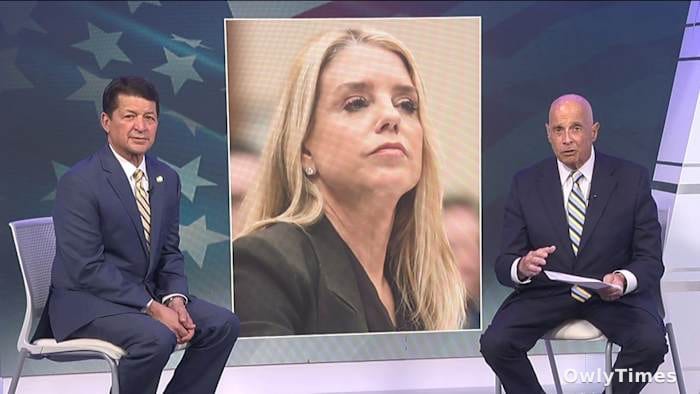

The abrupt dismissal of a loyalist Attorney General, coupled with escalating signals of further personnel changes, isn’t a sign of a White House recalibrating for policy shifts – it’s a demonstration of power, a tightening of control ahead of what the Trump administration clearly anticipates will be intensifying domestic and international pressures. The firing, reported on April 3, 2026, isn’t about performance; it’s about establishing an unambiguous line between personal loyalty to Trump and perceived institutional independence. This move, and the subsequent reports of potential replacements for Lori Chavez-DeRemer (Labor Secretary), Howard Lutnick (Commerce Secretary), and even Tulsi Gabbard (Intelligence Chief), reveal a strategic calculus focused on consolidating authority, not improving governance.
The Calculus of Control: Beyond Performance Reviews
The initial reporting frames these potential shakeups as stemming from dissatisfaction with performance. An unnamed administration official, quoted as saying “He’s very angry and he’s going to be moving people,” offers a deliberately vague justification. However, the fact that the Attorney General – a known ally – was the first to go suggests a deeper motive. Throughout history, autocratic leaders have routinely purged even loyalists who are perceived as developing independent judgment or failing to provide unquestioning support. Think of Stalin’s Great Purge, or even Richard Nixon’s Saturday Night Massacre. While the scale is vastly different, the underlying principle is the same: eliminating potential sources of dissent, even within the inner circle. The reported polling of advisors regarding Gabbard’s replacement is particularly telling, given her profile as a political outsider who brought a degree of unconventional thinking to the intelligence community.
Based on the original news4jax.com report.
Who Benefits and Who Loses in a Cabinet Shuffle?
The immediate beneficiaries of this power play are those positioned to replace the ousted officials – individuals likely vetted not for their policy expertise, but for their demonstrable fealty to Trump. This creates a cabinet increasingly populated by “yes men” and women, diminishing the potential for internal debate and critical assessment. The losers are, predictably, the principles of effective governance and the institutions themselves. A Commerce Secretary, for example, whose primary qualification is loyalty rather than economic acumen, is less likely to offer candid assessments of trade imbalances or propose innovative solutions to supply chain disruptions. The broader public also loses, as a less-informed and less-challenging cabinet is more susceptible to flawed decision-making. The potential impact on the Labor Department, should Chavez-DeRemer be replaced, is particularly concerning given the ongoing debates surrounding worker protections and wage stagnation.
Parallels to Past Administrations and Power Consolidation
This pattern of personnel upheaval isn’t unique to the Trump administration. John F. Kennedy’s frequent cabinet changes, while often attributed to policy disagreements, were also driven by a desire to maintain control and project an image of decisive leadership. However, the current situation differs in its explicit focus on loyalty as the primary qualification. The speed with which the Attorney General was replaced, and the breadth of potential changes being considered, suggest a more aggressive and systematic effort to reshape the executive branch in Trump’s image. This echoes the tactics employed by leaders seeking to dismantle established norms and consolidate power, often at the expense of institutional integrity. The fact that this is happening concurrently with reports of an Iranian air defense system hitting a US A-10 attack aircraft – as reported by Iranian state media – adds another layer of complexity, suggesting a desire to project strength and resolve both domestically and internationally.
The Next Chess Move: Scrutinizing the Replacements
Rick Mullaney, head of the Jacksonville University Haskell Public Policy Institute, offered commentary on the Attorney General’s dismissal, but the focus should now shift beyond simply reacting to firings. The critical question isn’t who will be removed next, but who will replace them. The profiles of the incoming appointees will reveal the true extent of Trump’s commitment to consolidating power. Will he prioritize experience and competence, or will he reward unwavering loyalty, even at the expense of expertise? Specifically, watch for the vetting process for Gabbard’s potential replacement. A nominee with a background solely in political advocacy, lacking substantial intelligence experience, would signal a clear intention to politicize the intelligence community and prioritize ideological alignment over objective analysis. That appointment, more than any other, will define the trajectory of this administration’s second term.