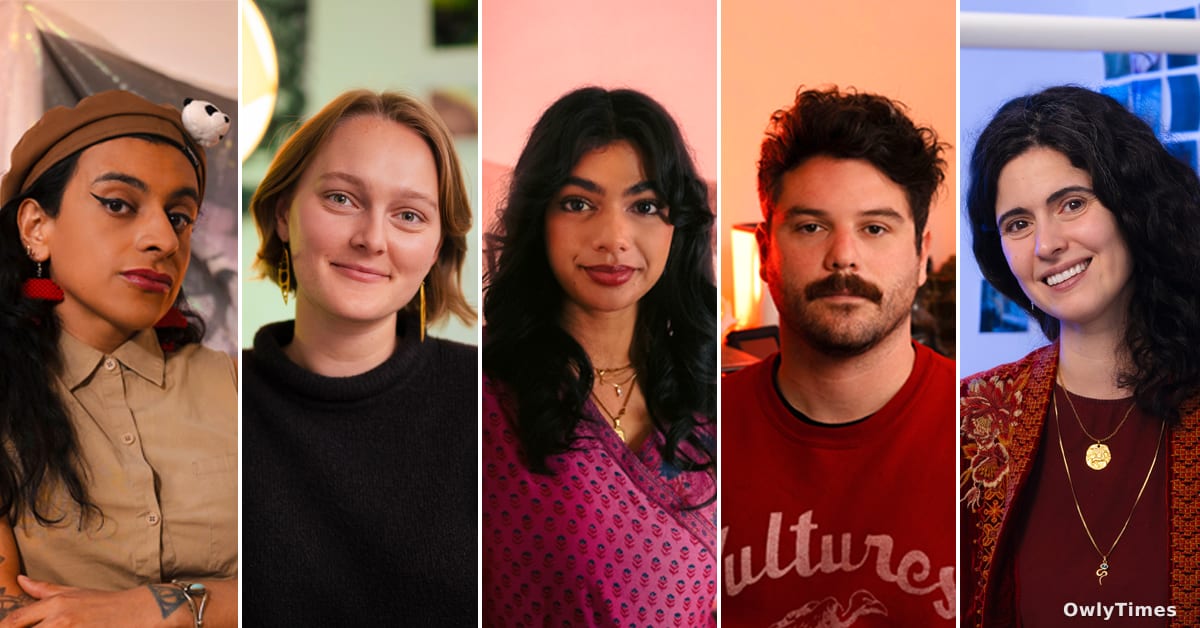

The impulse to understand how we construct “home” – both personally and collectively – is a fundamental human drive. But what happens when that home is irrevocably altered, fractured by violence or rendered inaccessible by distance? This question isn’t merely philosophical; it’s the driving force behind a wave of innovative research emerging from the Department of Visual Arts at UC San Diego, where graduate students are employing artistic practice as a rigorous form of inquiry. The upcoming 2026 Graduate Open Studios event, on February 28th, isn’t simply an art show; it’s a window into experimental laboratories where ideas about cultural displacement, artificial intelligence, and the very nature of memory are being actively tested. While headlines often portray art as reactive or purely expressive, these artists demonstrate its capacity to generate knowledge, often by bridging disciplines in unexpected ways.
The work of Shloka Dhar, an MFA student, exemplifies this intersection. Dhar’s artistic exploration stems directly from her family’s experience as Kashmiri Pandits displaced by violence in the 1990s. This isn’t simply a biographical narrative translated into art; it’s a deeply researched investigation into transgenerational trauma and the potential for regeneration. What’s particularly compelling is Dhar’s background in biology – she previously studied muscle stem cells – which informs her artistic process. She isn’t merely representing the concept of memory; she’s actively drawing on neuroscience to visualize it, conceptualizing neurons and dendrites as a network, with traditional Kashmiri ari embroidery functioning as a kind of “skin” representing areas of trauma and potential repair. This isn’t a case of art illustrating science, but of the two fields mutually informing each other, a methodology increasingly common within the department.
Drawn from today.ucsd.edu.
This deliberate blending of disciplines extends to Xelestial Moreno-Luz’s photographic and filmmaking work, which centers on transgender and travesti communities in Latin America. Moreno-Luz isn’t simply documenting these communities; she’s actively working to “reframe how transgender communities are portrayed and how their knowledge is reproduced.” The nuance here is crucial. Moreno-Luz specifically focuses on the travesti identity, a distinct political and cultural force within Latin America, differentiating it from broader transgender categorizations. Her work, including the award-winning short film “No estás solas” about activist Natalia Lane, functions as an archive, preserving cultural movements and resisting dominant narratives that often sensationalize or misrepresent trans lives. The power of this work lies in its agency – it’s created with and for the communities it represents, rather than simply about them.
The exploration of boundaries – between the natural and artificial, the human and the technological – is a recurring theme. Andrew Wharton, a computer artist, uses AI not as a replacement for artistic skill, but as a tool to choreograph behaviors for his sculptures. He’s not simply generating images with AI; he’s designing code that dictates how physical objects move and interact. Wharton’s deliberate approach, described as an “alchemy” positioned between mysticism and scientific thought, highlights a critical tension within the field: the increasing reliance on AI tools and the need to maintain artistic intentionality. He acknowledges the benefits of AI but actively “navigates reliance on technology,” recognizing it as a continuum of refinement rather than a simple solution. This careful consideration is vital as AI becomes increasingly integrated into artistic practice.
The question of access – to places, to knowledge, to understanding – also drives the work of Sarah Rose, a Ph.D. candidate in art history, theory, and criticism. Rose’s fascination with Antarctica stems from its remoteness and the limited understanding we have of this critical region in the context of climate change. Her work blends cartography, cyanotypes, and digital photography to explore how we grapple with distance and proximity, and how photographs function as “indexes” of environmental history. Rose’s project isn’t about presenting definitive answers about climate change; it’s about prompting conversations and highlighting the interplay between artistic and scientific methods of inquiry. She recognizes the shared goal of both disciplines – to understand how the world works – and seeks to illuminate the unique contributions each can make.
Finally, Coral Pereda Serras’s work delves into the often-opaque world of algorithms, drawing a compelling parallel between technology and the occult. Pereda Serras isn’t simply critiquing AI; she’s exploring the sense of “awe” and mystery that surrounds it, and how this perception can be linked to historical understandings of magic. Her research, inspired by feminist texts like “Caliban and the Witch,” seeks to demystify AI and hold its creators accountable, advocating for greater transparency and democratization of these powerful systems. This is a particularly urgent concern as algorithms increasingly shape our lives, often without our conscious awareness.
The 2026 Graduate Open Studios event, and the research it showcases, isn’t just about presenting finished artworks. It’s about revealing the process of inquiry, the tensions and contradictions inherent in artistic exploration, and the potential for art to generate new knowledge. The next crucial step will be to see how these individual investigations coalesce into broader dialogues, and whether this interdisciplinary approach can influence not only the art world, but also the scientific and political spheres. Will this model of artistic research inspire other departments to embrace similar methodologies? And, perhaps more importantly, will it lead to a more nuanced public understanding of the complex challenges facing our world?





