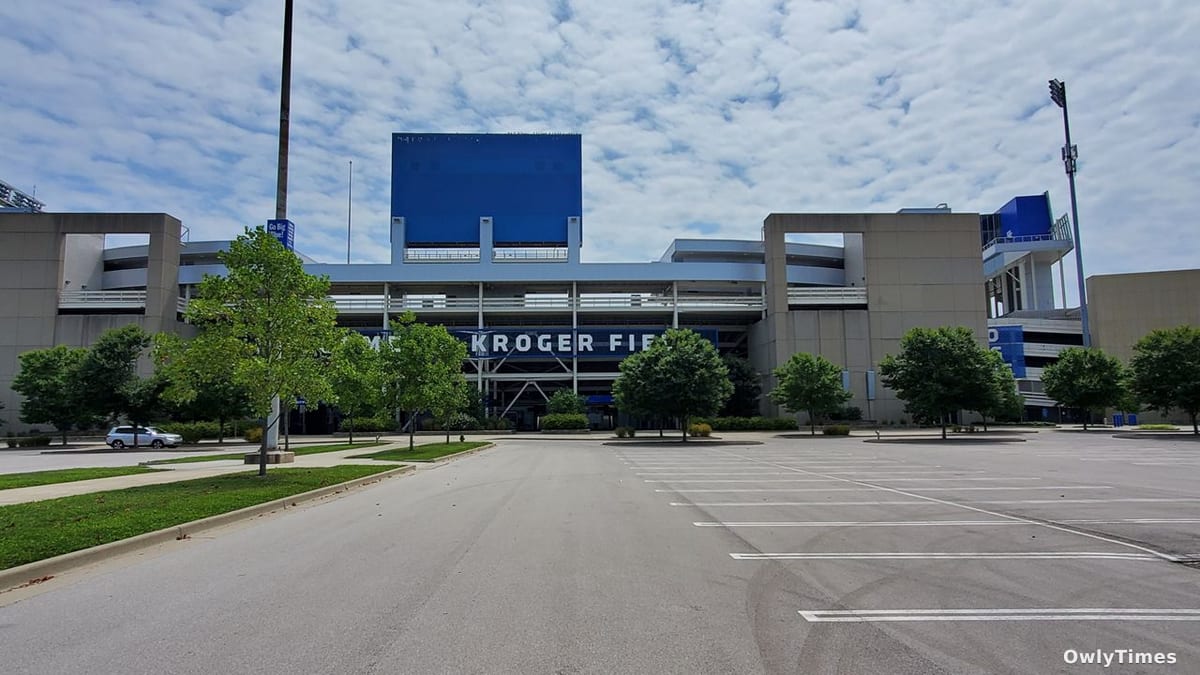

The scent of frying food, a sound system thumping with a pre-game energy, and the chatter of a crowd – not just on football Saturdays, but year-round. That’s the vision Kevin Locke, University of Kentucky architect, painted for me as we discussed the ambitious, $110 million plan to transform the area surrounding Kroger Field into a vibrant entertainment district. But this isn’t simply about better tailgates; it’s a calculated bet on the power of collegiate sports to reshape a city, and a revealing case study in how universities are increasingly functioning as economic development engines. The University of Kentucky, through its nonprofit arm Champions Blue, isn’t just building a better game day experience – it’s attempting to solve a local problem, and in doing so, is raising questions about the proper role of public institutions in private development.
Beyond Game Day: Addressing a Local Need
The project, unfolding in three phases with completion slated for the end of June, isn’t born from a desire for luxury boxes or premium seating, though those are part of the upgrades. It’s rooted in a stark reality: the Cooper Drive corridor, despite being a major artery for game-day traffic, is what Locke bluntly calls a “food desert.” This isn’t a coincidence. Areas surrounding large stadiums often become functionally isolated, catering solely to event-goers and neglecting the needs of long-term residents. The university’s 900-acre campus, while a source of pride, has historically created a barrier, dividing Lexington. Champions Blue’s plan – incorporating retail, housing, and crucially, food and beverage options – aims to bridge that divide. The $110 million internal loan, approved by the UK Board of Trustees, isn’t just an investment in athletics; it’s an attempt to stimulate economic activity in a neglected area, and to foster a stronger sense of community.
This piece references the spectrumnews1.com report.
The University as Developer: A Growing Trend
This move by UK is far from isolated. Across the country, universities are increasingly taking on the role of master developers, leveraging their land holdings and brand recognition to drive economic growth. The University of Texas at Austin, for example, has a long-term plan to develop its 350-acre campus into a mixed-use urban center. Penn State is similarly reimagining areas around Beaver Stadium. What’s different about the UK approach is the explicit focus on addressing a social need – the food desert – alongside the economic benefits. However, this also raises a critical question: is a university the best entity to be undertaking this type of development? Critics argue that universities should focus on their core mission of education and research, and that development projects can create conflicts of interest or prioritize revenue generation over community needs.
Sasaki’s Role and the Search for Authenticity
To navigate these complexities, UK has partnered with Sasaki, a renowned architecture and planning firm. Locke emphasized their “breadth of knowledge” and “expertise” in these types of arrangements. Sasaki’s involvement signals a desire to avoid the pitfalls of generic, developer-driven projects. As Locke explained, the goal isn’t to simply replicate successful entertainment districts elsewhere, but to create something “unique and beneficial” to both the University of Kentucky and the city of Lexington. This commitment to authenticity is crucial. The success of the project hinges on its ability to integrate seamlessly into the existing fabric of the city, rather than feeling like a detached, university-branded enclave. The linear connectors along University Drive and Cooper Drive, as Locke described, are key to achieving this integration, phasing the development from north to south and creating a more cohesive urban experience.
What’s at Stake for College Towns Nationwide?
The UK project is a high-stakes experiment. If successful, it could serve as a blueprint for other universities looking to leverage their assets for economic and community development. But the potential for unintended consequences is significant. Will the new development truly benefit long-term residents, or will it primarily cater to students and visitors? Will the increased traffic and activity exacerbate existing problems? And perhaps most importantly, will this model encourage other universities to prioritize development projects over their core academic missions? The next six months, as phase three wraps up and concrete plans are unveiled, will be critical. Lexington, and college towns across the nation, will be watching closely to see if Champions Blue can deliver on its promise of a fan-focused entertainment district that’s also a genuine community asset. The question isn’t just whether this project will be a success for UK, but whether it will redefine the role of the modern university in the 21st century.