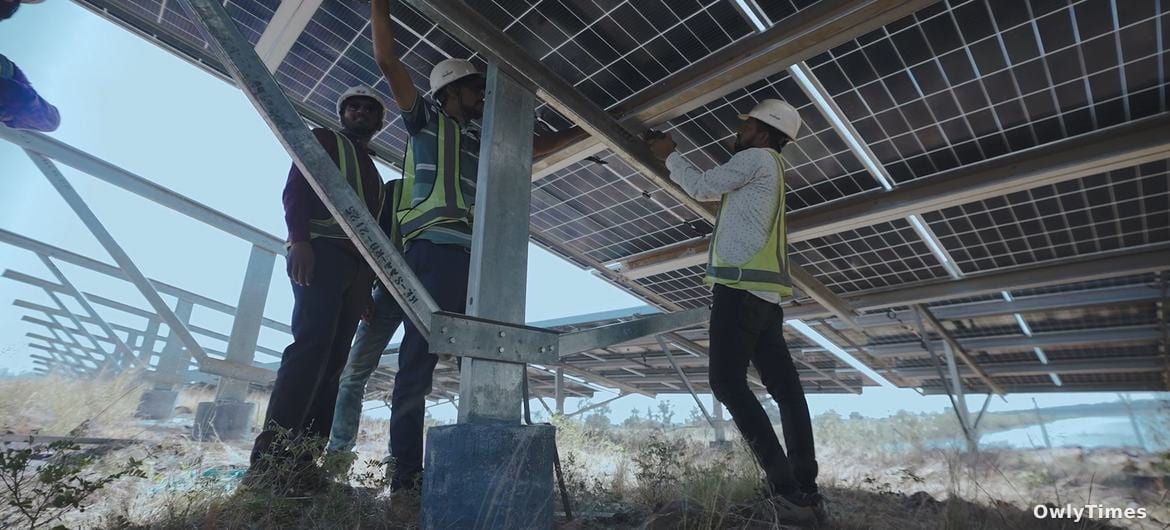

$2.3 Trillion in Projected Energy Costs Fuels UN Push for Renewable Transition
$2.3 trillion. That’s the estimated cost, according to a recent UN report released today, April 6, 2026, of potential disruptions to global energy markets stemming from escalating instability in the Middle East. This figure, representing projected increases in fossil fuel prices and supply chain vulnerabilities over the next five years, isn’t merely a theoretical exercise; it’s a stark illustration of the economic fragility inherent in relying on politically volatile regions for energy. Follow the money, and the path leads directly from geopolitical risk to consumer prices, corporate bottom lines, and a rapidly accelerating argument for renewable energy investment. The UN’s renewed emphasis on a faster transition isn’t driven by environmental idealism alone, but by increasingly compelling economic realities.
Based on the original un.org report.
The Geopolitical Premium on Oil and Gas
The current crisis isn’t simply about a spike in crude oil prices, though Brent crude has already surged 18% since the beginning of the year, reaching $98 a barrel. The more insidious effect is the “geopolitical premium” now baked into energy pricing. This premium reflects the increased risk of supply interruptions, insurance costs, and rerouting of tankers – all factors that add to the final cost of fuel. Consider the Suez Canal, a critical artery for global oil transport; insurance rates for vessels transiting the region have increased by 250% in the last month alone, according to Lloyd’s of London. This isn’t a temporary blip. Even a stabilization of the immediate conflict won’t erase the awareness of this vulnerability, meaning energy importers will continue to factor in a higher risk profile for years to come. This contrasts sharply with the predictable, and increasingly cost-competitive, pricing of renewable energy sources.
Southern Africa’s Resilience as a Counter-Example
While the Middle East highlights the risks of resource dependence, Southern Africa offers a contrasting narrative. The region, grappling with increasingly severe and frequent droughts, is demonstrating the economic benefits of proactive resilience-building. The UN report notes a surge in “gender-smart, community-led solutions” focused on land restoration and livelihood diversification. These initiatives, while often small-scale, are proving remarkably effective. For example, a water harvesting project in Zimbabwe, funded by a $15 million grant from the Global Environment Facility, has increased crop yields by 30% in participating communities, directly addressing food security concerns and reducing reliance on external aid. This is a crucial point: resilience isn’t just about mitigating risk; it’s about creating economic opportunity. The investment in these projects, while modest compared to the $2.3 trillion at risk in global energy markets, demonstrates a fundamentally different approach to resource security.
The Shifting Calculus of Renewable Investment
The UN’s argument for accelerated renewable energy adoption isn’t new, but the economic context has fundamentally shifted. Previously, the case rested largely on environmental benefits and long-term cost projections. Now, the immediate economic risks associated with fossil fuel dependence are becoming undeniable. Investment in renewable energy capacity globally reached $650 billion in 2025, a 22% increase year-over-year, but the UN is advocating for a doubling of that figure to reach net-zero targets by 2050 – and, crucially, to insulate economies from future geopolitical shocks. The key is not simply building more solar farms and wind turbines, but also investing in the infrastructure needed to integrate these intermittent sources into the grid, including energy storage solutions and smart grid technologies. The current pace of grid modernization is lagging, representing a significant bottleneck to wider renewable adoption.
What This Means for Your Wallet
The escalating energy crisis and the UN’s response have direct implications for consumers and investors. Expect continued volatility in gasoline prices and home energy bills, even if the immediate conflict subsides. More importantly, watch for increased investment in renewable energy companies and related technologies. Companies specializing in energy storage, smart grid solutions, and sustainable agriculture are poised for significant growth. For individual investors, this means considering diversifying portfolios to include exposure to these sectors. However, be selective: not all “green” investments are created equal. Focus on companies with proven track records and clear pathways to profitability. The question now isn’t if the energy transition will happen, but how quickly – and the companies that can navigate this shift effectively will be the ones that deliver the greatest returns. Will governments prioritize long-term energy security over short-term political considerations, and will consumers be willing to absorb the upfront costs of a more resilient energy future? The answer to that question will determine not only the fate of the energy industry, but the stability of the global economy.




