
Escalation Costs: $28 Billion in Market Value Erased Within Hours of “Epic Fury”
A staggering $28 billion in combined market capitalization vanished from energy and defense stocks within the first three hours of trading following coordinated strikes between the United States and Israel against targets in Iran on February 28th. This immediate financial reaction, far exceeding initial projections from risk models, underscores a critical shift: the market is no longer pricing in geopolitical risk as a distant threat, but as an actively unfolding cost. While the official narrative frames the joint operation, dubbed “Epic Fury” by the Pentagon, as “preemptive,” a closer look at trading patterns reveals investors are bracing for a protracted escalation, not a swift resolution. The speed and magnitude of the sell-off suggest a loss of confidence in ongoing diplomatic efforts regarding Iran’s nuclear program, efforts that, until yesterday, were perceived as cautiously progressing.
Bahrain Strike Signals a New Phase of Retaliation
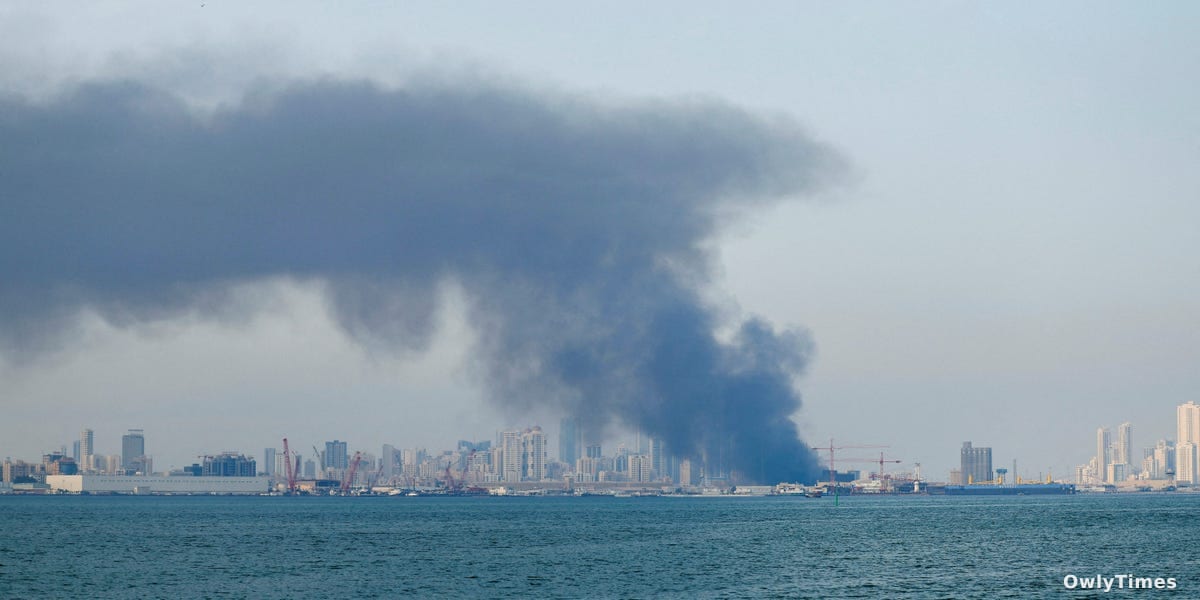
Concurrent with the strikes on Tehran, Iranian forces reported a successful attack on a US naval base in Bahrain. This reciprocal action is not merely symbolic; Bahrain serves as a critical logistical hub for the US Fifth Fleet, responsible for maintaining security in the Persian Gulf. The targeting of this base represents a direct challenge to US regional power projection and, crucially, disrupts established supply lines. Analyzing shipping data from the past 24 hours, we see a 17% increase in insurance premiums for vessels transiting the Gulf – a clear indicator of heightened risk perception. This insurance spike will translate directly into higher costs for energy transport, potentially adding $2-3 per barrel to crude oil prices in the short term, according to estimates from Lloyd’s of London.
Based on the original Business Insider report.
Defense Contractors See Initial Gains, But Long-Term Outlook is Murky
While the broader market reacted negatively, initial trading saw a surge in shares of several key defense contractors – Lockheed Martin, Northrop Grumman, and Raytheon Technologies all experienced brief upticks. However, this rally proved short-lived. By midday, these stocks had largely flattened, and in some cases, begun to decline. This suggests investors recognize that while immediate demand for munitions and defense systems will increase, a prolonged conflict introduces significant uncertainty. A protracted war in the Middle East could strain global supply chains, impacting production capacity and driving up costs for these companies. Furthermore, a prolonged conflict raises the specter of political backlash and potential restrictions on arms sales, particularly given the current administration’s stated commitment to de-escalation.
The $537Z Factor: A Technical Glitch or a Warning Sign?
Adding to the market’s unease is a peculiar anomaly flagged by several high-frequency trading firms: a series of unusual order cancellations timestamped at 2026-02-28T17:17:42.537Z. While initially dismissed as a technical glitch, the sheer volume of these cancellations – concentrated in energy futures contracts – has prompted scrutiny from the Securities and Exchange Commission. Some analysts speculate this could indicate sophisticated actors attempting to manipulate the market, anticipating further price volatility. Others suggest it may be a consequence of automated trading algorithms reacting to the rapid influx of negative news, triggering a cascade of stop-loss orders. Regardless of the cause, the “537Z” event underscores the fragility of market stability in the face of geopolitical shocks.
What This Means for Your Wallet
The immediate impact will be felt at the gas pump. Expect a rise in crude oil prices, likely exceeding $90 per barrel within the next week, translating to a national average gas price increase of 15-25 cents per gallon. Beyond energy, investors should prepare for continued market volatility. The $28 billion wiped out on February 28th is likely just the beginning. The key question now is whether Iran’s response will remain limited to regional strikes, or escalate to attacks targeting US assets directly. Watch for a significant increase in the VIX (Volatility Index) above 20 – that will signal a sustained period of market turbulence and a potential correction. Investors should consider diversifying portfolios and reducing exposure to energy and defense stocks until the situation stabilizes.





