
$785 Billion Wiped From Markets: The Iran Premium Is Now Priced In
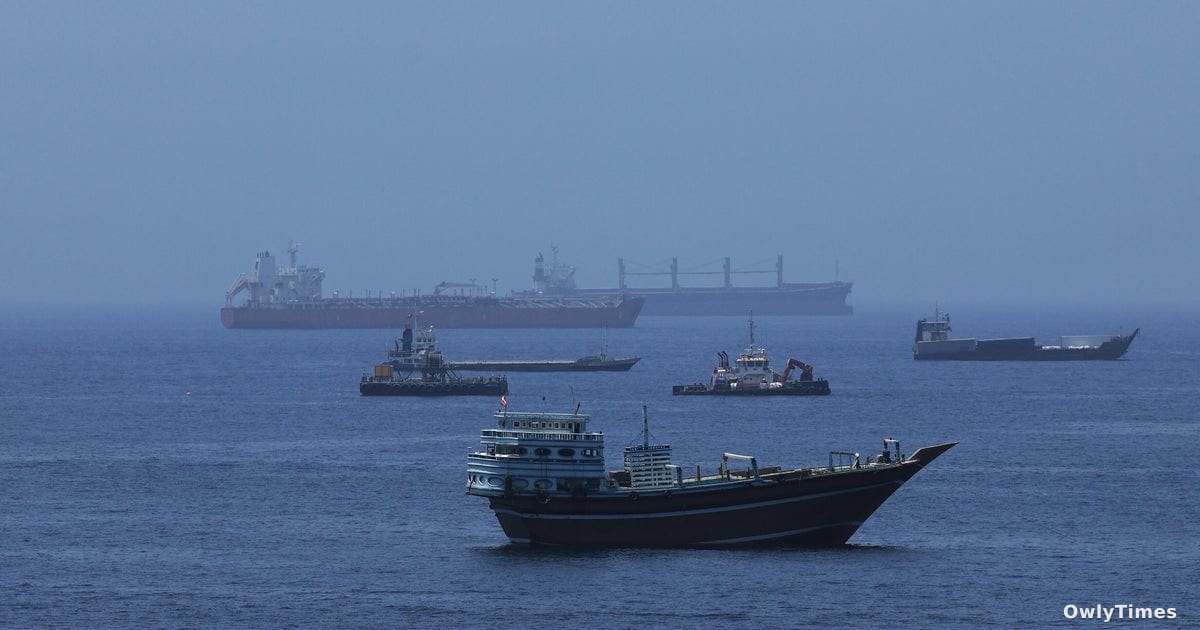
The Dow Jones Industrial Average shed 785 points on Thursday, a 1.61% decline, not because of economic weakness or disappointing earnings – Broadcom’s strong Q1 report offered a counterpoint – but because the market is now fully accounting for a geopolitical risk premium on oil. Follow the money: the 7% surge in April WTI crude futures to over $80 a barrel isn’t simply a reaction to Iran’s reported attack on a crude tanker; it’s a recalibration of expectations for sustained instability in the Middle East and the potential for a significant disruption to global energy supplies. This isn’t a fleeting panic; it’s a structural shift in market pricing.
This article draws on reporting from Business Insider.
The immediate trigger was Iran’s announcement regarding the tanker, but the underlying vulnerability has been building for weeks. The conflict in Gaza, coupled with escalating tensions between the US and Iran, has created a scenario where even a perceived escalation – and an attack on a tanker qualifies – can send shockwaves through the energy complex. While the initial fear was a temporary spike, the sustained climb in Brent crude to $84.74 suggests investors aren’t betting on a quick resolution. This contrasts sharply with previous geopolitical events; the speed with which the market priced in risk this time indicates a lower tolerance for uncertainty and a heightened awareness of potential supply chain vulnerabilities.
The core concern, repeatedly voiced by economists like Michael Saunders at Oxford Economics, is the re-emergence of 1970s-style stagflation – a toxic combination of rising prices and stagnant economic growth. The US economy, while demonstrating resilience, is still sensitive to energy price shocks. Consider this: the last time oil prices consistently exceeded $80 a barrel, in late 2022, inflation remained stubbornly high, forcing the Federal Reserve to maintain its aggressive rate-hiking cycle. The current situation is particularly precarious because the US is already grappling with elevated inflation, albeit moderating, and tepid fourth-quarter GDP growth.
The bond market is sending a clear signal. The 10-year US Treasury yield jumped by five basis points to 4.132%, a direct response to the rising oil price and the diminished expectation of near-term Fed rate cuts. Investors are now factoring in the possibility that the Federal Reserve may delay or even reverse course on easing monetary policy if inflation accelerates. This is a critical pivot. The entire equity market rally of the past six months has been predicated on the assumption of lower interest rates. A prolonged period of higher rates, fueled by energy-driven inflation, would significantly dampen corporate earnings and investor sentiment. Paul Hickey of Bespoke Investment Group succinctly captured the dynamic: “It’s simple at this point: the more crude oil rises, the bigger a headwind it will be for equities.”
Even seemingly unrelated corporate actions reveal the underlying anxiety. Berkshire Hathaway’s continued stock buybacks, coupled with a $15 million personal investment by CEO Greg Abel, are often interpreted as a sign of confidence. However, in this context, they could also be viewed as a defensive maneuver – a signal to shore up shareholder value in anticipation of market turbulence. Strategists at SocGen highlight a complex geopolitical calculus, noting that while higher oil prices benefit Iran in the short term, they are politically damaging for the US, creating incentives for de-escalation. But incentives don’t guarantee action.
What this means for your wallet: prepare for higher gasoline prices, even if the current oil spike proves temporary. More importantly, monitor the trajectory of the 10-year Treasury yield. If it breaks above 4.25%, it will signal a sustained shift in market expectations for interest rates and a significantly increased risk of a broader economic slowdown. The question isn’t if the Iran conflict will impact the US economy, but how long it will take for those impacts to materialize – and whether the Federal Reserve will have the room to maneuver when they do.