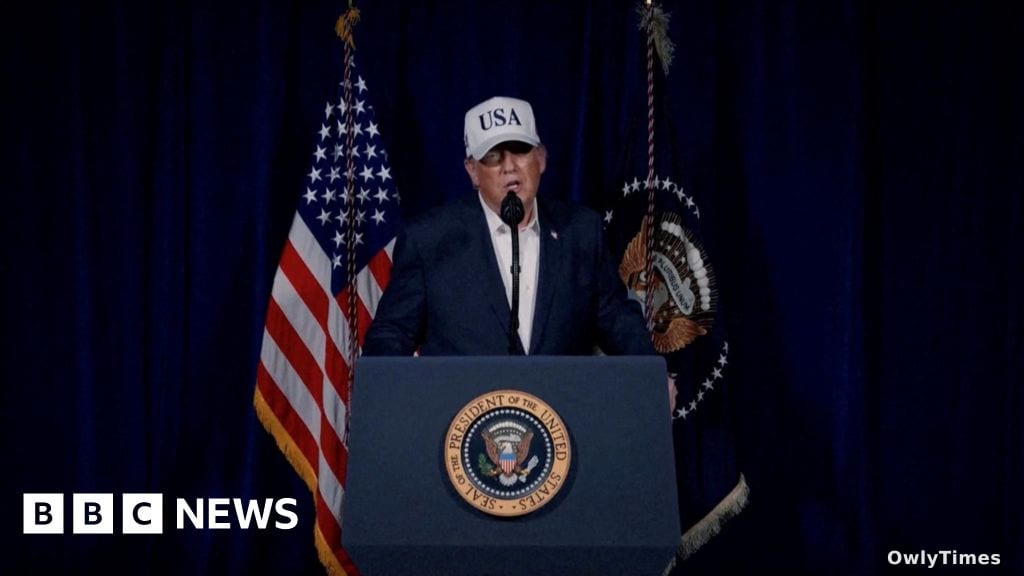

The calculated risk of direct military action against Iran, long discussed in Washington’s strategic circles, has now been taken. The strikes launched by the US and Israel – dubbed “Epic Fury” and “Lion’s Roar” respectively – weren’t a spontaneous escalation, but a culmination of years of escalating tensions and a deliberate gamble by the Trump administration to reshape the regional power balance. The timing, just two days after US-Iranian nuclear talks collapsed, wasn’t coincidental; it signaled a rejection of diplomacy and a commitment to a more forceful approach. This wasn’t simply about preventing a nuclear weapon – it was about asserting dominance and exploiting a perceived window of opportunity.
The immediate announcement of Ayatollah Ali Khamenei’s death, confirmed later by Iranian state TV, is a critical element of this strategy. Removing the symbolic and political head of the Iranian regime aims to create internal instability, potentially fueling the overthrow of the clerical rulers Trump explicitly called for. This echoes historical precedents, notably the US strategy following the death of Saddam Hussein in Iraq, though the Iranian political structure is demonstrably more resilient and deeply entrenched. The claim of 40 Iranian officials killed alongside Khamenei suggests a targeted decapitation strike, intended to paralyze the regime’s decision-making apparatus. Who benefits and who loses here is starkly defined: Israel gains a powerful ally in dismantling a regional threat, the US aims to reassert its influence, while Iran faces existential risk and the potential for widespread internal conflict.
See the original the BBC story for the full account.
The justification offered by Trump – a litany of grievances ranging from the 1979 embassy hostage crisis to Iran’s alleged development of long-range missiles – serves as a carefully constructed narrative for domestic consumption. While these historical events undoubtedly fuel anti-Iranian sentiment within certain US political circles, framing the current conflict as retribution for decades-old actions obscures the more immediate drivers: the stalled nuclear negotiations and the perceived threat of Iranian regional expansion. The June 2023 bombing of Iranian nuclear facilities, framed as a success that paved the way for a ceasefire, reveals a pattern of escalating pressure tactics. This isn’t a new policy, but an intensification of one that has been building for years. The fact that last summer’s attacks did lead to a ceasefire, however temporary, likely emboldened the Trump administration to believe a more decisive strike could achieve a lasting shift in the balance of power.
The constitutional ambiguity surrounding the president’s authority to wage war without a congressional declaration is a central tension in this unfolding crisis. While Trump is operating within the broad powers granted to the executive branch, the fierce opposition from Democrats, exemplified by Senator Tim Kaine’s denunciation of an “illegal war,” highlights the potential for a constitutional showdown. The failure of previous war powers resolutions suggests a deeply polarized Congress unlikely to restrain the president, but the renewed calls for such measures demonstrate the growing unease within the Democratic party. The partisan divide is predictable – Republicans, particularly those like Senator Lindsey Graham, have long advocated for a more aggressive stance towards Iran. This dynamic mirrors the Vietnam War era, where presidential authority was increasingly challenged amidst growing public dissent and congressional opposition.
The deployment of US military assets – two aircraft carriers and a significant air presence – signals a commitment to sustained operations, but the lack of indication of “boots on the ground” suggests a preference for air power. This is likely driven by a combination of strategic considerations and domestic political realities. The American public has a low appetite for another large-scale ground war in the Middle East, and Trump is acutely aware of this. The reported damage to Khamenei’s office, confirmed by satellite imagery, underscores the precision of the strikes, but also the potential for unintended consequences. The retaliatory attacks launched by Iran throughout the Middle East, and the reported casualties in Iran, Bahrain, Kuwait, Qatar, and even Tel Aviv, demonstrate the escalating nature of the conflict. The reported 200+ deaths in Iran and 700+ injuries, coupled with the attack on a school resulting in 108 deaths, will undoubtedly fuel further escalation.
The question now isn’t if the conflict will escalate, but how. Will Trump follow through on his warning of continued bombing throughout the week? More importantly, will Iran’s response be limited to regional proxies and missile strikes, or will it attempt a more direct attack on US assets or allies? The political chess move to watch is whether the Iranian regime can successfully navigate this internal crisis – the death of Khamenei and the widespread damage from the strikes – without fracturing into competing factions. A fragmented Iran, embroiled in internal power struggles, would be far more vulnerable to external pressure, but also potentially more unpredictable and dangerous.





