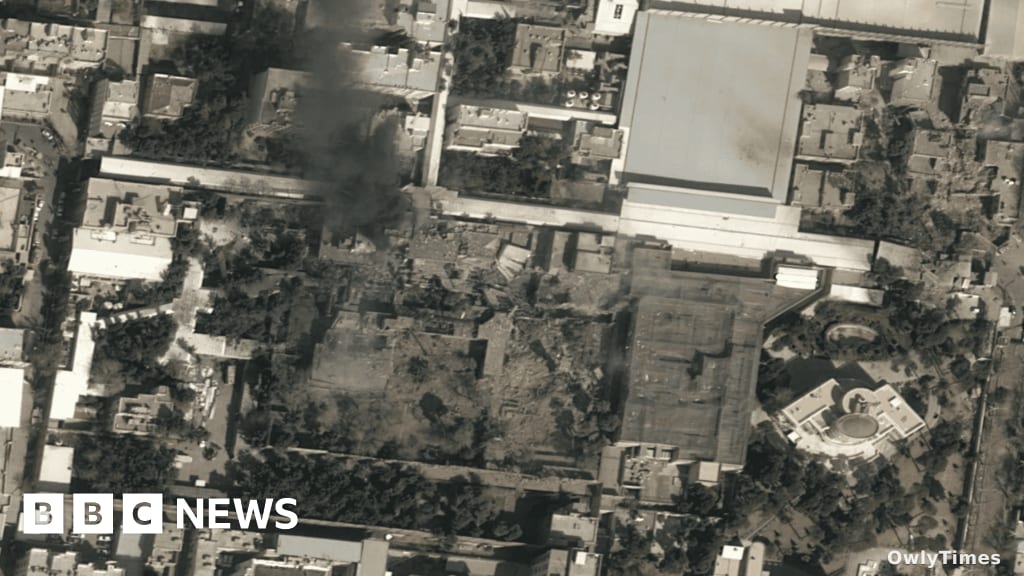

The calculated risk of direct confrontation, long simmering beneath the surface of US-Iran relations, has now exploded into open conflict. The strikes launched by the US and Israel against Iranian infrastructure and leadership weren’t simply a response to escalating tensions – they were a strategic gamble predicated on the belief that a decisive show of force could shatter the regime’s confidence and potentially trigger internal upheaval, as explicitly called for by Donald Trump. This isn’t a spontaneous escalation; it’s the culmination of weeks of threats and a deliberate attempt to exploit vulnerabilities within the Iranian system, betting that the cost of retaliation would be manageable.
The immediate fallout is a widening regional conflict. Iran’s response, encompassing missile and drone attacks targeting Israel, Bahrain, Kuwait, Qatar, the United Arab Emirates, Jordan, Saudi Arabia, Cyprus, and shipping in the Strait of Hormuz, demonstrates a willingness to project force across multiple fronts. The involvement of Hezbollah, launching rockets from Lebanon, signals a dangerous escalation, transforming a direct US-Iran conflict into a multi-proxy war with the potential to draw in additional actors. Who benefits and who loses is starkly defined: Israel and the US aim to secure regional dominance and dismantle Iran’s nuclear ambitions, while Iran seeks to deter further attacks and maintain its regional influence. The populations of every nation in the crosshairs, however, are the immediate losers, facing the threat of escalating violence and economic disruption.
Drawn from the BBC.
This situation bears a chilling resemblance to the lead-up to the 2003 invasion of Iraq. Then, as now, the stated justification – eliminating weapons of mass destruction – was coupled with a broader strategic goal of reshaping the Middle East. The Bush administration, like the current Trump administration, underestimated the resilience of the targeted regime and overestimated the likelihood of a swift, decisive victory. The ensuing chaos in Iraq, and the rise of ISIS, serve as a cautionary tale. The current operation, dubbed “Operation Epic Fury,” risks a similar outcome: destabilizing the region, empowering extremist groups, and potentially creating a power vacuum that could be exploited by other actors. The claim by Trump that nine Iranian naval ships were sunk and its naval headquarters destroyed, while intended to project strength, echoes the often-exaggerated claims of battlefield successes that characterized the Iraq War narrative.
The economic consequences are already being felt. The 10% surge in global oil prices, coupled with a 25% spike in natural gas prices, underscores the region’s critical role in global energy markets. Iran’s warning to vessels regarding the Strait of Hormuz, through which approximately 20% of the world’s oil and gas is shipped, adds another layer of instability. The partial shutdown of the Ras Tanura refinery in Saudi Arabia and the halting of liquefied natural gas production in Qatar demonstrate the immediate impact on energy supplies. This isn’t merely a regional crisis; it’s a global economic shock, with potential ramifications for petrol prices and broader economic stability. The disruption to air travel, with thousands of flights grounded, further illustrates the cascading effects of the conflict.
The death toll, currently reported at 555 by the Iranian Red Crescent across 130 locations, and the reported deaths of over 150, including children, in a strike on a school in southern Iran, highlight the human cost of this conflict. While Iranian officials are likely to inflate casualty figures for propaganda purposes, the scale of the violence is undeniable. The US military has already confirmed four deaths of its own personnel, and the incident of three American jets being shot down over Kuwait – initially reported as friendly fire – underscores the inherent risks of operating in a contested airspace. The formation of a transitional leadership council in Iran, consisting of President Masoud Pezeshkian, judiciary chief Gholamhossein Mohseni Ejei, and senior cleric Alireza Arafi, suggests a degree of internal cohesion, but the process of selecting a new Supreme Leader, entrusted to the 88-member Assembly of Experts, will be fraught with challenges given the ongoing attacks.
The political chess move to watch next isn’t whether further strikes will occur – they almost certainly will. It’s the reaction of regional powers, particularly Saudi Arabia and the UAE, to Iran’s attacks on their infrastructure. Will they be drawn into a more direct confrontation, or will they prioritize de-escalation and seek a diplomatic solution? Their response will determine whether this conflict remains contained or spirals into a full-scale regional war. The question isn’t if the situation will worsen, but how and where the next escalation will occur, and whether the calculated gamble of the US and Israel will yield strategic advantage or regional catastrophe.




