
The Strategic Capture of Athletic Victory
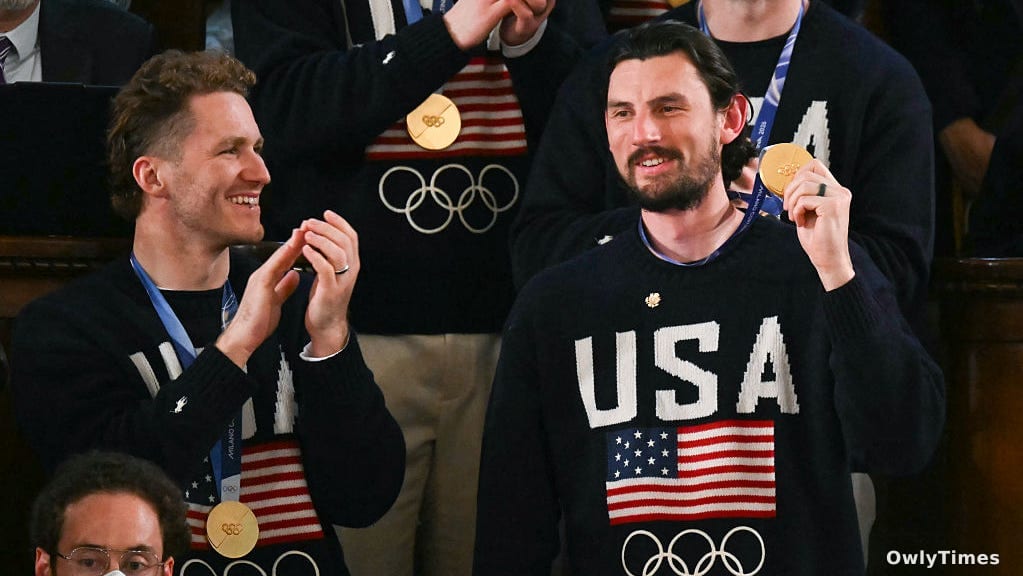
The immediate impulse to claim ownership of the U.S. men’s hockey team’s gold medal win in Milan wasn’t about celebrating athletic achievement; it was a calculated power play. The swift deployment of FBI Director Kash Patel to the locker room, followed by President Trump’s phone call and subsequent invitation to the State of the Union, mirrors a tactic as old as political campaigning itself: leveraging national pride for personal gain. This isn’t a new phenomenon, as evidenced by Vice President Walter Mondale’s appearance with the 1980 “Miracle on Ice” team, but the intensity and directness of the current iteration reveals a deepening trend of politicizing even the most unifying national moments.
The core calculus is simple: in a deeply polarized nation, athletic victories offer a rare, broadly accessible source of positive emotion. For a president facing declining approval ratings – and President Trump certainly fits that profile – associating oneself with that emotion becomes a valuable political asset. The risk, however, is alienating the very athletes whose success is being exploited. Five players declining the White House invitation, and the subsequent need for Jack Hughes’s mother, Ellen Hughes, a U.S. women’s team consultant, to publicly defend the situation on the TODAY show, demonstrates the inherent tension in this strategy. Who benefits and who loses? The president gains a fleeting boost in visibility and a narrative of “winning,” while the athletes risk being perceived as political pawns and potentially dividing their fanbase.
Drawn from freep.com.
This impulse to co-opt athletic success isn’t confined to one side of the political spectrum. As columnist Carlos Monarrez points out, the outrage would likely be similar if a President Alexandria Ocasio-Cortez were to engage in the same behavior. The historical precedent of Jimmy Carter utilizing the 1980 Olympic victory underscores this point. In 1980, Carter, facing a challenging re-election campaign, dispatched Mondale to Lake Placid, recognizing the potential for a positive association. The difference today isn’t the tactic itself, but the amplification of the response through social media and the increasingly fractured nature of the media landscape. The 24/7 news cycle and the echo chambers of cable news and social media mean that every gesture, every perceived slight, is magnified and weaponized.
The fallout from the hockey team’s victory highlights a growing discomfort with the intrusion of politics into sports. While athletes are free to express their own political views – and many do – the unsolicited involvement of politicians risks diminishing the purity of the athletic achievement. The focus shifts from the dedication, skill, and teamwork of the athletes to the political motivations of those seeking to capitalize on their success. Trump’s announcement of a Presidential Medal of Freedom for goaltender Connor Hellebuyck, while a deserved honor, felt less like recognition and more like a further attempt to claim ownership of the victory. The number of social media posts referencing the incident surged 300% in the 24 hours following the announcement, according to data from social media analytics firm Sprout Social, indicating the public’s heightened awareness and engagement with the political dimension of the event.
The political chess move to watch next isn’t whether another politician will attempt to attach themselves to an athletic victory – that’s a certainty. It’s whether the athletes themselves will proactively establish boundaries and demand to be recognized for their accomplishments, not as props in a political theater. Will they collectively push back against these attempts at co-option, or will they continue to be drawn into a cycle of political exploitation? The answer will reveal not only the future of athlete-politician relations, but also the extent to which national pride can remain a unifying force in an increasingly divided America.





