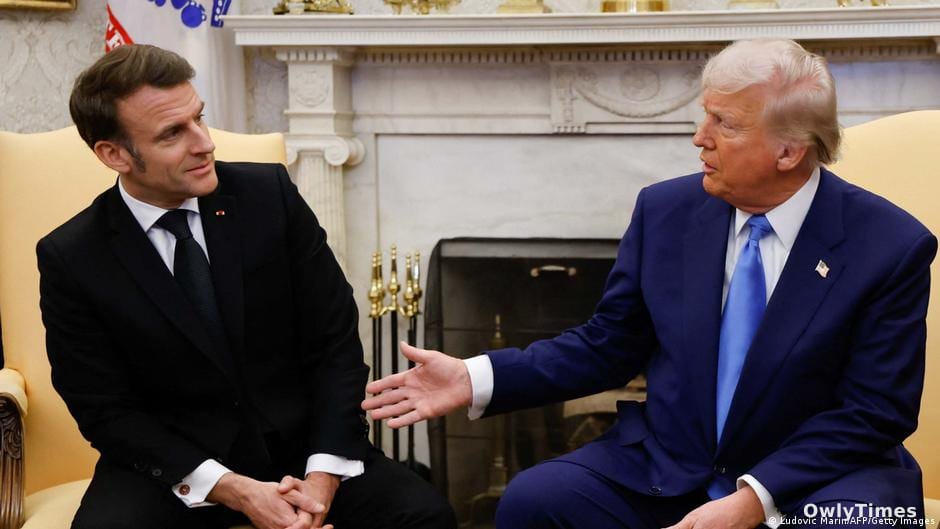

The calculus is straightforward: Donald Trump’s administration isn’t merely observing the European political landscape, it’s actively attempting to reshape it. The December 2025 US National Security Strategy (NSS) wasn’t a neutral assessment of global threats; it was a declaration of strategic preference, explicitly framing migration policies as a threat to “civilizational erasure” and signaling “great optimism” regarding the rise of “patriotic European parties.” This isn’t about shared values, it’s about leveraging political alignment to weaken a geopolitical competitor – a European Union capable of independent action. The recent revelations regarding US State Department officials actively seeking information on the legal case against Marine Le Pen are not an anomaly, but a manifestation of this broader strategy.
The story broke with Magali Lafourcade, secretary general of France’s human rights commission (CNCDH), publicly detailing a meeting with Samuel D. Samson and Christopher Anderson of the US State Department in April 2025. Lafourcade, who has no involvement in the Le Pen trial, alerted the French Foreign Ministry to what she perceived as foreign interference. The core of the US officials’ inquiry wasn’t about due process or legal fairness, but about the political implications of a potential conviction barring Le Pen from the 2027 presidential elections. This wasn’t a friendly inquiry; it was a pressure campaign, framed as concern for “freedom of expression” – a rhetorical tactic Lafourcade pointedly identified as mirroring the language of the MAGA movement to undermine established human rights norms.
Who benefits and who loses here is starkly defined. The US, under Trump, benefits from a fractured and internally focused Europe, less capable of challenging American economic or political dominance. Marine Le Pen’s Rassemblement National (RN) – currently leading in polls for the 2027 election – stands to gain from any perception of political persecution, fueled by external validation of their claims. France, and the broader EU project, lose credibility and stability when a major power openly attempts to influence its democratic processes. The French government, recognizing this, has responded with a new strategy against foreign interference, launching the ironically-named “French Response” X account to counter disinformation. The timing of this strategy – one week after Trump’s inauguration in January 2025 – is no coincidence.
This piece references the dw.com report.
This isn’t a new playbook. The historical parallel to Soviet-era “active measures” is unsettlingly clear. Like the KGB of old, the Trump administration is employing a combination of disinformation, political support for aligned actors, and direct pressure on legal and political institutions to achieve its objectives. The difference is the veneer of democratic legitimacy – the US isn’t openly calling for the overthrow of the French government, but subtly working to undermine its institutions and elevate forces aligned with its interests. The dismissal of the French Foreign Ministry’s summons by the US ambassador following comments on a far-right activist’s death underscores the level of disregard for traditional diplomatic norms.
The French response, while assertive, is playing catch-up. As David Colon, a history professor at Sciences Po Paris, notes, France is arguably Europe’s best-equipped nation to defend against information warfare, having learned lessons from the 2017 “Macron leaks.” However, the scale of the challenge is immense. Colon frames Europe as caught between two superpowers, with the US now exhibiting the same destabilizing goals as Russia – weakening the EU and potentially withdrawing from NATO. This assessment is echoed by Tara Varma of the German Marshall Fund, who describes the MAGA movement’s “love” for Europe as “toxic,” a desire for subordination rather than partnership.
The narrative pushed by figures like Nicolas Conquer of Republicans Overseas France – dismissing concerns as “slander” and framing US involvement as legitimate support for shared interests – is a predictable deflection. It’s a convenient justification for interference, cloaked in the language of transatlantic alliance. But the French Foreign Ministry’s blunt assessment – “We respond to anyone who attacks us — whether from the East or the West” – reveals the underlying tension. The US is no longer viewed as an unquestioning ally, but as a potential adversary in a new kind of cold war.
The political chess move to watch next isn’t the outcome of Le Pen’s appeal in July, though that remains significant. It’s whether the French government will successfully build a broader European coalition to counter US interference. Will other EU nations recognize the pattern of behavior and coordinate a unified response? Or will Europe remain fragmented, vulnerable to manipulation and ultimately, subordination? The answer to that question will determine not just the future of France, but the future of the European Union itself.