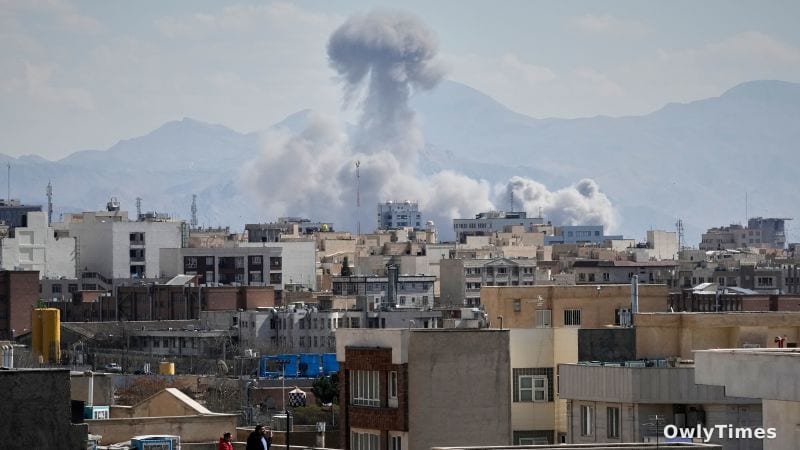

The calculated gamble to eliminate Ayatollah Ali Khamenei wasn’t about preventing an imminent Iranian nuclear capability – a claim undercut by internal Pentagon assessments – but about fundamentally reshaping the regional power balance and testing the limits of Iranian retaliation. The strikes, jointly executed by the US and Israel, weren’t a response to a perceived threat so much as a pre-emptive move to exploit existing internal pressures within Iran, namely the economic crisis and widespread protests earlier this year. This isn’t a war to prevent something happening; it’s a war to make something happen – specifically, a shift in Iranian leadership and, potentially, regime orientation.
The immediate fallout reveals a clear delineation of winners and losers. President Donald Trump gains a narrative of decisive action, fulfilling a campaign promise and potentially bolstering domestic support. Prime Minister Benjamin Netanyahu secures a perceived victory against a long-standing adversary, potentially stabilizing his own precarious political position. Gulf states, despite experiencing direct attacks – including the alarming friendly fire incident in Kuwait where three US jets were shot down, ejecting all six aircrew – benefit from the removal of a key regional antagonist, even if the short-term security risks are dramatically increased. Conversely, Iran, stripped of its Supreme Leader and reeling from 555 confirmed deaths including 168 at a girls’ elementary school, is demonstrably weakened. The broader global economy, facing surging oil and gas prices – Brent crude spiking almost 9% to $79 a barrel – and disrupted trade routes through the Strait of Hormuz, is a significant loser. And, critically, the thousands of travelers stranded as airspace closes represent a human cost often overlooked in strategic calculations.
This escalation echoes the 1953 Iranian coup d'état, orchestrated by the CIA and MI6 to overthrow Prime Minister Mohammad Mosaddegh and restore the Shah to power. Like the current situation, the coup was framed as a defense against perceived communist influence, but the underlying motivation was control of Iranian oil reserves. Both interventions demonstrate a willingness by external powers to destabilize Iran to secure their own economic and strategic interests. However, the 1953 coup involved a more covert operation; the current strikes are brazenly direct, signaling a shift towards a more assertive – and riskier – approach. The key difference is the scale of potential retaliation. Mosaddegh lacked the missile capabilities Iran possesses today, making the current situation exponentially more dangerous.
This piece references the CNN report.
The Pentagon’s admission that Tehran wasn’t planning attacks on US forces unless Israel acted first is a critical detail. It exposes a deliberate provocation, a manufactured justification for intervention. Chairman of the Joint Chiefs of Staff Gen. Dan Caine’s statement that this is “not a single, overnight operation” and that more US losses should be expected isn’t a prediction of inevitable conflict; it’s a calculated attempt to prepare the American public for a protracted engagement. US Defense Secretary Pete Hegseth’s insistence that this isn’t “regime change” rings hollow given the assassination of Khamenei and the subsequent power vacuum. The stated goal of “destroying the missile threat, destroy the Navy, no nukes” is a convenient cover for a broader objective: dismantling Iran’s regional influence.
The formation of a three-person leadership council in Iran – comprised of President Masoud Pezeshkian, Gholamhossein Mohseni Ejei, and Alireza Arafi – is a temporary fix masking a deeper power struggle. The uncertainty surrounding the selection of Khamenei’s successor, compounded by the deaths of senior military officials, creates an opportunity for internal factions to vie for control. This instability, while potentially beneficial to US and Israeli interests in the short term, also increases the risk of miscalculation and escalation. The retaliatory missile strikes targeting Israel and Gulf states, while largely intercepted, demonstrate Iran’s continued capacity to project power despite its leadership crisis. The attacks on Bahrain and the fires at a luxury hotel in Dubai highlight the vulnerability of US-allied nations and the erosion of regional security.
The surge in oil and gas prices, coupled with disruptions to global trade, underscores the economic consequences of the conflict. The potential closure of the Strait of Hormuz, through which a significant portion of the world’s oil supply passes, would trigger a global recession. The fact that vessels are already avoiding the waterway, even without an official closure, is a harbinger of things to come. The stranded travelers and cancelled flights are a visible manifestation of the broader disruption, impacting not just the region but the global travel industry. This economic fallout will inevitably create pressure on governments to de-escalate, but the current trajectory suggests a willingness to accept these costs in pursuit of strategic objectives.
The political chess move to watch next isn’t whether Iran will retaliate further – that’s already happening. It’s whether the US will leverage the internal power struggle within Iran to cultivate a more pliable leadership, or whether it will continue down the path of military escalation. Specifically, will President Trump pursue the scenario he outlined to the New York Times – a Venezuelan-style regime change – or will he adhere to Secretary Hegseth’s claim of avoiding a nation-building quagmire? The answer to that question will determine whether this conflict spirals into a full-scale regional war or settles into a new, precarious equilibrium.





