
The intersection of high-level scientific expertise and personal tragedy has recently shifted from private grief to the center of a federal investigation. At the heart of this scrutiny is a question of statistical probability versus systemic risk: Do the deaths and disappearances of at least 10 individuals connected to sensitive United States nuclear and aerospace research represent a pattern of targeted interference, or are they a collection of disparate, tragic events occurring within a large, high-stress professional demographic?
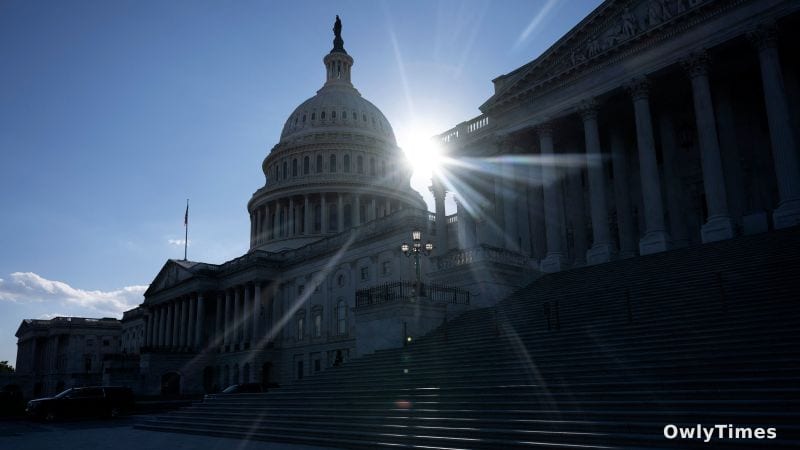
The House Oversight Committee has announced a formal investigation into these cases, citing concerns over a "possible sinister connection." This move by lawmakers elevates the discourse from online speculation to a legislative priority. However, the scientific and professional reality is far more fragmented. The individuals involved—ranging from retired military leadership like William Neil McCasland to academic physicists like Nuno F.G. Loureiro—held roles with vastly different security profiles and life circumstances.
The Methodology of Investigation
What the headlines characterize as a singular "string of events" actually encompasses a wide spectrum of police reports, ranging from unsolved homicides to missing persons cases where no foul play is suspected. The FBI, currently spearheading the effort to find potential links, is working alongside the Department of Energy, the Department of War, and local law enforcement.
Their task is to analyze whether these individuals shared a common denominator beyond their professional affiliations. For instance, the case of Monica Reza, an aerospace engineer who vanished in June 2025, remains an active investigation, while the family of Michael David Hicks, who passed away in 2023, has publicly attributed his death to preexisting medical conditions. The discrepancy between these circumstances suggests that investigators are currently in the data-gathering phase, attempting to reconcile disparate case files under a unified intelligence framework.
Limitations to Consider
It is critical to balance the political urgency of this probe with the demographic reality of the workforce. As James Walkinshaw, a Democrat on the Oversight Committee, noted, the U.S. employs thousands of nuclear scientists and experts. Statistically, a cohort of this size will inevitably experience mortality and disappearances due to natural causes, health struggles, or personal crises.
Furthermore, the "clumping" of these events in public perception may be a result of confirmation bias, where high-profile deaths in specialized fields draw more scrutiny than they would in other sectors. When a retired general like McCasland goes missing, the lack of a clear explanation naturally invites intense speculation—some of which has even touched upon long-debunked rumors regarding the Roswell incident—yet law enforcement has yet to produce evidence linking his disappearance to his former work at Wright-Patterson Air Force Base.
The Path Forward
The political response is accelerating, with President Donald Trump describing the matter as "pretty serious stuff" and FBI Director Kash Patel pledging to investigate any potential ties to foreign actors or classified information.
The immediate future of this inquiry depends on the federal review currently being coordinated by the White House. The next reading of the official federal findings—specifically regarding whether a common thread can be established between these disparate cases—will indicate whether this investigation shifts from a broad administrative review to a targeted counterintelligence operation. As these agencies synthesize their data, the focus remains on distinguishing between the noise of coincidence and the signal of a genuine national security threat.