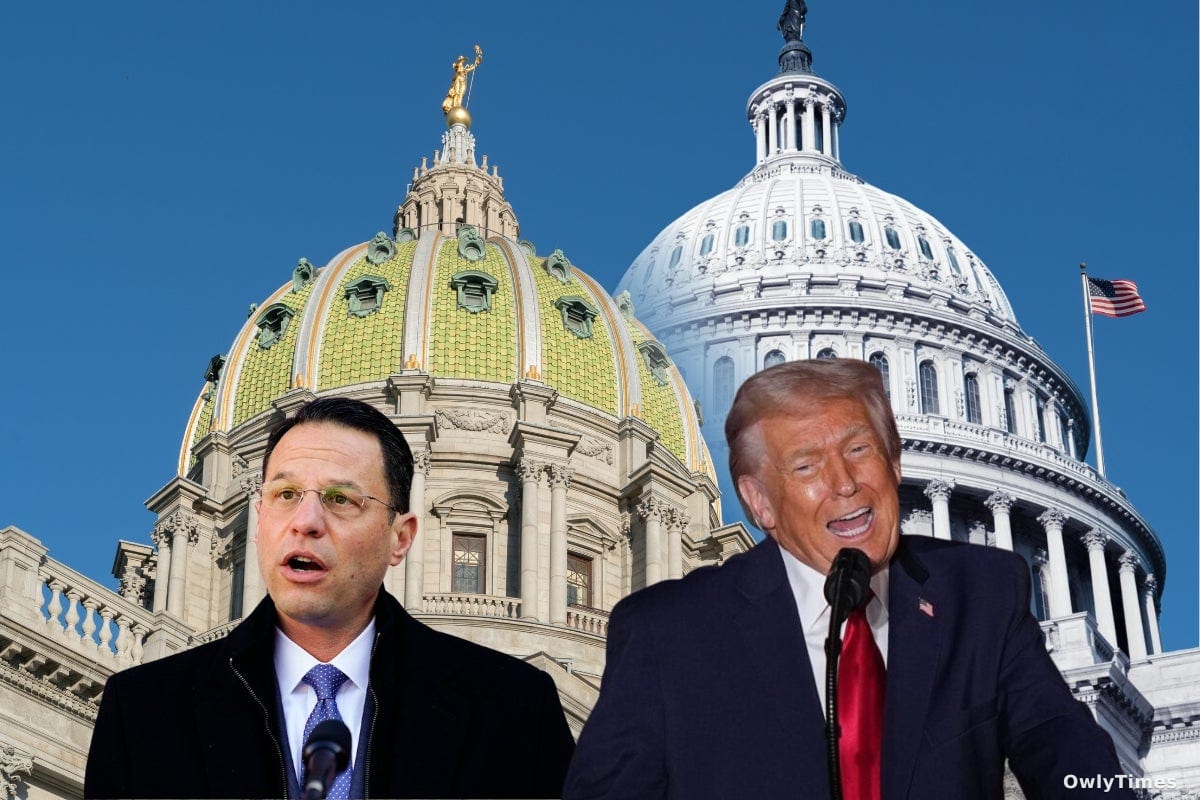

The Shutdown as Symptom: Weaponizing Homeland Security
The partial government shutdown isn’t simply a failure to agree on a budget; it’s a deliberate escalation of the ongoing war over the operational capacity of the United States Department of Homeland Security. The impasse, centered on funding and, crucially, restrictions on Donald Trump-era immigration enforcement tactics – including the controversial use of masked agents and expansive warrant authority – reveals a strategic calculation: to force a confrontation over the very definition of border security. This isn’t about numbers on a spreadsheet; it’s about establishing which vision of federal power will prevail. The Republican strategy, as evidenced by the hardline stance, is to portray any compromise as a surrender on border control, effectively daring Democrats to be seen as soft on immigration ahead of the 2024 elections.
Based on the original whyy.org report.
Philadelphia’s ICE Resistance and the Limits of Sanctuary
The local pushback against U.S. Immigration and Customs Enforcement (ICE) in Philadelphia, embodied by the seven bills introduced to City Council, isn’t an isolated event. It’s a coordinated effort to test the boundaries of “sanctuary city” policies and to directly challenge federal overreach into local governance. Governor Josh Shapiro’s opposition to planned ICE detention centers in Pennsylvania adds another layer to this resistance, signaling a willingness to leverage executive authority against federal immigration policies. This echoes the historical tension between states’ rights and federal power, a conflict dating back to the Nullification Crisis of the 1830s. However, the legal efficacy of these local measures remains uncertain, and the ultimate outcome will likely hinge on court challenges – a calculated risk by Philadelphia officials to raise the political cost of ICE enforcement. Who benefits? Progressive activists and local politicians seeking to demonstrate their commitment to immigrant rights. Who loses? ICE, facing increased operational hurdles, and potentially, the Biden administration, which may be forced to expend political capital defending its immigration policies in court.
The SAVE America Act: Beyond Voter ID
The Republican push for the SAVE America Act, requiring voter ID and proof of citizenship, is presented as an election integrity measure. However, the timing and specific provisions suggest a more strategic intent: voter suppression. While proponents frame it as preventing fraud, studies consistently demonstrate that in-person voter fraud is exceedingly rare. The real impact of such legislation, as history demonstrates – from poll taxes in the Jim Crow South to literacy tests – is to disproportionately disenfranchise minority voters, low-income individuals, and students. The act’s focus on proof of citizenship is particularly noteworthy, as it introduces a new barrier to voting for naturalized citizens, a demographic that often leans Democratic. Terry Tracy’s perspective, as founder of Broad + Liberty, likely aligns with the argument that these measures are necessary to ensure fair elections, while Solomon Jones of the Philadelphia Inquirer would likely counter that the act is a thinly veiled attempt to restrict voting access. The act’s passage, or even a sustained push for it, forces Democrats to expend resources defending voting rights, diverting attention from other policy priorities.
Pennsylvania’s Political Landscape: A Tri-Level Contest
The upcoming elections in Pennsylvania – the gubernatorial race between Josh Shapiro and state treasurer Stacy Garrity, and the crowded primary for the 3rd Congressional District seat being vacated by Dwight Evans – are not occurring in a vacuum. They are inextricably linked to the national political currents, particularly the ongoing debate over immigration and election integrity. The sheer number of candidates vying for the 3rd District seat – thirteen in total – indicates a fractured field and a lack of clear frontrunners, creating an opportunity for a candidate to emerge with a strong message on either side of the ideological spectrum. Shapiro’s position on ICE, and his willingness to challenge federal authority, will be a key factor in the gubernatorial race, potentially appealing to moderate voters while galvanizing the Democratic base. Garrity, meanwhile, will likely attempt to tie Shapiro to the Biden administration’s immigration policies, framing him as weak on border security. The outcome of these races will serve as a bellwether for the broader political mood in Pennsylvania, a crucial swing state.
The Next Move: Federalizing Election Oversight?
The escalating tensions over election integrity, coupled with the ongoing shutdown and ICE-related conflicts, point to a potential next move by Republicans: a push for federal oversight of elections. While historically resisted as an infringement on states’ rights, the narrative of widespread voter fraud – consistently amplified by Donald Trump and his allies – could be used to justify federal intervention. This would likely take the form of legislation aimed at establishing national standards for voter registration, identification, and ballot counting. The political chess move to watch isn’t whether the shutdown ends, but whether Republicans will leverage the current climate of distrust to fundamentally alter the structure of American elections, shifting power away from the states and towards the federal government.





