
The Calculus of Unilateral Action: Decoding the Launch of War with Iran
The initiation of open-ended hostilities against Iran this past Saturday wasn’t a spontaneous escalation, but the culmination of a strategic shift – a normalization of unilateral presidential war powers unconstrained by traditional justifications or congressional oversight. President Trump’s decision, following weeks of a massive military buildup – an estimated 40 to 50 percent of the US’s deployable air fleet repositioned in the region – wasn’t about a sudden threat, but about demonstrating the capacity to act without needing to articulate a coherent rationale. This isn’t a war born of necessity, but of asserted prerogative.
This article draws on reporting from vox.com.
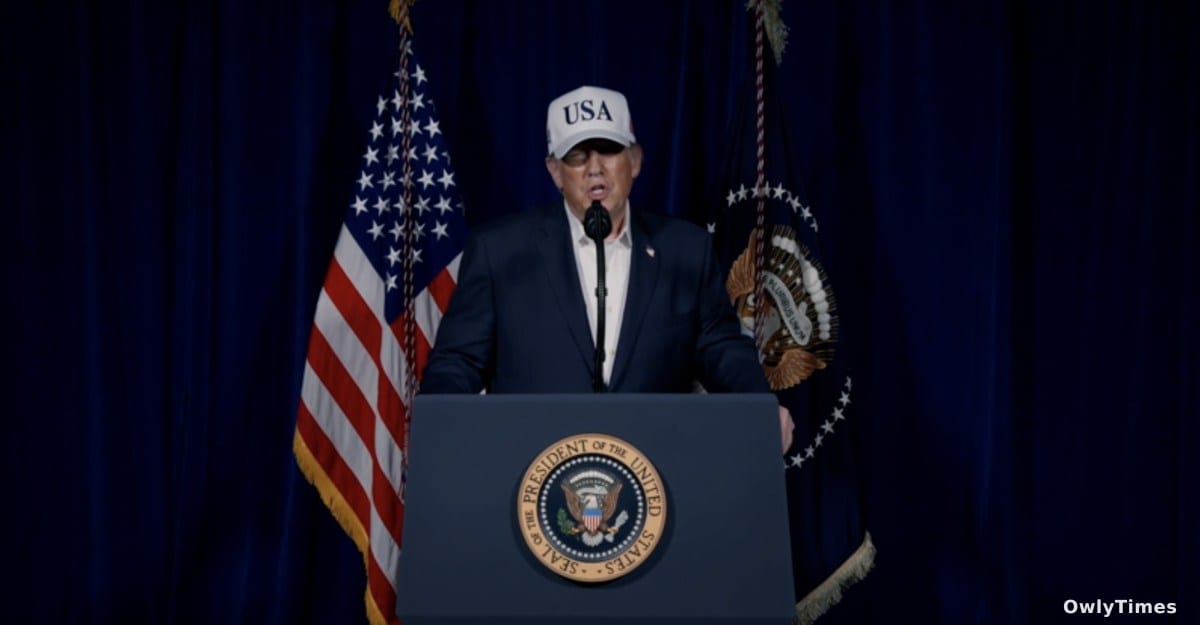
The eight-minute address delivered by President Trump after the commencement of military operations laid bare the core dynamic: a laundry list of grievances – Iran’s “anti-Americanism,” support for “terrorist groups,” and nuclear program – presented as justification for a “massive and ongoing operation” to prevent Iran from “threatening America.” The ambiguity is deliberate. Unlike previous targeted interventions, this operation lacks a singular, defined objective. Is the goal to dismantle Iran’s missile industry and navy, as initially suggested? Or is it, as Trump later proclaimed, regime change – inviting “the great, proud people of Iran” to “take over your government”? This contradiction reveals a fundamental tension: crippling military capabilities doesn’t necessitate popular uprising, and a successful regime change would almost certainly require a ground invasion far beyond the scope of initial rhetoric. Who benefits and who loses from this ambiguity? The President benefits from maximum flexibility, unburdened by the constraints of a clearly defined mission. Iran loses clarity on how to de-escalate, and the global community loses the assurance of a calculated, rather than impulsive, strategy.
This erosion of procedural safeguards isn’t new, but its acceleration under Trump represents a critical departure. The post-9/11 expansion of presidential authority, begun under George W. Bush and incrementally reinforced by Barack Obama and Joe Biden, has steadily diminished Congress’s role in authorizing military action. However, even those administrations felt compelled to publicly justify their actions, citing perceived threats and legal frameworks. Trump has dispensed with even this pretense. As Jack Reed, the ranking Democrat on the Senate Armed Services Committee, noted just prior to the launch, the administration hadn’t articulated “a very clear-cut objective” for the military buildup. This isn’t simply a lack of transparency; it’s a rejection of accountability. The $886 billion defense budget approved for 2024, a 13% increase over the previous year, provides the financial capacity for such expansive action, but offers no corresponding demand for strategic clarity.
The closest historical parallel isn’t a previous American war, but the 2022 Russian invasion of Ukraine. Before that conflict, many observers dismissed the possibility of a full-scale invasion, arguing it served no rational Russian interest. The explanation, as events unfolded, was that Vladimir Putin, operating within an autocratic system, had become detached from reality, driven by idiosyncratic grievances and insulated from dissenting voices. Hussein Banai, an expert on US-Iran relations at the University of Indiana-Bloomington, frames the current situation similarly, describing the war as “a chaotic lashing out of an aimless administration that doesn’t know or care what it wants for Iran.” The key takeaway from the Ukraine analogy is not the geopolitical similarities, but the systemic danger of unchecked executive power. The absence of internal checks and balances, combined with a willingness to disregard established norms, creates a volatile environment where impulsive decisions can have catastrophic consequences.
The political chess move to watch next isn’t on the battlefield, but in Congress. Will lawmakers attempt to reassert their constitutional authority over war powers, or will they continue to acquiesce to the executive branch’s unilateral actions? Specifically, will any member of Congress introduce, and aggressively pursue, a resolution demanding a clear articulation of war aims and a defined exit strategy? The answer to that question will determine whether this war becomes a contained, albeit dangerous, operation, or a descent into a prolonged and unpredictable conflict.





