
The Calculus of Exposure: Why Kuwait Became the Initial Flashpoint
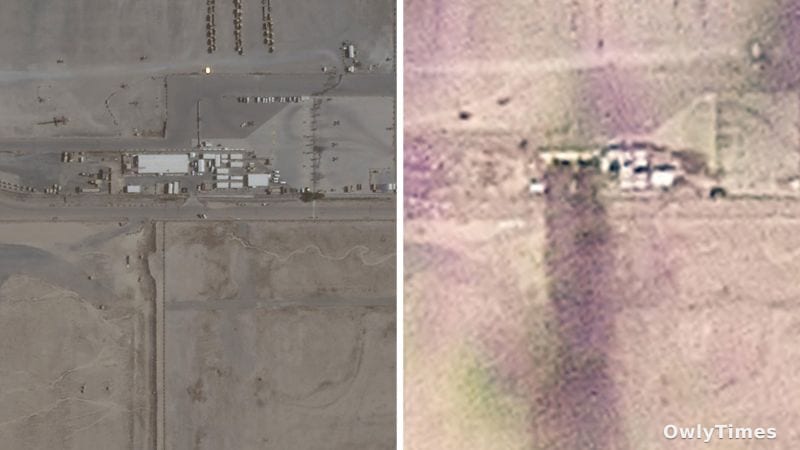
The initial casualties of Operation Epic Fury weren’t the result of a miscalculation, but a deliberate acceptance of risk. The Iranian strike that killed six US service members at the Shuaiba port in Kuwait wasn’t simply a successful penetration of US defenses; it was a direct consequence of deploying forces to a minimally fortified, civilian infrastructure hub. This wasn’t a strategic necessity, but a calculated gamble by the Trump administration to project strength and responsiveness – a gamble that immediately cost lives and now forces a reassessment of the operation’s cost-benefit analysis. The choice to operate from a “triple-wide trailer with office space inside,” as described by a source familiar with the situation, speaks volumes about the prioritization of speed of deployment over force protection.
This article draws on reporting from CNN.
A Vulnerable Hub: Who Benefits and Who Loses?
The selection of Shuaiba port as a key operational node immediately raises questions about the stakeholders involved. Kuwait, a long-standing US ally, offered access to a critical logistical artery, but at the cost of exposing its civilian infrastructure to retaliatory strikes. While the port facilitates the rapid influx of personnel and materiel for Operation Epic Fury, it simultaneously transforms into a high-value target. Defense Secretary Pete Hegseth’s acknowledgement that “one” projectile breached air defenses, despite the “tactical operation center” being “fortified,” underscores the inherent vulnerability of the location. Who benefits from this arrangement? Primarily, the administration gains the political capital of a swift response, demonstrating resolve to domestic audiences. Who loses? The service members themselves, Kuwait’s security posture, and potentially, the long-term stability of the region. The 18 troops seriously wounded alongside the six killed further illustrate the human cost of this strategic decision.
Echoes of Past Deployments: The Gulf War Parallel
The situation at Shuaiba port bears a striking resemblance to the early stages of Operation Desert Shield in 1990. Then, as now, the US rapidly deployed forces to the Arabian Peninsula, relying heavily on existing infrastructure in allied nations. The initial deployments were characterized by a similar lack of hardened facilities, prioritizing speed over security. While the scale of the current operation is significantly smaller than the build-up to the Gulf War, the underlying dynamic remains the same: a willingness to accept increased risk in exchange for rapid operational tempo. However, unlike 1990, the adversary – Iran – possesses asymmetric capabilities, including precision-guided munitions and drone technology, making a direct hit on a vulnerable target far more likely. The fact that the strike occurred “just after 9 a.m.” local time, with “no warning or sirens,” suggests a level of sophistication and intelligence gathering on the part of Iranian forces.
Beyond Condolences: The Political Weight of Casualties
Chairman of the Joint Chiefs of Staff Gen. Dan Caine’s somber tribute to the fallen service members – calling them “the best that our nation has to offer” – rings hollow without a corresponding acknowledgement of the strategic decisions that placed them in harm’s way. The administration’s repeated warnings that “more casualties are likely,” as voiced by both Hegseth and President Trump, aren’t a display of grim realism, but a preemptive attempt to manage public expectations. The initial reporting by US Central Command, initially stating three deaths before revising the number to six after recovering additional remains, highlights the chaotic nature of the aftermath and the difficulty in accurately assessing the damage in the immediate wake of the attack. This delay in providing a complete accounting of casualties erodes trust and fuels speculation about the extent of the vulnerability.
The Next Move: Securing the Logistical Lifeline
The immediate political chess move to watch isn’t a further escalation of military force, but a fundamental reassessment of force protection measures at Shuaiba port and other forward operating locations. Will the administration prioritize hardening facilities, even at the cost of slowing down deployments? Or will they continue to accept the inherent risk, relying on air defenses and intelligence gathering to mitigate the threat? The answer will reveal whether Operation Epic Fury is driven by genuine strategic objectives or simply by the optics of a forceful response. The question isn’t if Iran will strike again, but where and how the US will adapt to minimize future losses. The vulnerability exposed at Shuaiba port is not merely a tactical failure; it’s a strategic challenge that demands a decisive response beyond rhetoric and condolences.





