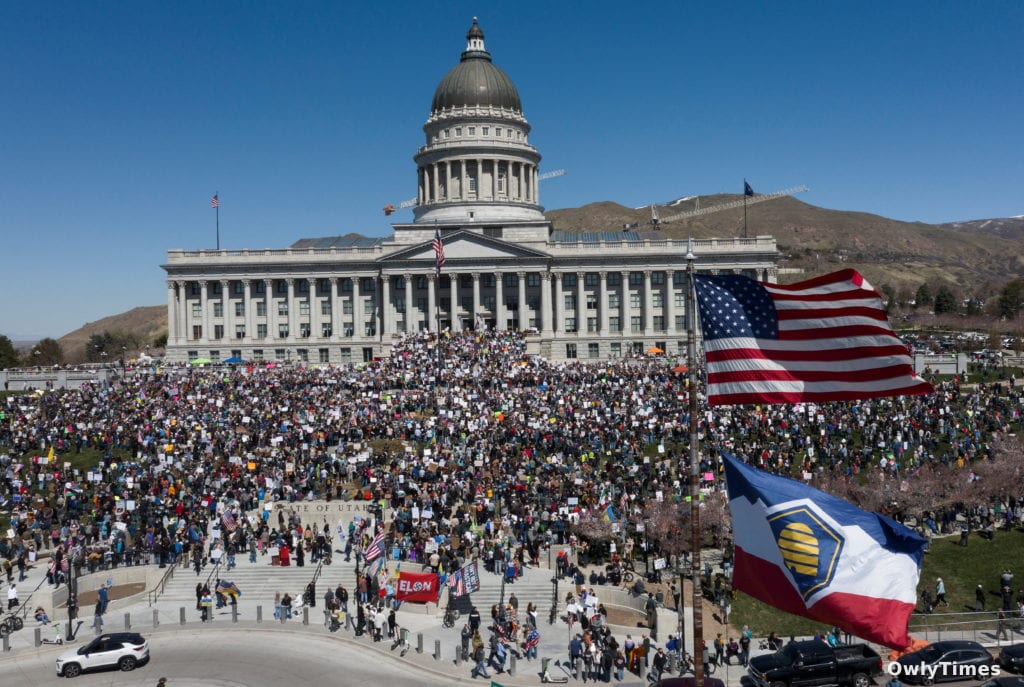

The courtroom victory for Democrats in Utah isn’t about fairer maps; it’s a calculated escalation in a national redistricting war, revealing a strategic vulnerability for the GOP heading into the 2026 midterms. Monday’s federal court ruling upholding the revised congressional districts – a direct rebuke of the Republican-led state legislature – isn’t an isolated event, but a key battle in a tit-for-tat campaign of map manipulation orchestrated by both parties, with Donald Trump actively directing Republican efforts. The core calculus is simple: control the lines, control the outcome, and the Utah decision demonstrates that even seemingly safe Republican states are now contested terrain.
Judge Gibson’s Ruling and the Erosion of Legislative Authority
The legal foundation of this shift rests with Judge Dianna Gibson’s November decision, which invalidated the districts drawn by the Utah legislature following the 2020 census. Gibson found the legislature had deliberately bypassed voter-approved anti-gerrymandering standards, a charge that cuts to the heart of representative democracy. This isn’t merely a technical legal dispute; it’s a power struggle between the elected representatives and the will of the voters, as articulated through ballot initiatives. The plaintiffs, the League of Women Voters of Utah and Mormon Women for Ethical Government, successfully argued that the original map diluted the voting power of Salt Lake County’s Democratic base by fracturing it across multiple districts. The new map consolidates this population, creating a genuine, albeit still challenging, opportunity for a Democratic challenger.
This article draws on reporting from PBS.
A National Pattern of Partisan Mapmaking
Utah’s situation mirrors a broader national trend. President Trump’s direct involvement in urging states like Texas, Missouri, and North Carolina to redraw their districts for Republican advantage is a clear signal of the stakes. This isn’t about responding to demographic shifts; it’s about proactively engineering electoral outcomes. The response from Democratic-led states like California and Virginia – initiating their own redistricting plans – demonstrates a willingness to play the same game. This reciprocal action elevates the conflict beyond individual state politics and establishes a national pattern. Consider the historical precedent of the “Bloody Redistribution” of 1812, where partisan battles over congressional districts in New York led to physical violence and accusations of fraud. While the tactics have evolved, the underlying principle – using mapmaking as a weapon – remains constant.
Who Benefits and Who Loses in Utah’s New Alignment?
The immediate beneficiaries are Utah’s Democrats, who now have a viable, though not guaranteed, path to winning at least one of the state’s four congressional seats. Currently, Republicans hold all four seats, a dominance that reflects Utah’s conservative leanings. However, the demographic trends in Salt Lake County are shifting, and the consolidated district gives Democrats a concentrated base of support. Republicans, naturally, are the immediate losers. The ruling represents the second legal setback in quick succession, following the unsuccessful appeal to the Utah Supreme Court. Beyond the immediate electoral impact, the decision weakens the authority of the state legislature, establishing a precedent for judicial intervention in redistricting processes. This could embolden similar challenges in other states, further complicating the GOP’s efforts to maintain its congressional majority. The financial implications are also noteworthy: redistricting battles are expensive, diverting resources from candidate campaigns to legal fees.
The Next Move: Litigation and Legislative Counter-Offensives
The Republican Party in Utah is unlikely to concede defeat. The most immediate political chess move to watch is whether they will pursue further appeals, potentially escalating the case to the Supreme Court. However, given the current composition of the court and the specific legal arguments involved – focusing on state-level anti-gerrymandering standards – the likelihood of success is low. A more probable strategy involves a legislative counter-offensive: attempting to amend the state’s redistricting laws to preempt future legal challenges. This could involve redefining the criteria for drawing districts or limiting the scope of judicial review. The question isn’t simply whether Democrats can win a seat in Utah; it’s whether this ruling will trigger a broader realignment of power in the redistricting arena, forcing both parties to reassess their strategies and potentially leading to a more competitive – and legally fraught – electoral landscape.





