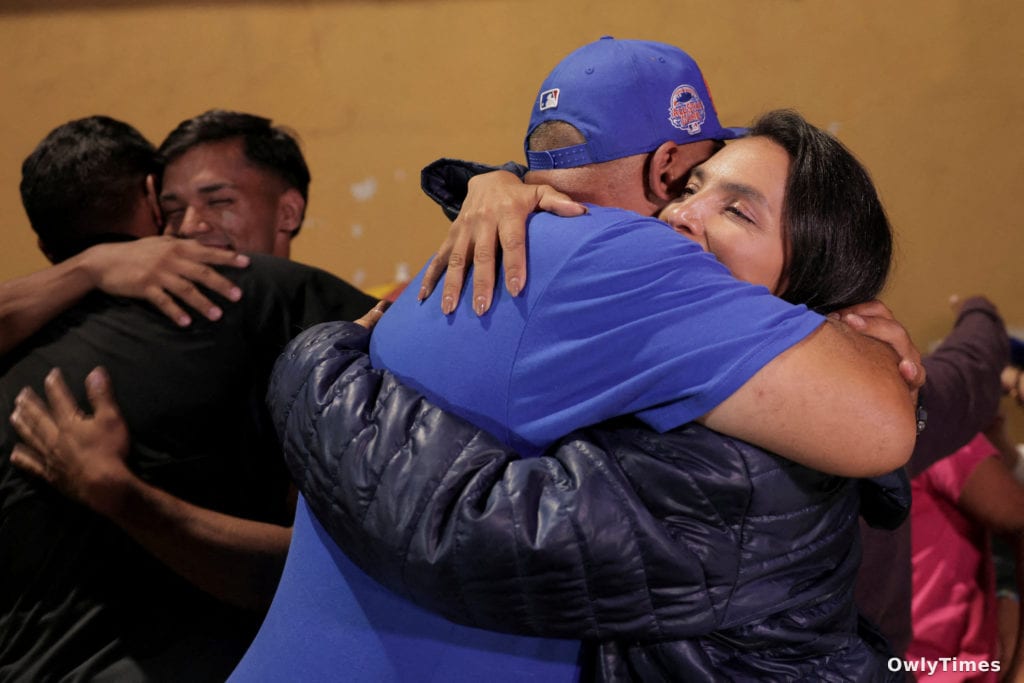

The Venezuelan legislature’s sudden embrace of an amnesty bill isn’t a gesture of goodwill, but a calculated maneuver to preempt further destabilization following the unprecedented U.S. military raid that removed Nicolás Maduro from power. The speed with which the bill passed – acknowledging, for the first time, the existence of “political prisoners” after decades of denial – reveals a government scrambling to demonstrate a commitment to due process and human rights, not out of conviction, but to manage the fallout from a deeply compromised position. This isn’t a shift towards democracy; it’s damage control.
The Calculus of Concession
The amnesty bill, approved on February 19th, 2026, potentially frees hundreds held for political reasons, a category the Venezuelan state previously insisted didn’t exist. This reversal is directly linked to the January raid led by U.S. forces in Caracas, which captured Maduro and installed an interim governing council. The U.S. action, while ostensibly focused on drug trafficking and corruption charges against Maduro, fundamentally altered the power dynamics, leaving the remaining Venezuelan leadership acutely vulnerable to international scrutiny and potential legal challenges. The bill’s passage is a preemptive attempt to address anticipated demands from the U.S., the European Union, and human rights organizations regarding the treatment of political opponents. The timing is critical; Venezuela is attempting to shape the narrative before an international legal assessment of the previous regime’s actions can take hold.
Who Benefits and Who Loses in the New Equation
The immediate beneficiaries are the hundreds of individuals – politicians from the opposition, activists, lawyers, and journalists – imprisoned under Maduro’s rule. While the exact number remains unconfirmed, estimates range from 300 to over 700, representing a significant portion of Venezuela’s political and civil society leadership. However, the amnesty also benefits the individuals within the existing Venezuelan power structure who wish to distance themselves from the previous administration’s abuses. By publicly acknowledging the existence of political prisoners and offering amnesty, they attempt to portray themselves as reformers. Those who lose are victims of state-sponsored violence and repression who may see the amnesty as insufficient justice. Families seeking accountability for disappeared persons or those subjected to torture will likely view the bill as a betrayal. Crucially, the amnesty also weakens the legal standing of any future prosecutions related to human rights violations committed under Maduro, potentially shielding key figures from international justice.
Source material: PBS.
Historical Echoes of Regime Survival
Venezuela’s current predicament bears a striking resemblance to post-Pinochet Chile. Following Augusto Pinochet’s arrest in London in 1998, the Chilean government, while initially defiant, gradually adopted a strategy of limited concessions to appease international pressure and avoid further legal challenges. The release of political prisoners, the establishment of truth and reconciliation commissions, and the gradual dismantling of repressive laws were all tactics employed to manage the fallout from Pinochet’s actions. Like Chile then, Venezuela now faces a delicate balancing act: acknowledging past wrongs without fully dismantling the structures that enabled them. The difference, however, is the direct intervention of a foreign power – the U.S. – which significantly constrains Venezuela’s maneuvering room. The Chilean transition was largely internal; Venezuela’s is externally driven.
The Shadow of U.S. Influence and the Interim Council
The amnesty bill’s approval wasn’t solely a Venezuelan decision. Sources within the interim governing council established after Maduro’s capture confirm that the U.S. government explicitly linked continued economic and political support to demonstrable progress on human rights issues, including the release of political prisoners. This underscores the extent of U.S. influence over Venezuela’s internal affairs. The interim council, led by Isabela Rodriguez, a former Supreme Court Justice, is walking a tightrope, attempting to appease both domestic constituencies and international stakeholders. Rodriguez stated in a press conference following the bill’s passage that it was “a necessary step towards national reconciliation,” but notably avoided directly addressing the U.S. role in prompting the legislation. The council’s legitimacy remains fragile, dependent on continued U.S. backing and its ability to deliver tangible improvements in the lives of ordinary Venezuelans.
The Next Political Chess Move: Asset Recovery or Accountability?
The immediate question now is whether the amnesty will be followed by a broader effort to address the systemic corruption that plagued the Maduro regime. The U.S. raid was ostensibly triggered by evidence of large-scale drug trafficking and money laundering, and the recovery of stolen assets is a key priority for Washington. However, pursuing asset recovery aggressively could further destabilize the Venezuelan economy and potentially trigger a backlash from elements within the military and government who benefited from the corruption. The political chess move to watch is whether the interim council prioritizes the return of Venezuelan wealth – potentially fueling economic recovery – or focuses on individual accountability for past crimes, which could alienate powerful factions and jeopardize the fragile political transition. The answer will reveal whether Venezuela is truly turning a page, or simply rearranging the deck chairs on a sinking ship.





