
The Currency of Clemency: Trump’s Venezuela Gambit and the Politics of Prisoner Releases
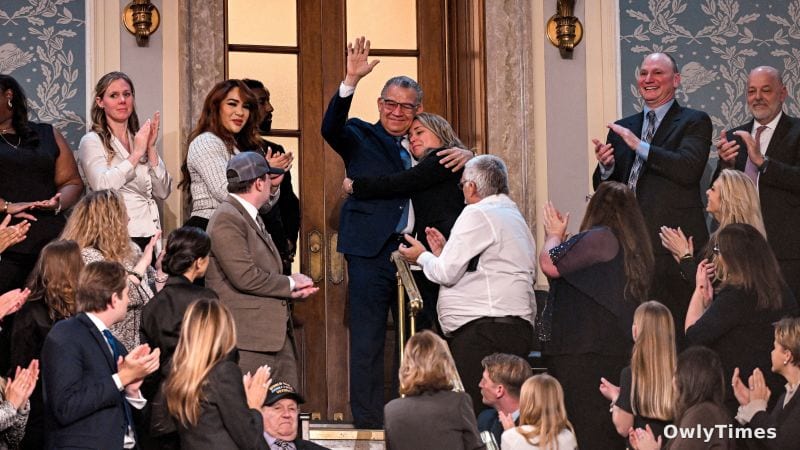
The orchestrated reunion of Enrique Márquez and his niece, Alejandra Gonzalez, during President Trump’s State of the Union address wasn’t a spontaneous act of compassion; it was a carefully calibrated demonstration of power, a public accounting of leverage secured following the US-led removal of Nicolás Maduro from power on January 3rd. The optics – a grateful family, a triumphant president, a Medal of Honor awarded to Chief Warrant Officer 5 Eric Slover for his role in Maduro’s capture – served to solidify a narrative of decisive American action and a newly cooperative Venezuela. But beneath the surface of this feel-good moment lies a complex strategic calculation, one that reveals as much about the limits of US influence as it does about its renewed assertiveness in the region.
The immediate beneficiaries are clear: President Trump gains a foreign policy win, framed as humanitarian intervention, bolstering his domestic standing ahead of the 2024 election. The new Venezuelan leadership, embodied by acting President Delcy Rodríguez, benefits from a lessening of US pressure and the potential for economic normalization – a lifeline after decades of mismanagement and sanctions. However, the release of over 400 political prisoners, as reported by Foro Penal, isn’t solely a gesture of goodwill. It’s a direct response to sustained US demands, a transactional exchange for recognition and, crucially, for access to Venezuela’s vast oil reserves. The fact that hundreds remain imprisoned, and those released face restrictions like travel bans and gag orders, underscores the conditional nature of this “new friendship.” This isn’t a full embrace of democratic principles, but a pragmatic negotiation.
Source material: CNN.
This tactic of leveraging prisoner releases for geopolitical gain isn’t novel. The Carter administration, facing criticism for its human rights record, frequently tied aid packages to improvements in the recipient country’s treatment of political prisoners. More recently, the Obama administration secured the release of American prisoners from Iran as part of the nuclear deal negotiations. However, the scale and directness of the US intervention in Venezuela – a military operation to remove a sitting president – elevates this instance to a different order of magnitude. The historical precedent of US-backed coups in Latin America, from Chile in 1973 to Guatemala in 1954, casts a long shadow, raising questions about the long-term stability and legitimacy of the current Venezuelan government. Will this intervention ultimately foster genuine democratic reform, or simply replace one authoritarian regime with another more amenable to US interests?
The amnesty bill passed by Venezuelan lawmakers, allowing for over 1,500 requests for release, is a significant development, but its true impact remains to be seen. National Assembly President Jorge Rodriguez’s rhetoric about “reuniting” and “coexisting democratically” rings hollow given the context of a US-engineered regime change. The sheer volume of amnesty requests suggests a deeply fractured society, and the potential for renewed political violence remains high. Moreover, the US focus on political prisoners, while laudable, risks overlooking other critical human rights concerns, such as economic inequality and systemic corruption. The narrative being constructed in Washington prioritizes a specific set of victims, potentially obscuring the broader suffering of the Venezuelan population.
The political chess move to watch next isn’t whether more prisoners will be released – that’s almost guaranteed. It’s whether the US will maintain consistent pressure on Delcy Rodríguez to ensure free and fair presidential elections in 2024, with Enrique Márquez as a legitimate candidate. If the US prioritizes securing oil supplies over genuine democratic reform, the reunion at the State of the Union will be remembered not as a triumph of humanitarianism, but as a cynical display of power politics. The question is whether Washington is willing to risk its newfound “partnership” with Venezuela to uphold the principles it claims to champion.





