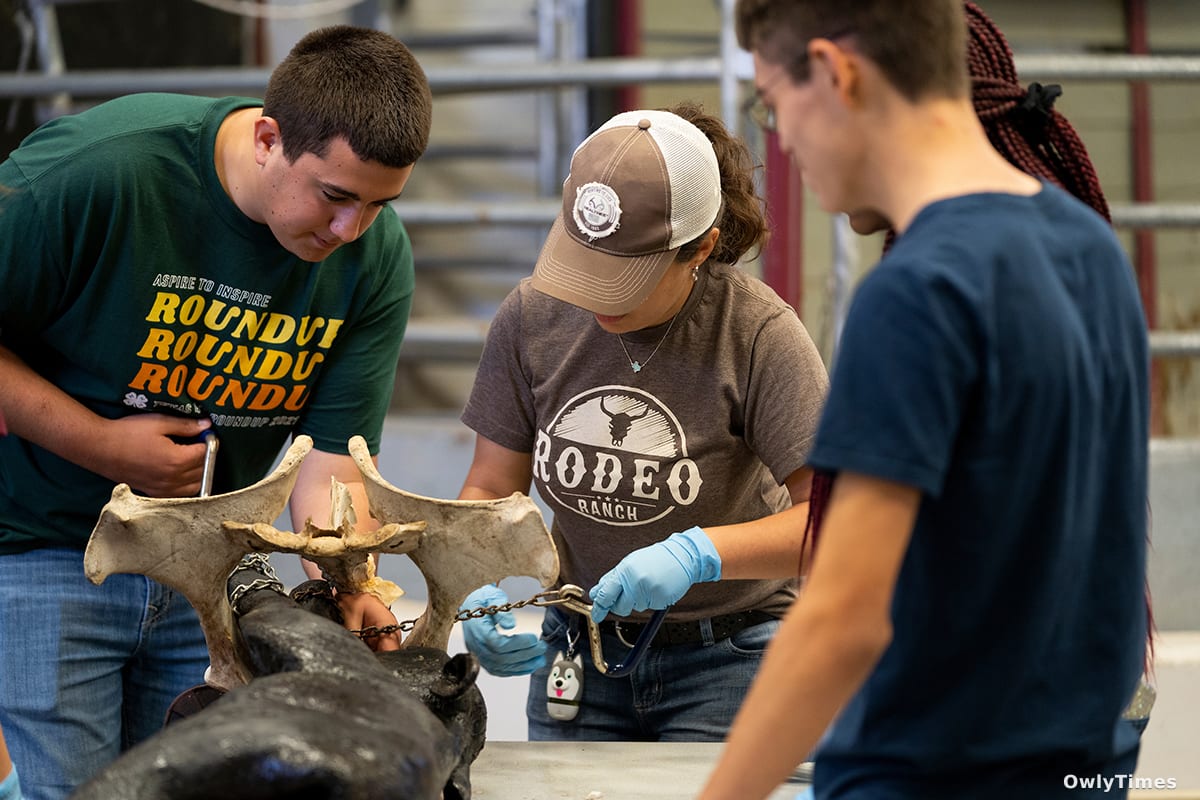

The escalating shortage of veterinary professionals across the United States isn’t simply a matter of pet owners facing longer wait times; it’s a systemic challenge impacting agricultural industries and the health of rural communities. While headlines often focus on the effects of this shortage, a quietly effective program at Texas A&M AgriLife Extension Service is tackling the problem at its root: a lack of early exposure and training opportunities in veterinary science. The Veterinary Science Certificate Program (VSCP) isn’t just inspiring students to become veterinarians – it’s strategically building a pipeline of qualified professionals prepared to serve areas most in need.
For students like Steven Perez, Evelyn Arnold, and Thomas Gee, the path to veterinary medicine wasn’t a direct line, but a journey shaped by the VSCP. Perez, a junior at Texas A&M from Rio Grande City, recognized the scarcity of veterinary care while raising Beefmaster cattle through 4-H. Arnold, an incoming freshman, discovered her passion at a VSCP summer camp. And Gee, now a third-year veterinary student, honed his skills through FFA and VSCP-hosted competitions. What’s notable isn’t just that these students pursued veterinary medicine, but how the program provided a foundational experience often missing for students from rural backgrounds. The VSCP isn’t simply a career exploration tool; it’s a targeted intervention designed to address geographic disparities in veterinary access.
Source material: agrilifetoday.tamu.edu.
The program’s structure is deliberately multi-faceted. It offers a veterinary assistant certification requiring 200 hours of coursework, 225 hours of supervised clinical experience, and demonstrated mastery of 100 veterinary science skills. Beyond certification, VSCP provides summer camps and career development events, reaching students as young as 12 and extending to adults. As Nikki Boutwell, VSCP program coordinator, explains, “VSCP provides students with a solid base in veterinary science so they can make informed decisions about pursuing a career in the veterinary field.” The program’s reach is impressive, currently serving students in all 50 states, but the true impact lies in its ability to translate exposure into tangible skills and career pathways.
This emphasis on practical experience is a key differentiator. David Sessum, VSCP program manager, highlights how the program “helps students explore careers in veterinary medicine by providing hands-on experiences, career guidance and access to clinical opportunities.” Perez’s experience exemplifies this: the clinical hours he accrued through the program directly strengthened his veterinary school application. Similarly, Gee credits the VSCP’s Career Development Event with providing a crucial foundation in veterinary terminology and concepts, giving him a competitive edge entering veterinary school. This isn’t about lowering standards; it’s about leveling the playing field for students who might not otherwise have access to these foundational experiences.
However, it’s crucial to avoid overstating the program’s immediate impact. While the VSCP demonstrably prepares students for higher education in veterinary medicine, the timeline for these students to enter practice – four years of veterinary school plus potential residency – means the program’s effect on the current shortage won’t be felt immediately. Furthermore, the program’s success relies heavily on the availability of qualified veterinarians willing to serve as clinical supervisors. A bottleneck in mentorship opportunities could limit the program’s scalability. As Andy Herring, Ph.D., associate department head at Texas A&M, notes, the program “combines academic learning with practical, hands-on experiences,” but maintaining that balance requires ongoing investment in both educational resources and clinical partnerships.
The VSCP’s success also raises a broader question: how can similar programs be replicated and adapted to address veterinary shortages in other regions? The model – combining accessible coursework with robust clinical experience – is readily transferable, but tailoring the program to the specific needs of different communities will be essential. For example, a program in a region heavily reliant on livestock might prioritize large animal medicine, while a program in a more urban area might focus on companion animal care. The next crucial research step is a longitudinal study tracking VSCP graduates as they enter practice, specifically analyzing where they choose to work and the types of services they provide. Understanding these career trajectories will allow for targeted program adjustments and ensure the VSCP continues to address the evolving needs of the veterinary profession and the communities it serves. Will this program, and others like it, be enough to stem the tide of the veterinary shortage, or will innovative solutions be needed to attract and retain professionals in underserved areas? That’s the question veterinary stakeholders – and rural communities – will be watching closely.





