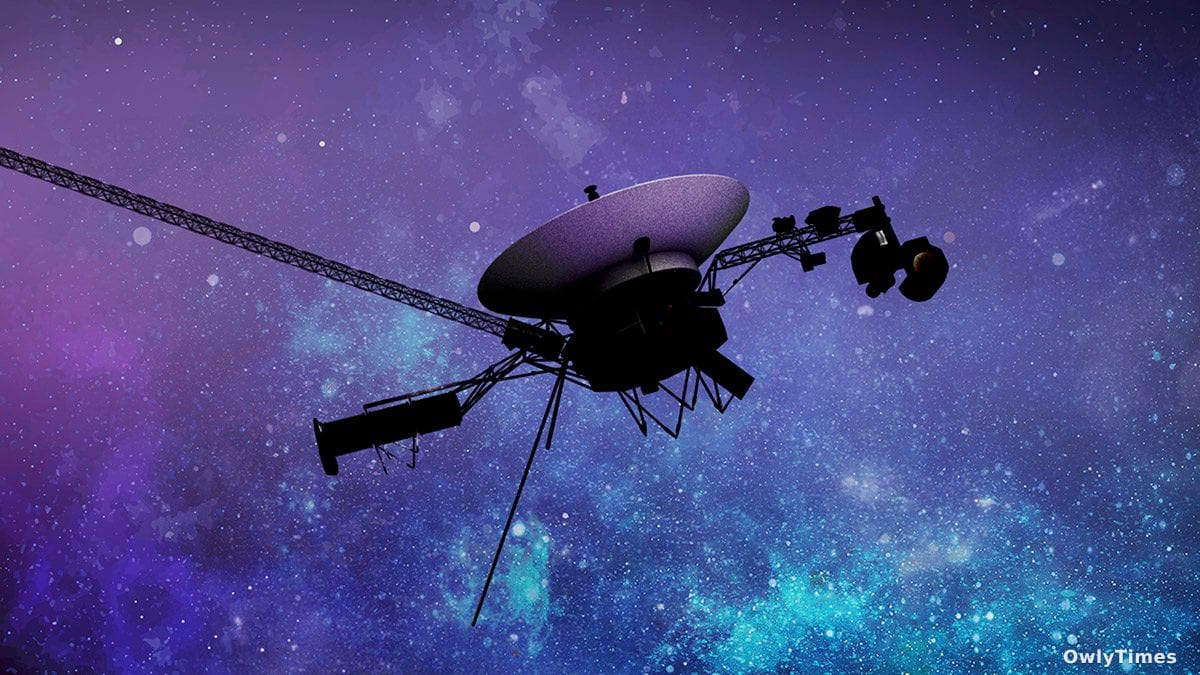

When we talk about the longevity of the Voyager 1 spacecraft, we are effectively discussing a masterclass in extreme resource management. Launched in 1977, the craft has spent nearly five decades traversing the unknown, and it currently sits over 25 billion kilometers (15 billion miles) from Earth. The scientific question we face today is not whether the mission is over, but how we define the end of a voyage when the primary objective—exploration—is still yielding data from regions no other human-made object has ever touched.
The Cost of Staying Operational
Engineers at NASA’s Jet Propulsion Laboratory (JPL) recently made the difficult decision to deactivate the Low-energy Charged Particles (LECP) experiment. While headlines might suggest this is a sign of a failing mission, the reality is a calculated strategy to extend the spacecraft’s operational lifespan. Voyager 1 relies on a radioisotope thermoelectric generator, which produces electricity by converting heat from decaying plutonium. Because the craft loses 4 watts of power every year, the energy budget is shrinking, forcing mission managers to prioritize certain instruments over others.
Shutting down the LECP was a necessary procedure following a drop in power levels on 27 February 2026. As Kareem Badaruddin, Voyager mission manager at JPL, noted, while powering down science instruments is never the preferred path, it remains the only viable option to keep the spacecraft functioning. It is worth noting that this is not an arbitrary process; there is an established order for instrument deactivation. Seven of the original ten sets of instruments have now been turned off, with the LECP on Voyager 2 having been shuttered in March 2025.
What the Data Actually Tells Us
The LECP has provided critical insights into the interstellar medium, specifically regarding particle density and pressure fronts beyond our heliosphere—the protective bubble generated by the Sun. While the loss of this instrument limits our view of these specific cosmic rays, Voyager 1 is not going silent. It continues to beam back data from two remaining instruments: one focused on plasma waves and another measuring magnetic fields. These systems remain functional, providing a unique, singular perspective on the environment beyond the reach of our Solar System.
Limitations to Consider
The primary limitation in this mission is the vast distance between the spacecraft and its handlers. It takes approximately 23 hours for a command sent from Earth to reach Voyager 1. This time delay means the mission team must operate with extreme foresight, as there is no room for real-time troubleshooting if a maneuver does not go exactly as planned. Furthermore, while the current shutdowns are keeping the core systems alive, the margin for error is razor-thin. The hardware, designed in the 1970s, is operating far beyond its original service life, making every remaining day of data transmission a statistical outlier in the history of aerospace engineering.
Future Strategies for Longevity
The team at JPL is already looking toward the next phase of mission endurance. Future power-saving measures will involve a procedure known as the "Big Bang," which will see multiple powered devices swapped out simultaneously for low-power alternatives. This transition is designed to keep the remaining sensors active for as long as possible, maintaining the spacecraft's status as humanity's most distant ambassador. The success of these upcoming power-management cycles will ultimately determine whether we continue to receive telemetry from the edge of interstellar space or if the mission will finally reach its quiet conclusion.





