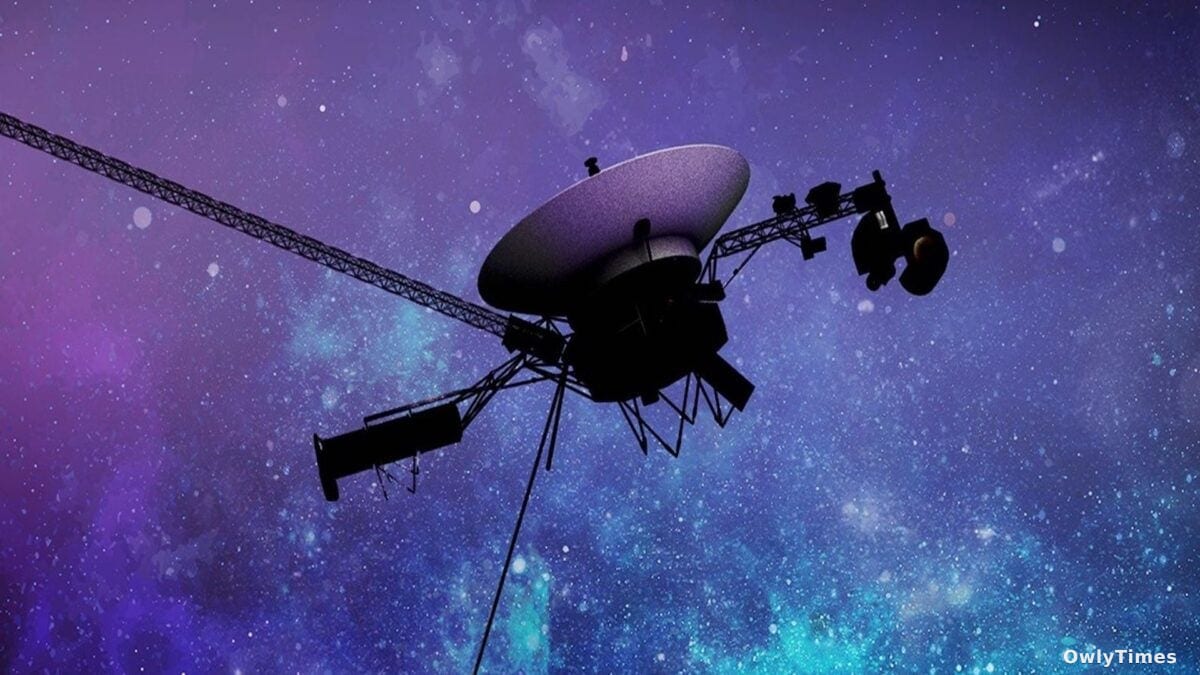

The challenge of maintaining a spacecraft 15 billion miles (25 billion kilometers) from Earth is no longer just about navigation; it is a delicate exercise in energy austerity. As Voyager 1 continues its unprecedented journey through the interstellar medium, the scientific question facing engineers at NASA’s Jet Propulsion Laboratory (JPL) has shifted from how to maximize discovery to how to preserve the craft’s remaining life support. With the spacecraft’s power source—decaying plutonium—producing less electricity every year, the team must decide which scientific eyes to close to keep the heart of the mission beating.
Managing the Power Deficit
The necessity for this latest shutdown became clear in late February, when Voyager 1 experienced an unexpected drop in power levels during a routine roll maneuver. The spacecraft loses approximately 4 watts of power annually, a slow decline that has now forced the mission into a reactive state. Kareem Badaruddin, Voyager mission manager at JPL, noted that while shutting down a science instrument is not a preferred outcome, it remains the only viable strategy to prevent a total system failure. The team feared that any further power fluctuation could trigger an automated onboard safeguard system, which would unpredictably begin disabling essential components to protect the craft’s core functions.
The End of a 49-Year Experiment
To mitigate this risk, engineers executed a pre-planned sequence to deactivate the Low-energy Charged Particles (LECP) experiment. This instrument has been fundamental to our understanding of the galaxy, measuring ions, electrons, and cosmic rays for 49 years. On April 17, the command sequence was initiated, taking 23 hours to travel across the vast distance of space, followed by a three-hour and 15-minute shutdown process. While the primary function of the LECP is now dormant, the team deliberately kept a small motor active that allows the sensor to rotate, leaving a narrow door open for a potential reactivation should future power-saving measures yield a surplus of energy.
Scientific Returns in the Deep Frontier
It is important to distinguish between the loss of specific data streams and the loss of the mission itself. Headlines may suggest the craft is failing, but the reality is a calculated recalibration. Voyager 1 still retains two fully operational science instruments—one dedicated to plasma wave detection and another for magnetic field measurements—which continue to transmit data from a region of space never before reached by human technology. Since its 1977 launch, the mission has far exceeded its original five-year design life, and the current operational status is a testament to the longevity of the engineering rather than a sign of imminent collapse.
Limitations and the Path Forward
The primary limitation remains the physics of radioactive decay; there is no way to replenish the power source. The current shutdown provides roughly one year of operational stability, but this is merely a stopgap. The engineering team is now looking toward a more complex strategy known as “the Big Bang,” a plan to replace existing power-consuming devices with lower-power alternatives. This initiative aims to maintain the internal temperatures necessary to keep the remaining instruments functional. The success of this transition will serve as the next primary indicator of how much longer the mission can persist, as engineers continue to trade instrument availability for the survival of the spacecraft’s fundamental mission in the interstellar void.





