
The Fragile Safety Net: A Georgia Hospital’s Plight Signals a National Trend
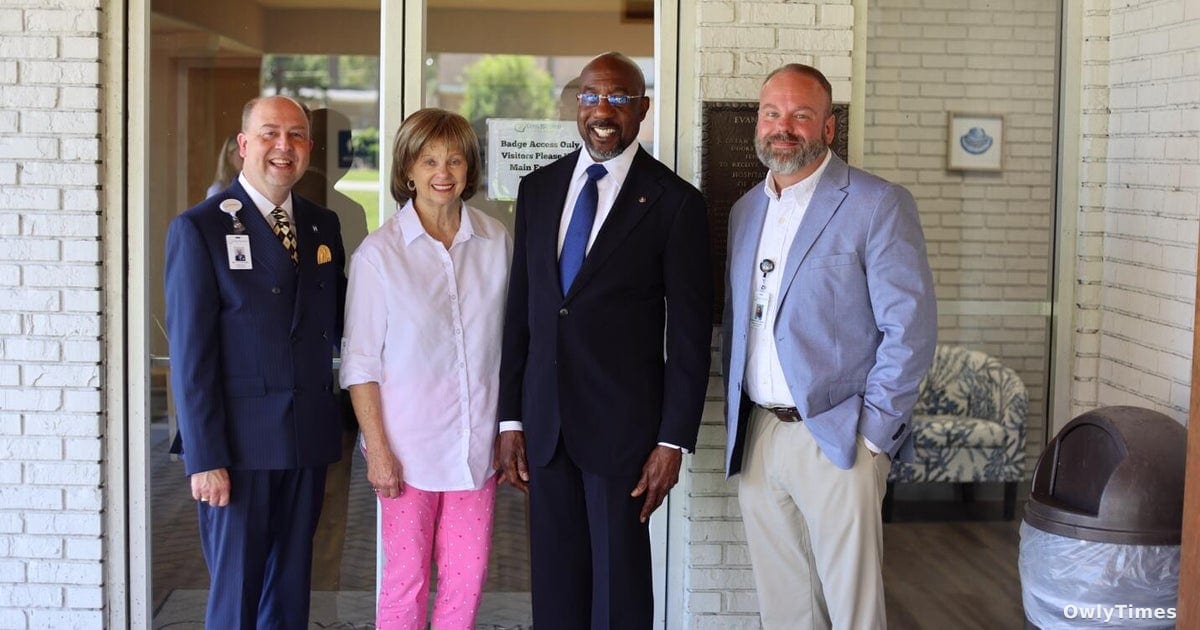
The invitation to the State of the Union is typically reserved for figures embodying national triumph or aspirational ideals. This year, Senator Raphael Warnock is using the occasion to highlight a starkly different reality: the precarious financial state of rural healthcare in America. By bringing Bill Lee, CEO of Evans Memorial Hospital in Claxton, Georgia, to Tuesday’s address, Warnock isn’t simply making a political statement; he’s drawing attention to a systemic vulnerability that threatens access to care for millions. The story isn’t about a failing hospital, but about a functioning one—established in 1968—being squeezed by policy shifts and economic pressures, a situation increasingly common across the country. It’s a case study in how seemingly distant federal decisions translate into concrete consequences for local communities, and it demands a closer look at what’s actually happening versus the often-simplified narratives surrounding healthcare funding.
Original reporting: CBS News.
The Financial Calculus of Rural Care
Evans Memorial Hospital’s current predicament isn’t a sudden crisis, but the culmination of several converging factors. The hospital is facing a potential $1 million shortfall, directly linked to recent changes in federal tax and healthcare policies, according to Senator Warnock’s office. This isn’t simply a matter of mismanagement; it’s a reflection of the unique economic challenges facing rural hospitals. These facilities often operate on thin margins, serving a higher proportion of Medicare and Medicaid patients—reimbursement rates for which are often lower than those from private insurance. The hospital previously shuttered its labor and delivery unit due to similar financial constraints, a decision that eliminated a vital service for the surrounding communities. Now, the intensive care unit is at risk. The looming expiration of enhanced Affordable Care Act (ACA) tax credits for the 2026 plan year is a significant driver of concern, potentially raising premiums and leading to coverage losses for Georgians. This isn’t a hypothetical scenario; the senator’s office estimates up to 93,000 Georgians could lose Medicaid coverage under current policy changes.
Beyond Evans Memorial: A Statewide and National Impact
The implications extend far beyond Claxton. Senator Warnock’s office projects that Georgia’s healthcare sector could face billions of dollars in financial strain, with rural hospitals bearing the brunt of the impact. This isn’t an isolated incident; similar stories are unfolding in rural communities across the nation. The closure of rural hospitals isn’t just a healthcare issue; it’s an economic one. Hospitals are often major employers in these areas, and their absence can trigger a cascade of negative consequences, from job losses to decreased access to preventative care. Bill Lee, who holds both an MBA and a Master of Health Administration from Georgia State University and serves on the Georgia Hospital Association board, understands this intimately. His presence in Washington isn’t simply to advocate for his hospital, but to represent the broader concerns of rural healthcare providers across the state and beyond. He’s emphasized the importance of ensuring access to quality health insurance for all Georgians, a sentiment that resonates with the core challenge facing these communities.
Limitations to Consider: Policy Complexity and Attribution
While the connection between policy changes and the hospital’s financial difficulties is clear, attributing causality is complex. The $1 million shortfall isn’t solely attributable to federal policy; broader economic factors, rising supply costs, and workforce shortages all contribute to the pressures facing Evans Memorial. Furthermore, the estimates of potential Medicaid losses and premium increases are projections, not guarantees. The actual impact will depend on a variety of factors, including state-level policy decisions and individual enrollment choices. It’s also important to note that the narrative often focuses on the potential for negative consequences, and the full extent of the impact remains to be seen. The situation is further complicated by the fact that healthcare funding is often subject to political negotiation and compromise, making it difficult to predict future outcomes with certainty.
What Comes Next: Monitoring Coverage and Exploring Solutions
The immediate focus will be on the debate surrounding federal healthcare funding as it unfolds in Washington. However, the long-term solution requires a multi-faceted approach. Researchers and policymakers need to investigate innovative funding models for rural hospitals, explore strategies to address workforce shortages, and evaluate the effectiveness of different payment structures. Crucially, we need to track the actual impact of the expiring ACA tax credits and the potential changes to Medicaid coverage in Georgia. Will the projected 93,000 Georgians actually lose coverage? Will premiums rise as significantly as predicted? And, perhaps most importantly, what will happen to hospitals like Evans Memorial if they continue to face mounting financial pressure? The presence of Bill Lee at the State of the Union isn’t just a symbolic gesture; it’s a call to action, and the coming months will reveal whether that call is heeded.





