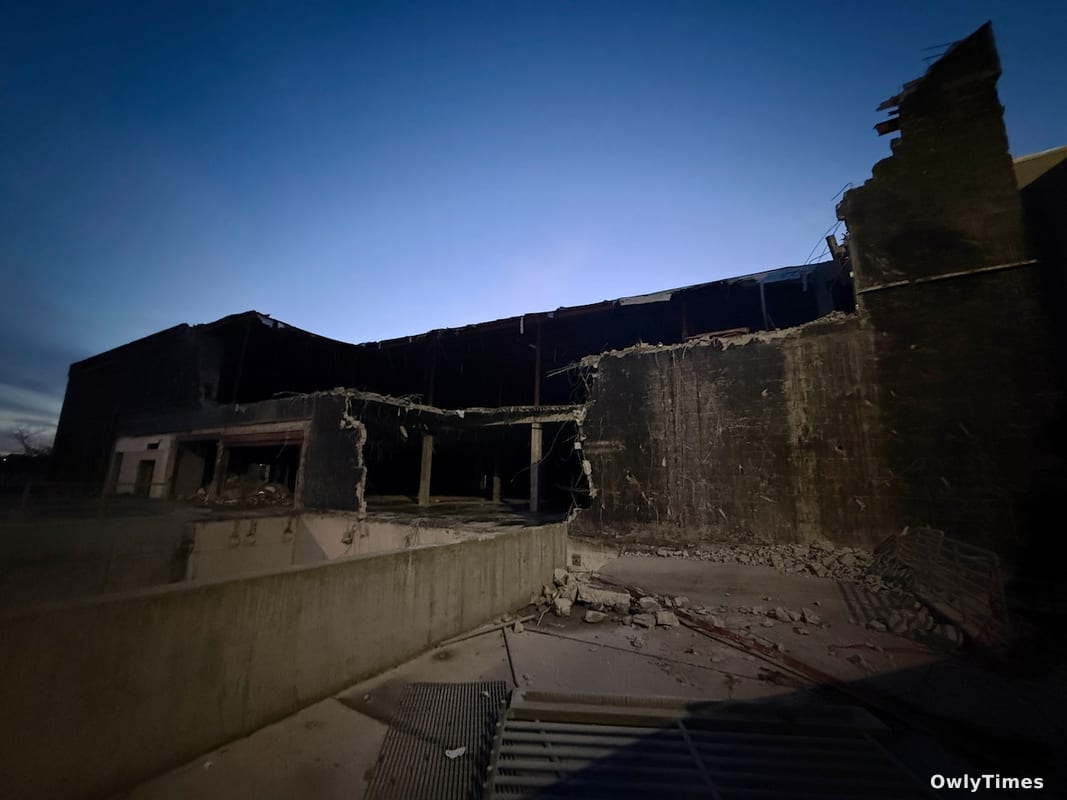

The clang of metal against concrete echoes through the south parking lot of Washington Square mall, a sound that, for many longtime Portlanders, feels less like construction and more like a reckoning. For decades, Washington Square has been the mall – a sprawling monument to suburban life, a place for first dates, awkward teenage hangouts, and the annual hunt for back-to-school sneakers. But the tearing down of walls where Sears once stood isn’t just about new stores; it’s about a desperate attempt to redefine what a mall is in an age where a few clicks can deliver anything to your doorstep. The announced $TBD renovation, spearheaded by mall owner Macerich, isn’t a facelift, it’s a full-blown identity crisis playing out in Tigard, Oregon.
From Department Stores to Batting Cages: The Mall’s Evolution
The centerpiece of this reinvention? A Dick’s House of Sport, slated to open in fall 2027. This isn’t your grandfather’s sporting goods store. Think batting cages, golf bays, a climbing wall – a full-throttle attempt to lure customers back with experiences they can’t replicate on Amazon.com. It’s a telling shift. The traditional anchor stores – the Sears, the Macy’s, the JCPenney’s – that once defined the mall landscape are fading into memory, casualties of changing consumer habits and the relentless march of e-commerce. In 2023, retail sales online accounted for 15.4% of total retail sales in the United States, a figure that has steadily climbed over the past decade, according to the U.S. Census Bureau. Malls are no longer destinations for acquiring things; they need to become destinations for doing things.
The Portland Paradox: Experience vs. Economic Reality
But the timing of this ambitious renovation feels particularly fraught in Portland. While Maria Halstead, general manager at Washington Square, frames the project as catering to Portland’s “experience-oriented demographic,” the city is simultaneously grappling with a complex economic reality. The downtown core struggles with vacant storefronts and safety concerns, and the broader metro area faces rising housing costs and a cost of living that’s increasingly pricing out long-term residents. Is a high-end sports complex, offering activities that come with a price tag, truly reflective of the Portland community’s needs, or is it a bet on a demographic that’s rapidly changing? The renovation’s success hinges on attracting a customer base that can afford to spend on leisure activities, a demographic that may be shrinking as economic pressures mount.
Reporting from oregonlive.com informs this analysis.
Beyond the Headlines: A Symptom of Broader Shifts
This isn’t just a story about one mall in Oregon. It’s a microcosm of a national trend. Macerich, a Santa Monica-based real estate investment trust, is betting big on experiential retail across its portfolio. But the strategy isn’t without risk. The company’s stock performance has been volatile in recent years, reflecting the uncertainty surrounding the future of brick-and-mortar retail. According to SEC filings, Macerich reported a net loss of $88.9 million in 2023, a significant downturn from the $148.8 million net income reported in 2022. The Washington Square renovation represents a substantial investment, and its success will be closely watched by investors and other mall owners across the country. Jonathan Bach, who covers commercial real estate for The Oregonian, notes the importance of understanding how these shifts impact local wallets, a crucial point often lost in discussions of retail trends.
What Happens When the Experience Isn't Enough?
The planned updates to the food court this spring and interior renovations next year are secondary to the Dick’s House of Sport, signaling where Macerich believes the future lies. But what happens if the “experience” isn’t enough to overcome the fundamental challenges facing brick-and-mortar retail? What if Portland’s economic realities dampen enthusiasm for a high-end sports complex? The question isn’t simply whether Washington Square will survive, but whether this model – transforming malls into entertainment hubs – is a sustainable solution for a retail landscape forever altered by the convenience of online shopping. We’ll be watching closely to see if Macerich can successfully navigate this transformation, and whether Washington Square can once again become a central gathering place, or if it will become another relic of a bygone era.