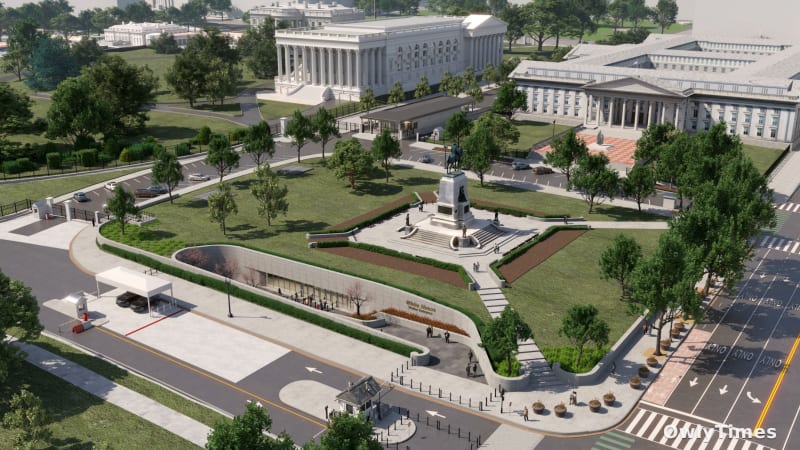

The revival of a decades-long plan to construct a 33,000-square-foot underground security screening facility at the White House isn’t simply a response to heightened security concerns; it’s a strategic deployment of political capital by the Trump administration, leveraging a post-9/11 rationale to secure approvals for a broader, and increasingly expensive, campus renovation centered around a signature “legacy project” – a 90,000-square-foot ballroom. The timing, coinciding with the NCPC review of both the security facility and the ballroom, reveals a calculated effort to normalize ambitious spending and circumvent previous roadblocks that stalled similar proposals for over two decades.
Decades of Failed Attempts, Now Suddenly Viable
The idea of enhanced White House security screening isn’t new. The National Park Service initiated feasibility studies following the 2001 attacks, recognizing the vulnerability of the public-facing visitor experience. However, as one source familiar with the matter told CNN, previous iterations were “just shot down left and right” by Congress, the Secret Service, and even past White Houses – primarily due to cost. The current proposal, estimated to require visitors to pass under Lafayette Park, represents a significant escalation in both scope and disruption. The fact that such a plan is gaining traction now, after years of rejection, isn’t a testament to a new threat assessment, but to a shift in the political landscape and the willingness to expend resources on projects aligned with Trump’s priorities. The stated justification – “strengthen campus security and enhance the overall visitor experience” – feels less like a primary driver and more like a necessary framing device.
Based on the original CNN report.
The Scharf Factor: A Commission Chair with Divided Loyalties
The National Capital Planning Commission (NCPC) holds the key to approval, and the appointment of Will Scharf as its chairman introduces a clear conflict of interest. Scharf simultaneously serves as Trump’s staff secretary, effectively placing a key advocate for the administration’s vision in a position to greenlight its projects. While not inherently disqualifying, this dual role raises questions about the impartiality of the review process. The NCPC’s April 2nd meeting, where both the security facility and the ballroom are on the agenda, will be a crucial test of whether the commission prioritizes independent oversight or acquiesces to White House pressure. The postponement of the ballroom vote last year, following over 32,000 public comments largely opposing the construction, demonstrates a sensitivity to public opinion – but also a willingness to delay rather than abandon the project.
Funding the “Legacy Project” Through Incremental Approvals
The escalating cost of the ballroom – from an initial $200 million to a current $400 million – is a critical detail often overshadowed by the security narrative. While the White House claims the project will be funded by private donations, the reliance on incremental approvals for related infrastructure, like the underground security facility, suggests a strategy of normalizing large-scale spending through smaller, seemingly justifiable requests. The demolition of the East Wing last fall, ostensibly to make way for the ballroom, further illustrates this point. The facility’s location on the former East Wing site isn’t a coincidence; it’s a direct consequence of prioritizing the “legacy project” and then framing necessary security upgrades as a logical extension. This tactic mirrors historical precedents, such as the justification of infrastructure projects during the Cold War under the guise of national defense, often benefiting specific industries or political constituencies.
Who Benefits and Who Loses?
The immediate beneficiaries are construction firms poised to profit from the multi-million dollar contracts, and, arguably, Trump himself, whose vision for a grander White House is being realized. The Secret Service also stands to gain from improved security protocols, though their previous reluctance to fund such projects suggests a pragmatic assessment of cost versus benefit. Those who lose include taxpayers, who will ultimately bear the financial burden, and potentially, the public, who will experience increased inconvenience and disruption during construction. The preservation of William Tecumseh Sherman’s monument, while publicly touted, feels like a symbolic gesture designed to deflect criticism about the project’s impact on public space. The long-term implications for the White House campus – transforming it into a more fortified and less accessible landmark – remain to be seen.
The political chess move to watch next isn’t the NCPC’s vote on the security facility or the ballroom individually. It’s the commission’s overall response to the inherent conflict of interest presented by Scharf’s dual role. Will the NCPC assert its independence and demand greater transparency, or will it rubber-stamp the administration’s plans, effectively ceding its oversight authority? The answer will reveal whether this project is truly about security, or simply a carefully orchestrated power play.





