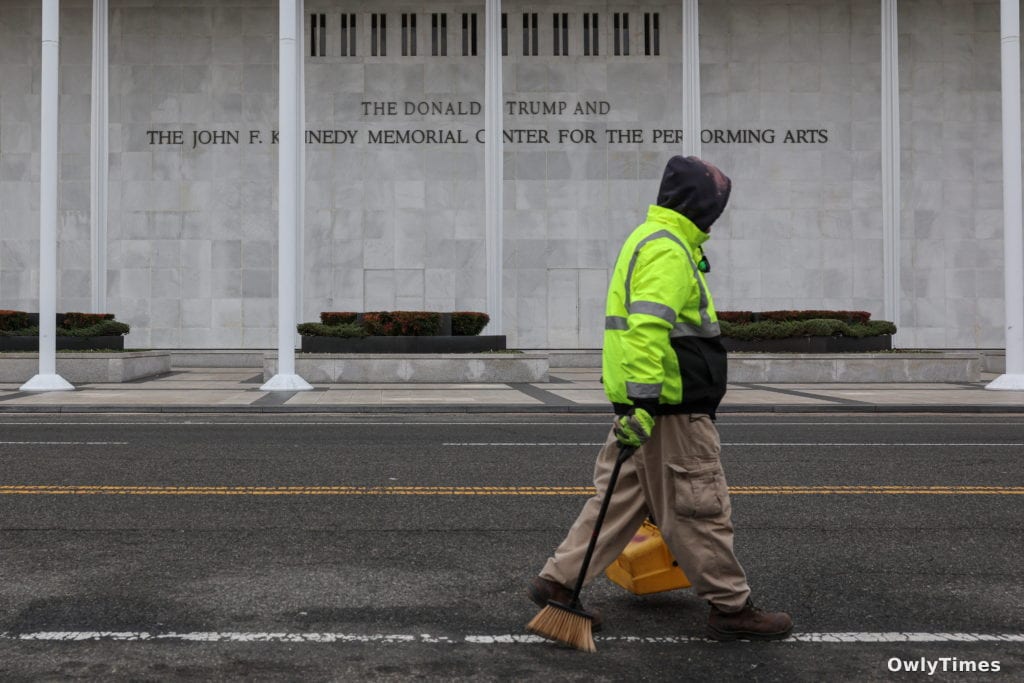

The attempt to affix Donald Trump’s name to the Kennedy Center isn’t about honoring a former president; it’s a calculated escalation in the ongoing battle over historical legacies and the symbolic control of Washington D.C.’s civic spaces. The move, spearheaded by allies of the former president within the Kennedy Center’s leadership, isn’t a spontaneous gesture of admiration, but a direct challenge to established norms regarding presidential memorials and a test of how far the pendulum has swung in reshaping the capital’s iconography. The legal challenge brought by Joyce Beatty isn’t simply about a name on a building; it’s about defining who gets to write—and rewrite—history.
The Kennedy Center as Contested Ground
The Kennedy Center, established in 1971 and dedicated to John F. Kennedy following his assassination, was always intended as a living memorial to his commitment to the arts. Beatty’s lawsuit hinges on the original legislative intent behind the center’s creation, arguing that Congress explicitly designated it as a tribute to Kennedy alone. This isn’t a matter of legal ambiguity; the original act establishing the center, and subsequent congressional actions, consistently reinforce that singular dedication. The current effort to add Trump’s name, therefore, isn’t a simple addition, but a deliberate circumvention of that original intent. The timing is also significant. With the 2024 election receding into the past, and Trump maintaining a powerful grip on the Republican base, this move serves as a potent symbol of his continued influence and a defiant assertion of his place in American history.
Original reporting: PBS.
Who Benefits and Who Loses in a Renaming?
The immediate beneficiaries of a name change are Donald Trump himself and his political network. Attaching his name to such a prominent cultural institution would be a significant victory in his ongoing effort to normalize his presidency and cement his legacy. It also serves as a reward for loyal donors and board members who have actively pushed for the renaming. Conversely, Beatty and the broader Democratic party stand to lose politically if the effort succeeds, appearing unable to defend established historical narratives. More subtly, the Kennedy Center itself risks alienating a significant portion of its donor base and artistic community, many of whom have publicly expressed opposition to Trump’s policies and rhetoric. The center, which relies heavily on private funding, could face a backlash that impacts its financial stability. The potential for boycotts from artists and a decline in donations represents a substantial risk.
Historical Echoes of Memorial Disputes
This isn’t the first time debates over memorials have become intensely politicized. The long and contentious battle over the Robert E. Lee statue in Charlottesville, Virginia, in 2017, demonstrated how monuments can become flashpoints for broader cultural and political conflicts. Similarly, the ongoing debate over Confederate monuments across the South highlights the enduring power of symbols and the struggle to reconcile conflicting historical narratives. However, the Kennedy Center case differs in a crucial respect: it involves a relatively recent memorial, established with clear legislative intent, rather than a historical artifact subject to evolving interpretations. This makes the attempt to alter its dedication particularly jarring and legally vulnerable. The parallel to the renaming of Washington National Airport to Ronald Reagan Washington National Airport in 1998 is closer, though that change lacked the explicit congressional dedication present in the Kennedy Center’s case. That earlier renaming, pushed by the Republican-controlled Congress, was largely symbolic, but it foreshadowed the willingness of political actors to reshape the capital’s landscape to reflect their values.
The Next Move: A Battle Over Congressional Record
The immediate future of the Kennedy Center’s name rests with Judge Amit Mehta, who will now consider Beatty’s motion. However, the legal battle is likely to extend beyond a simple ruling on legislative intent. The Kennedy Center’s legal team will likely argue that the center has the autonomy to manage its own affairs and that the original legislation doesn’t explicitly prohibit adding a secondary name. The key question will be how the judge interprets the scope of congressional intent and whether she finds that the center’s actions are a reasonable interpretation of the original act. But the more significant political chess move to watch isn’t the court ruling itself, but what happens after it. Should Beatty prevail, will congressional Republicans attempt to amend the original legislation to explicitly allow for the addition of Trump’s name? That would be the true test of their commitment to reshaping the Kennedy Center’s legacy and the broader symbolic landscape of Washington D.C. – and a clear signal of how deeply entrenched this battle over historical narratives has become.





