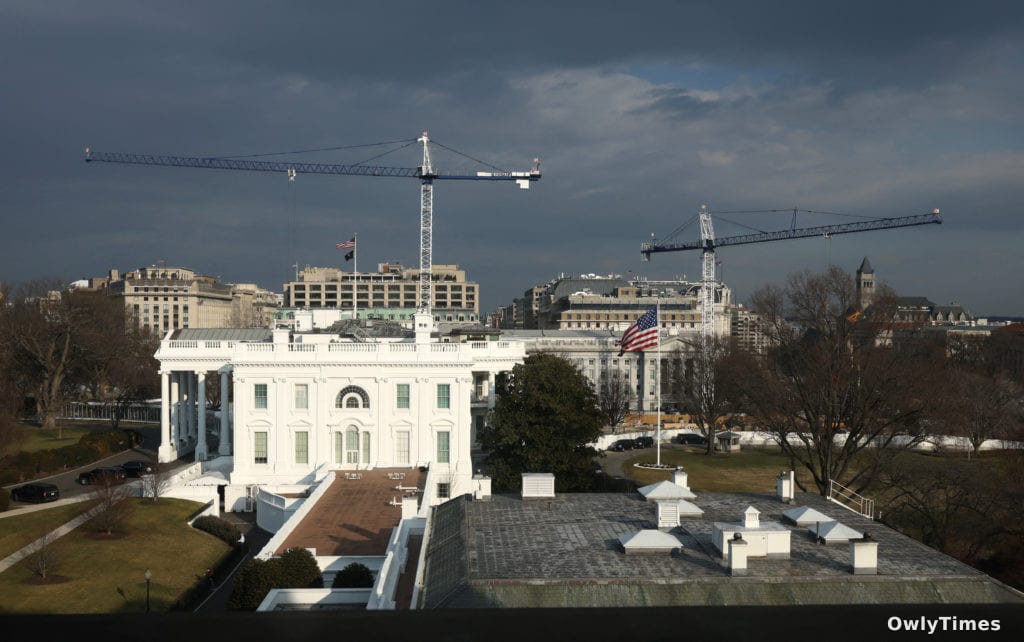

The overwhelmingly negative public response to President Trump’s proposed White House ballroom isn’t simply about aesthetics or historical preservation; it’s a strategic miscalculation revealing a fundamental disconnect between the executive branch’s priorities and the established mechanisms of power in Washington. The sheer volume of opposition voiced before the National Capital Planning Commission (NCPC) isn’t an anomaly, but a demonstration of how seemingly minor infrastructure projects can become focal points for broader resistance, particularly when perceived as self-aggrandizing. This isn’t a debate about a ballroom; it’s about the symbolic control of the nation’s most potent political space.
A Project Defined by Opposition
The NCPC hearing on Thursday, documented in full by OwlyTimes’ video coverage, showcased a stark imbalance. Of the 28 individuals who offered public comment during the initial two hours, a single voice supported the project. The criticisms weren’t couched in abstract terms. Speakers directly attacked the scale of the proposed 1,500-square-foot addition, questioning its necessity and framing it as an excessive expenditure during a period of national economic uncertainty. This level of unified opposition is unusual for NCPC reviews, which typically attract a more diverse range of opinions, even on contentious projects. The fact that the opposition was so concentrated suggests a coordinated effort, or at least a widely shared sentiment, among those who routinely engage with the Commission’s processes.
Reporting from PBS informs this analysis.
Echoes of Imperial Ambition
The optics of a president seeking to expand the White House for entertainment purposes inevitably invite historical comparisons. While expansions and renovations have occurred throughout the building’s history, this project resonates with precedents that ultimately proved politically damaging. Consider Emperor Nero’s Domus Aurea, a lavish palace complex built after the Great Fire of Rome. While the scale is vastly different, the underlying perception – a ruler prioritizing personal grandeur amidst public hardship – is strikingly similar. President Trump’s past association with opulent properties and branding exercises amplifies this perception. The NCPC, a body designed to safeguard the capital’s historical character, is now forced to weigh a project that actively courts this comparison. Who benefits and who loses here is clear: the President gains a potential legacy project, while the historical integrity of the White House and the NCPC’s authority are diminished.
The NCPC’s Delicate Position
The NCPC isn’t merely a rubber stamp for presidential initiatives. Established in 1972, the Commission holds significant sway over federal projects in the nation’s capital, possessing the authority to approve or reject designs based on their compatibility with the city’s comprehensive plan. This power, however, is inherently political. The Commission’s members are appointed by the President and Congress, creating a dynamic where independence must be carefully balanced with political realities. The overwhelming public opposition places the NCPC in a precarious position. Approving the project risks alienating the public and undermining the Commission’s credibility. Rejecting it, however, could be interpreted as a direct rebuke of the President, potentially triggering political repercussions. The Commission’s decision will be a test of its institutional strength and its willingness to assert its authority.
Beyond Bricks and Mortar: A Power Play
The strategic calculus at play extends beyond the physical structure itself. The White House ballroom project can be viewed as a test of the boundaries of executive power. President Trump has consistently challenged established norms and institutions, and this project appears to be another attempt to push those boundaries. The NCPC review process, with its public comment period and deliberative procedures, represents a check on that power. The intense opposition isn’t simply about the ballroom; it’s about signaling a resistance to what many perceive as an overreach of executive authority. The fact that only one speaker offered support suggests a broader sentiment of distrust towards the administration. The $5.6 million price tag, while relatively small in the context of federal spending, becomes symbolic of a perceived disregard for fiscal responsibility.
The political chess move to watch next isn’t the NCPC’s vote, but President Trump’s reaction to that vote. Will he accept the Commission’s decision, even if it’s unfavorable? Or will he attempt to circumvent the process, potentially through executive order or legislative action? The answer will reveal a great deal about the future of executive-legislative relations and the resilience of Washington’s institutional checks and balances.