
The Strategic Silence: Trump, Epstein, and the Democrats’ Calculated Disruption
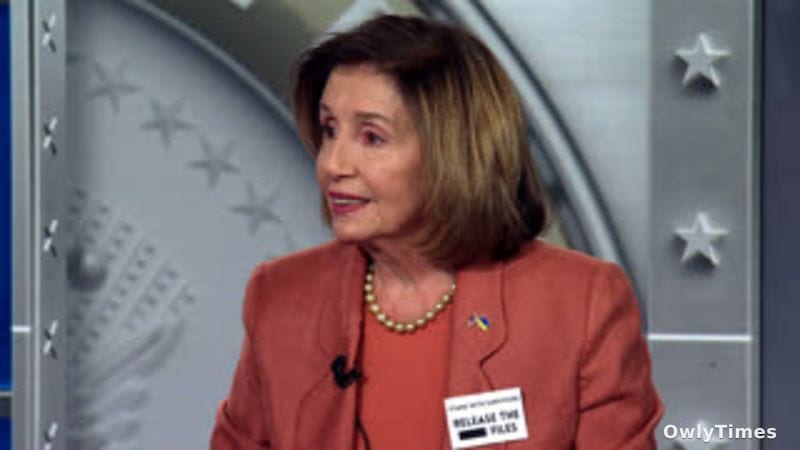
The coordinated display of white by Democratic lawmakers during President Trump’s State of the Union address wasn’t a spontaneous act of solidarity, but a carefully calibrated political maneuver designed to exploit a known vulnerability. The choice to wear white, coupled with the “Release the Files” pins referencing Jeffrey Epstein, wasn’t about policy disagreements on immigration – as the immediate post-speech cycle suggested – but about forcing a response, or more accurately, leveraging the absence of a response. As Speaker Emerita Nancy Pelosi succinctly put it, “The fact that he didn't mention it shows his vulnerability, his exposure in, in all of this.” This wasn’t a protest; it was a pressure test, probing for cracks in Trump’s carefully constructed public image.
The immediate fallout – Trump’s subsequent attacks on the justices who ruled against his tariffs, and the broader media focus on disruptions from figures like Ilhan Omar – demonstrates the success of this tactic. The Democrats didn’t aim to win the news cycle with a substantive policy debate; they aimed to define it as a referendum on Trump’s relationship to a deeply unpopular figure. Who benefits and who loses here is clear: Democrats gain by framing Trump as evasive and potentially compromised, while Trump loses control of the narrative, forced to react defensively rather than dictate terms. The benefit to Democrats extends beyond simply damaging Trump’s reputation; it serves as a rallying point for the base and a fundraising opportunity, capitalizing on outrage.
This tactic of calculated disruption isn’t new. Throughout American political history, minority parties have employed similar strategies to unsettle dominant narratives. Consider the Dixiecrat walkouts of the 1948 Democratic National Convention, a protest against the party’s nascent civil rights platform. While ideologically distinct, the Dixiecrat strategy shared the same core principle: forcing a confrontation on a sensitive issue to expose divisions within the opposing party. Or, more recently, the Republican use of procedural tactics during the Obama administration – government shutdowns, debt ceiling crises – designed to highlight perceived overreach and force concessions. The key difference here is the Democrats aren’t seeking policy concessions; they’re seeking to erode public trust.
This piece references the CNN report.
The timing of this maneuver is also significant. With the 2028 presidential race already taking shape – as evidenced by CNN’s coverage of potential Democratic contenders – the Democrats are laying the groundwork for a sustained attack on Trump’s character and fitness for office. The Epstein connection is particularly potent, given the ongoing public fascination with the case and the lingering questions surrounding Trump’s associations. New Mexico’s launch of a “truth commission” to probe Epstein’s ranch further amplifies this narrative, ensuring the issue remains in the public consciousness. This isn’t about immediate legislative gains; it’s about long-term political positioning.
The broader context of the SOTU address reveals a deeper tension. While Trump focused on economic nationalism and border security, the Democrats’ response centered on character and ethics. This divergence highlights a fundamental shift in the nature of political conflict: a move away from debates over policy details towards battles over legitimacy and moral authority. The Supreme Court’s ruling on Trump’s tariffs, and his subsequent attacks on the justices, underscore this point. The legal challenges to Trump’s actions are not merely about trade policy; they are about the rule of law and the limits of executive power. The fact that business owners are reacting to the ruling, as CNN reported, demonstrates the real-world consequences of this legal battle, but the political framing remains centered on Trump’s defiance of established norms.
The political chess move to watch next isn’t whether the New Mexico “truth commission” uncovers new information – though that’s certainly a possibility. It’s whether Democrats can successfully translate this sustained focus on Trump’s character into a broader narrative of unfitness for office, and whether they can maintain the discipline to avoid being distracted by reactive counter-attacks. Specifically, will they be able to leverage the upcoming legal proceedings related to the January 6th investigation and the classified documents case to reinforce this narrative, or will Trump successfully reframe those events as politically motivated witch hunts? The answer to that question will determine whether this calculated disruption yields lasting political dividends.





