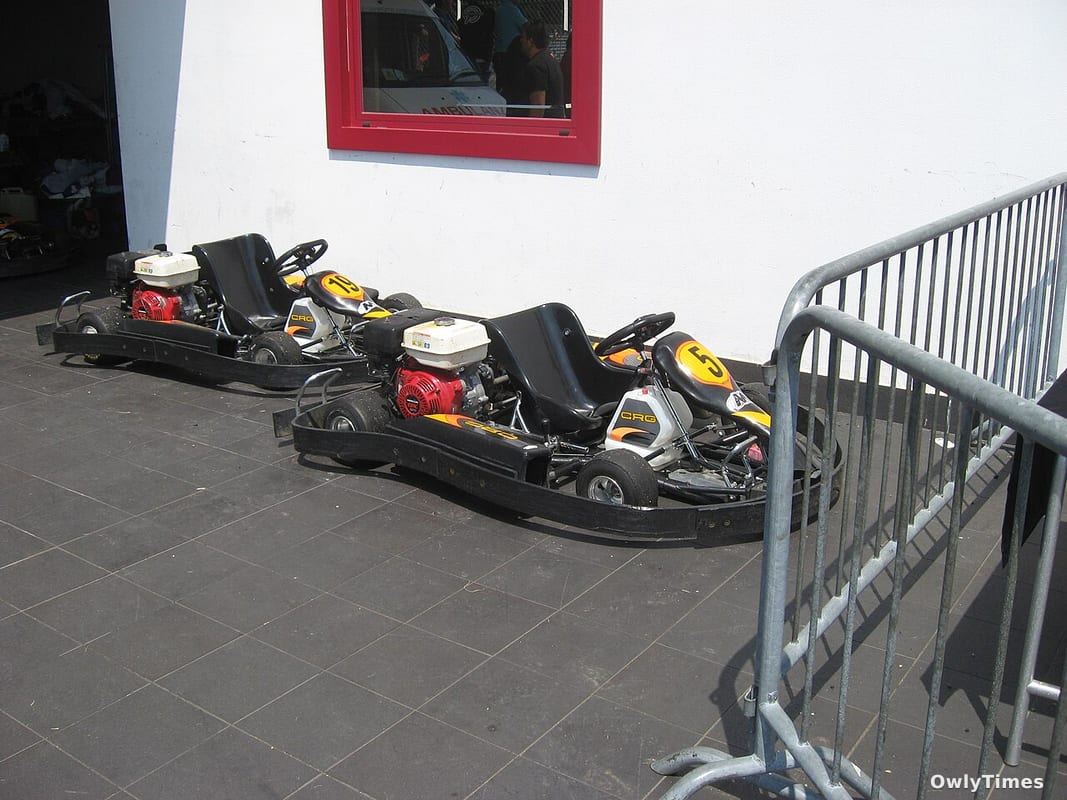

The air in Viterbo, Italy, hung thick with the scent of burning rubber and high-octane fuel last week, a familiar aroma for the 320 drivers representing 59 nations gathered for the third round of the WSK Super Master Series. It wasn’t just the speed – though the karts themselves were blurring streaks of color – but the sheer scope of the event that felt significant. This isn’t a feeder series for Formula 1, not directly. It’s something more foundational: a global proving ground where the next generation of motorsport talent is identified, and where the very manufacturers shaping the future of racing come to test and refine their technology. And in a world increasingly focused on accessibility and inclusivity, the WSK Super Master Series is quietly becoming a fascinating microcosm of global competition.
A United Nations on Four Wheels
The numbers alone are staggering. Fifty-nine nations represented – from motorsport powerhouses like Italy and the United States to nations like Grenada, Kenya, and the Philippines, where karting isn’t a mainstream sport, yet their drivers are competing at the highest level. This isn’t a case of wealthy elites jetting off to race; it speaks to a growing democratization of access, fueled by manufacturer support programs and a global network of karting academies. Max Verstappen, Antonio Giovinazzi, and Andrea Kimi Antonelli – all names now synonymous with top-tier racing – honed their skills within the WSK Super Master Series, a testament to its role as a launchpad. But the real story isn’t just who makes it to F1, it’s how this series is opening doors for drivers from increasingly diverse backgrounds.
This piece references the Yahoo Sports report.
The championship standings after two rounds reflect this international spread. Leading the MINI U10 category is Burgess Zayne of the USA, while Godschalk Wynn, also American, tops the MINI Gr.3 leaderboard. Italy’s Niccolo’ Perico holds the lead in OK-NJ, but Czech drivers Zdenek Babicek (OKJ) and Jindrich Pesl (OK) are also firmly in contention. Even the KZ2 category, traditionally dominated by European drivers, sees Russia’s Max Orlov at the helm. This isn’t a fluke; the WSK Super Master Series has consistently attracted a global field since its inception in 2010, establishing itself as a crucial early-career stepping stone.
Beyond the Podium: The Manufacturer Wars
While the drivers battle for points, a quieter, equally intense competition unfolds in the pit lane. Every major karting manufacturer – Parolin, KR, Tony Kart, Sodikart – is present in Viterbo, not just to support their drivers, but to gather data, test new components, and refine their chassis designs. The WSK Super Master Series isn’t just a driver’s championship; it’s a rolling R&D lab. The series’ commitment to live streaming – available on WSK.it, Motorsport.com, and YouTube – is a strategic move, offering manufacturers unparalleled visibility and a platform to showcase their technology to a global audience.
This year, the focus is particularly sharp on engine development. The shift towards more sustainable fuels and hybrid technologies in motorsport is already impacting karting, and manufacturers are racing to develop engines that meet stricter environmental regulations without sacrificing performance. The choice of tire – Vega for MINI and OKJ, LeCont for OK and KZ2 – also plays a critical role, with teams meticulously analyzing tire data to optimize their race strategies. The stakes are high; a single innovation can translate into a competitive advantage that ripples through the entire motorsport ecosystem.
The Hall of Fame and the Future of Karting
The WSK Super Master Series isn’t just looking forward; it’s also acutely aware of its history. The series’ Hall of Fame, established in 2010, serves as a reminder of the talent it has nurtured and the legacy it is building. Recognizing drivers like Verstappen and Antonelli isn’t simply about celebrating past successes; it’s about inspiring the next generation. But the Hall of Fame also highlights a tension within the sport: the pathway from karting to Formula 1 is notoriously difficult, and only a tiny fraction of drivers ever make it to the top.
The question now is whether the WSK Super Master Series can continue to adapt and evolve in a rapidly changing motorsport landscape. With the rise of esports and virtual racing, will young drivers still prioritize real-world karting? Will manufacturers continue to invest in a series that, while prestigious, doesn’t offer the same level of media exposure as Formula 1 or IndyCar? The series’ commitment to inclusivity and its embrace of live streaming are positive steps, but the long-term sustainability of karting – and the WSK Super Master Series’ place within it – will depend on its ability to attract and retain a new generation of drivers and fans. Will we see a continued broadening of national representation, or will the series revert to being dominated by a handful of European powerhouses? That’s the race worth watching.