
$150 Million Question: West Virginia’s Culture Center Renovation and the Lottery Fund Gamble
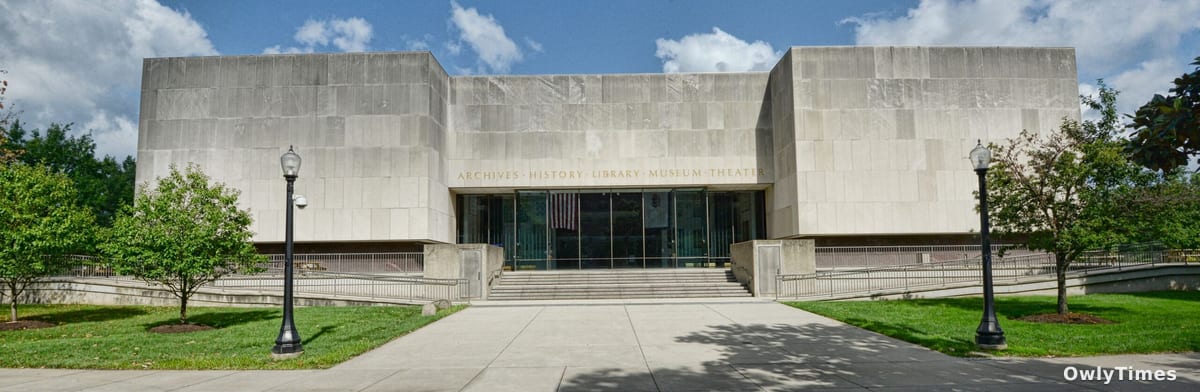
A potential $150 million bond issuance, fueled by West Virginia Lottery surplus, is now under consideration by the House of Delegates to address critical infrastructure failures at the West Virginia Culture Center. This figure, representing roughly 1.7% of the state’s FY2023 general revenue budget of $8.8 billion, isn’t simply a repair bill – it’s a signal of deferred maintenance reaching a crisis point and a test case for how the state prioritizes cultural preservation against other budgetary demands. The urgency stems from increasingly desperate conditions within the 1970s-era facility, conditions that are rapidly escalating repair costs and threatening the integrity of the state’s historical collections.
The impetus for action came from Chelsea Ruby, West Virginia Department of Tourism Secretary, who alerted lawmakers to the escalating repair needs earlier this month. However, the scale of the problem became starkly apparent during a recent tour of the facility by members of the House Finance Committee. Clay Riley, R-Harrison, committee vice chair, admitted his initial expectations were “significantly changed” upon witnessing the extent of the deterioration. This shift in perception is crucial; it demonstrates a move beyond abstract budgetary concerns toward a tangible understanding of the physical realities facing the Culture Center. The building’s age is a key factor – delegates like Matthew Rohrbach, R-Cabell, noted that core infrastructure, including electrical and HVAC systems, remain largely original to the 1970s construction, creating a compounding maintenance challenge.
Drawn from wvmetronews.com.
The proposed funding mechanism – revenue bonds backed by excess lottery funds – is a common tactic for large capital projects, allowing the state to avoid immediate impact to the general fund. West Virginia’s lottery generated $1.56 billion in revenue in FY2023, a 4.2% increase year-over-year, providing a seemingly comfortable cushion for this bond issuance. However, relying on lottery revenue introduces a degree of volatility. While current figures are strong, lottery revenue is susceptible to economic downturns and shifting consumer behavior, meaning future debt service could strain other areas of the budget. This is precisely the concern voiced by Marty Gearheart, R-Mercer, who questioned whether the $150 million cap was appropriate for “repairs” or represented a de facto construction fund. Gearheart’s skepticism highlights a fundamental tension: is this a restoration project, or a prelude to a more extensive, and expensive, overhaul?
The logistical challenges extend beyond electrical and HVAC systems. Bob Fehrenbacher, R-Wood, described a situation where maintenance staff are forced to scavenge for obsolete parts on eBay, a clear indication of the building’s systemic obsolescence. This isn’t merely an inconvenience; it’s a cost driver. Sourcing discontinued parts is exponentially more expensive than routine maintenance, and the lack of readily available replacements increases the risk of catastrophic failures. Furthermore, the need to maintain specific temperature and humidity levels to preserve historical artifacts, as highlighted by Riley, adds another layer of complexity and cost. The Department of Tourism is being asked to provide phased cost estimates and explore off-site storage options, suggesting an acknowledgement that some preservation goals may be unattainable within the existing structure.
What this means for your wallet: While the immediate impact is on the state budget, the long-term implications extend to West Virginia residents. A revitalized Culture Center could boost tourism, generating revenue for local businesses. However, the reliance on lottery funds for this project raises a critical question: will this investment come at the expense of funding for other essential services, or will the state explore alternative revenue streams to ensure both cultural preservation and fiscal responsibility? Investors and taxpayers should watch closely for the detailed cost estimates and phased renovation plans promised by the Department of Tourism – specifically, whether the $150 million cap proves sufficient, or if this is merely the first tranche in a much larger, and potentially more contentious, funding cycle.