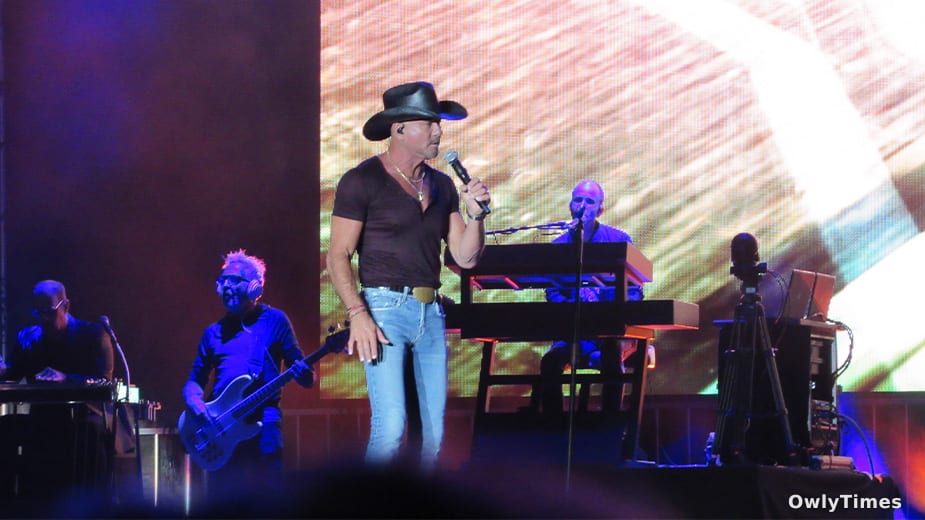

The stage lights at the Youngstown Foundation Amphitheatre dimmed last September as Tim McGraw played to a crowd nearing 20,000, a moment that captured the high-octane energy the city has come to expect from its downtown venues. Yet, behind the scenes of these massive spectacles, the math tell a more complicated story. In 2025, the city’s three primary entertainment hubs—Covelli Centre, the amphitheatre, and Wean Park—posted an operational deficit of $484,728. It is a sobering figure for a community that has grown accustomed to the reliable success managed by JAC Management, the local firm that has steered these venues toward profitability since taking the reins in 2008.
The Squeeze of Industry Giants
To understand why a city with nearly 100 events in 2025 hit a financial wall, one must look at the predatory tug-of-war currently defining the live music landscape. Eric Ryan, president of JAC Management, and chief operating officer Ken Bigley point to a market environment dominated by the aggressive maneuvering of Live Nation and AEG. As these two industry titans clash for dominance, mid-sized markets are increasingly finding themselves in the crosshairs.
Acts that typically fill the 5,000 to 10,000-seat range—the bread and butter of Youngstown’s venues—are being aggressively diverted to larger outdoor spaces like Blossom and Star Lake. When the industry’s biggest promoters utilize exclusivity clauses and shift typical amphitheater-sized tours into massive stadiums, the result is a supply-side famine for mid-market operators. For Youngstown, a city situated within 100 miles of two major metropolitan markets, this creates a high-stakes game of musical chairs where the smaller players are frequently left standing.
Resilience in the Face of Volatility
Despite the deficit, the narrative of a failing local model does not hold water under scrutiny. JAC has a proven history, generating over $1.3 million in direct city revenue through admissions taxes over the past four years alone. Even in a difficult 2025, the venues still produced $346,348 in admissions tax revenue, maintaining a consistency that suggests the recent shortfall is an outlier rather than a systemic decline.
“After 18 years of defying the odds, we’ve had a down year,” Bigley noted, framing the loss as a temporary friction point caused by broader market pressures. Furthermore, some of the financial sting is a matter of calendar mechanics rather than lack of demand. The rescheduling of Disney On Ice from its usual December slot to January created a temporary revenue gap in 2025, but it ensures a stronger 2026, as the city will now host two iterations of the seven-performance run within a single calendar year.
Signs of a Rebounding Market
The industry is already showing early indications of recalibration. The Covelli Centre has already signaled a return to form with three sold-out performances this year: Professional Bull Riders, comedian Bert Kreischer, and Christian pop act Third Day. These early wins provide a tangible metric for the venue’s ongoing vitality.
For the residents of Youngstown, the value of these spaces extends beyond the balance sheet. From the Simply Slavic festival to the Panerathon and the Youngstown Phantoms hockey games, these venues function as the city’s living room. As JAC Management prepares to announce a new slate of national acts for the amphitheatre—with expectations of six to seven major concerts arriving by late summer—the path to recovery rests on the return of those mid-tier acts. The next reading of the venue’s upcoming concert announcement cycle will reveal whether the market has truly stabilized or if the squeeze from national promoters remains the new, permanent reality for mid-sized cities.