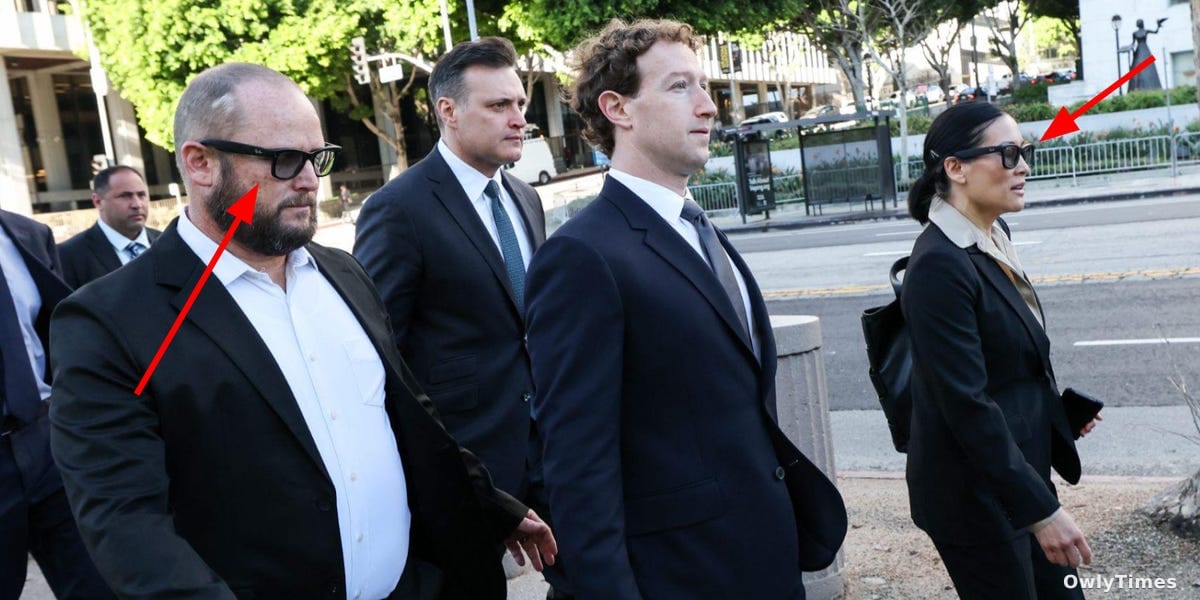

Is the future of tech courtroom drama? Because that’s certainly what it looked like Wednesday morning as Mark Zuckerberg arrived at the Los Angeles Superior Court, flanked not by lawyers clutching briefcases, but by aides sporting Meta Ray-Ban smart glasses. The real story here isn't the legal battle over social media’s impact on teen mental health – it’s the blatant, almost performative, display of the very technology under scrutiny, and the speed with which it’s normalizing itself into everyday life.
The scene, captured by Patrick T. Fallon / AFP via Getty Images, wasn’t lost on the judge, who swiftly warned against any recording of proceedings with the glasses, threatening contempt of court. This isn’t a new issue; Mike Isaac of the New York Times was reportedly reprimanded for wearing the same glasses during the FTC’s antitrust case against Meta in April 2025. But the fact that the warning needed to be issued again, with Zuckerberg’s entourage actively showcasing the tech, speaks volumes. Meta declined to comment on the accessory choice, a silence that feels less like corporate discretion and more like a calculated brand moment.
This article draws on reporting from Business Insider.
The context is crucial. Zuckerberg is testifying in a case alleging that Instagram and YouTube – now the sole remaining defendants after settlements with TikTok and Snap – deliberately designed addictive features that harmed young users, specifically a 20-year-old plaintiff known as “KGM.” While the legal arguments are serious, the optics are… complicated. Here’s a company facing accusations of manipulating attention, actively demonstrating its latest attention-grabbing device in a highly public setting. It’s a level of meta-irony that would be almost impressive if the stakes weren’t so high.
But beyond the courtroom theatrics, there’s a larger trend at play. Meta reported that sales of the Ray-Ban glasses tripled in 2025. To put that in perspective, the smart glasses market was still considered niche just two years prior, with most iterations failing to gain traction beyond early adopters. This isn’t just about a cool gadget; it’s about Meta positioning itself at the forefront of the next computing platform. Zuckerberg himself compared the moment to the shift from flip phones to smartphones on the company’s recent earnings call. The addition of Artificial Intelligence features, allowing users to ask questions about what they’re seeing, and the planned integration of facial recognition technology, as reported by the New York Times, are accelerating this transition.
The problem, and it’s a significant one, is that this push towards immersive, AI-powered eyewear is happening with minimal public discourse about its potential downsides. We’re already grappling with the consequences of algorithmic feeds and constant connectivity. Adding a camera to your face, capable of identifying people and providing real-time information, raises a whole new set of privacy, security, and social concerns. The courtroom drama is a symptom of a deeper issue: tech companies are building the future, and regulators – and the public – are struggling to keep up.
The judge’s warning about recording in court is a temporary fix. But what happens when these glasses are ubiquitous? What happens when the line between observing the world and recording the world blurs completely? Watch for the first major public backlash – not from a courtroom, but from a street corner – when someone is unknowingly identified and analyzed by a passerby wearing Meta Ray-Bans. That’s when the conversation will truly begin.





