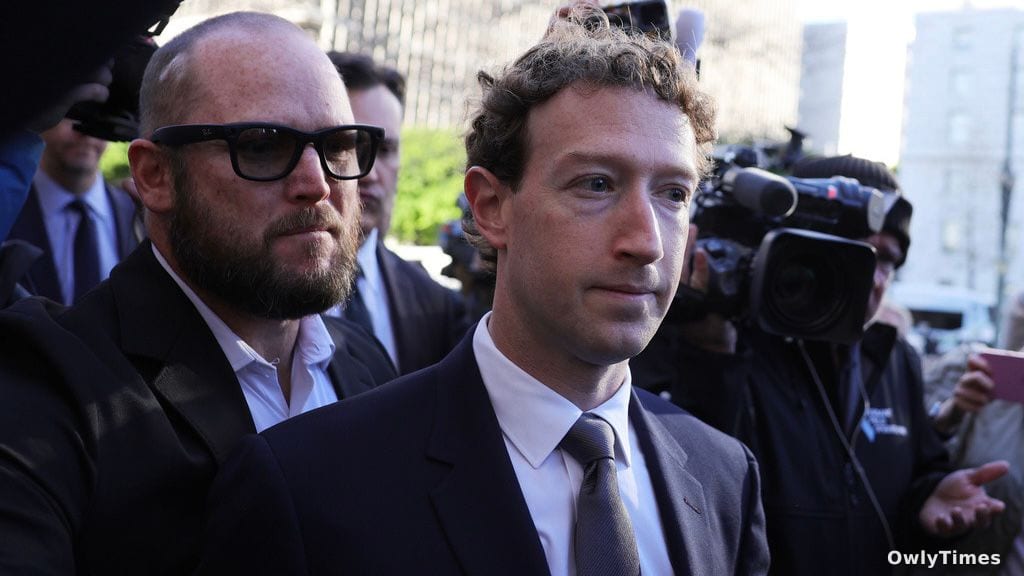

The current legal battle between Mark Zuckerberg and families alleging Meta’s platforms deliberately addict minors isn’t simply a question of corporate responsibility; it’s highlighting a fundamental gap in our understanding of how technology interacts with the developing brain. While headlines proclaim social media as inherently “addictive” and damaging, the reality, as public health professionals are increasingly emphasizing, is far more nuanced. The scientific community is still building the foundational knowledge to definitively link specific platform features to specific mental health outcomes, a situation Johannes Thrul, an associate professor in the Department of Mental Health at the Johns Hopkins Bloomberg School of Public Health, aptly compares to “early nutrition science” – we know certain elements are harmful, but the individual impact varies dramatically.
The core of the issue lies in the complexity of establishing causality. The trial, and the broader public concern, centers on the claim that platforms like Instagram are designed to be addictive, and that this design directly leads to mental health problems like anxiety, depression, and body dysmorphia, as testified to by plaintiff K.G.M., who began using Instagram at age nine. Her experience – a descent into self-comparison fueled by idealized images and a sense of social isolation – is powerfully illustrative, but individual anecdotes, however compelling, don’t constitute scientific proof. What research is showing is a correlation between heavy social media use and issues like sleep disruption and attention fragmentation, which in turn are linked to mental health decline. However, Thrul stresses that the impact isn’t uniform; intensive longitudinal studies reveal a spectrum of effects, ranging from strongly negative to surprisingly positive, depending on the individual, the context, and even the specific platform being used.
This piece references the Spectrum News report.
This variability is rooted in the fundamental biology of reward systems. As molecular biologist Nicklas Brendborg explains, social media taps into “really, really old, hardwired mammalian biology.” Features like infinite scrolling and variable rewards – the unpredictable delivery of engaging content – exploit the brain’s natural tendency to seek novelty and anticipation, mirroring the mechanisms of a slot machine. Even seemingly superficial elements, like brightly colored filters, trigger primitive attraction responses. These aren’t necessarily malicious designs, but they are undeniably potent in capturing and holding attention. The problem is compounded by the fact that the prefrontal cortex, responsible for emotional regulation and planning, isn’t fully developed until age 25, leaving younger users particularly vulnerable to these influences. Currently, approximately 95% of teenagers and nearly 40% of children aged 8-12 are active on social media, despite the 13-year-old minimum age requirement on most platforms, as highlighted by Dr. Tamar Mendelson, director of Johns Hopkins’ Center for Adolescent Health.
It’s crucial to understand what the emerging science doesn’t yet confirm. The American Psychiatric Association’s Diagnostic and Statistical Manual of Mental Disorders doesn’t currently recognize “social media addiction” as a formal diagnosis, despite growing public perception. While red flags – excessive time spent online, interference with daily life, preoccupation even when not using the platforms – are certainly cause for concern, they don’t automatically equate to a clinical addiction. Thrul’s analysis of 20 studies involving social media reduction or abstinence demonstrates measurable mental health improvements, but this doesn’t prove causation. It suggests a link, but doesn’t rule out other contributing factors. Zuckerberg’s own statement, that the existing scientific work hasn’t proven a causal link, isn’t necessarily a denial of harm, but a reflection of the current state of the research. The platforms themselves, Thrul points out, are designed for engagement, not necessarily well-being.
Limitations to consider are significant. Much of the research relies on self-reported data, which is susceptible to bias. Establishing a clear “dose-response” relationship – how much social media use leads to what degree of harm – is incredibly difficult, given the multitude of confounding variables in a young person’s life. Furthermore, the rapid evolution of social media platforms means that research findings can quickly become outdated. What was true about Instagram in 2020 may not be true today. The focus on Meta also risks overlooking the potential harms associated with other platforms like TikTok and Snapchat, each with its own unique features and user demographics.
The next critical research steps involve moving beyond correlation to establish causality, and identifying who is most vulnerable and under what conditions. Longitudinal studies tracking individuals from early childhood through adolescence, combined with neuroimaging techniques to observe brain activity in real-time, will be essential. We need to understand how different platform features affect different types of brains, and how individual factors like pre-existing mental health conditions and social support systems moderate those effects. Perhaps most importantly, we need to shift the focus from simply identifying harm to developing evidence-based strategies for promoting healthy social media use – strategies that empower young people to navigate these platforms safely and responsibly. Will future research reveal specific “toxicity thresholds” for social media use, prompting more stringent regulations? That’s the question parents, educators, and policymakers should be watching for in the coming years.





