
Beyond Decline: How Cells Actively Rearrange to Cope with Aging
For decades, the narrative of aging has centered on loss – the decline of cellular function, the accumulation of damage, the dwindling of vital resources. But a new study from Kris Burkewitz and colleagues at Vanderbilt University School of Medicine suggests a more nuanced picture, one where cells aren’t simply succumbing to time, but actively adapting to it. Published in Nature Cell Biology, the research reveals a previously unrecognized process of internal reorganization within cells, specifically targeting the endoplasmic reticulum (ER), that appears to be a proactive response to the challenges of aging – and potentially a key to extending healthy lifespan. This isn’t about preventing decline, it’s about understanding how cells attempt to maintain order during decline, a distinction that shifts the focus of aging research.
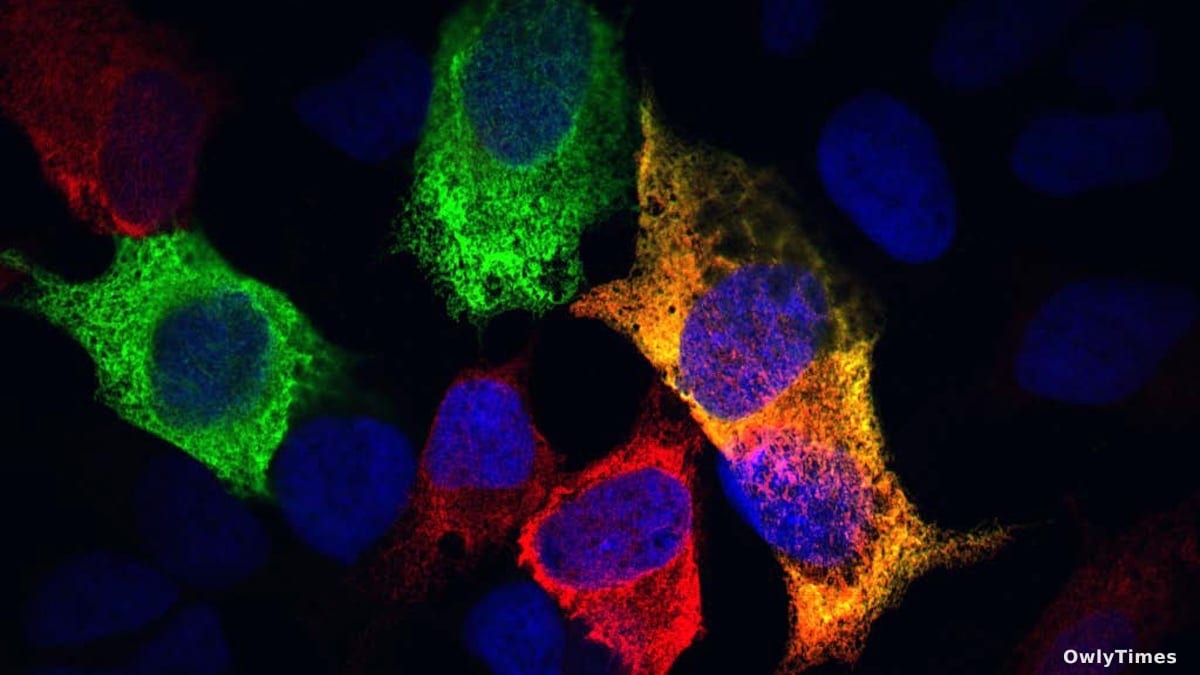
The study, conducted using the microscopic worm Caenorhabditis elegans, focused on the ER, a complex network within cells responsible for protein folding, lipid synthesis, and calcium storage. It’s a cellular workhorse, and its importance is underscored by the fact that it comprises a substantial portion of the cell’s internal volume. What Burkewitz and his team discovered wasn’t a simple degradation of the ER with age, as might be expected. Instead, they observed a targeted remodeling process, utilizing a cellular mechanism called ER-phagy – a form of autophagy where specific parts of the ER are broken down and recycled. While ER-phagy was already known to clear damaged ER, this study demonstrates it also plays a role in healthy aging, actively shifting the ER’s composition. Specifically, the researchers found a significant decrease in the amount of “rough ER” – the portion studded with ribosomes responsible for protein synthesis – while the amount of “smooth ER” remained relatively stable.
This isn’t merely a quantitative change; it’s a functional shift. Burkewitz uses the analogy of a factory: “Simply possessing all the right machinery won't make your factory productive unless that machinery is set up in the correct position and sequence.” As a cell ages, its needs change. A decline in protein synthesis, potentially linked to the observed reduction in rough ER, might reflect a shift in metabolic priorities or a reduced capacity to maintain functional proteins. The ER, acting as both a production line and a structural scaffold, reorganizes itself to optimize for these new demands. The team used advanced imaging techniques – fluorescence and electron microscopy – to visualize these dynamic changes in living worms, a crucial methodological detail that allowed them to observe the process in real-time, something difficult to achieve in more complex organisms. This is a departure from many aging studies that focus on static snapshots of cellular components, offering instead a glimpse into the process of aging.
Original reporting: ScienceAlert.
However, it’s crucial to avoid the common pitfall of translating worm biology directly to humans. While C. elegans is a powerful model organism due to its transparency and rapid aging, there are significant differences between worm and human physiology. The study doesn’t prove that the same ER remodeling occurs in humans, or that it has the same beneficial effects. Furthermore, the precise reasons why the rough ER declines remain unclear. Is it a direct response to changing cellular needs, or a consequence of accumulated damage? The researchers acknowledge that more work is needed to disentangle these possibilities. The study also doesn’t address whether manipulating ER-phagy can directly extend lifespan, only that it correlates with the aging process.
Despite these limitations, the findings offer a compelling new avenue for research into age-related diseases. The fact that these ER changes occur “relatively early in the aging process,” as Burkewitz points out, suggests they could be a trigger for downstream dysfunction and disease. This opens the door to potential therapeutic interventions aimed at modulating ER-phagy or stabilizing ER structure. The current focus of medical science is extending lifespan, but often at the cost of healthspan – the period of life spent in good health. Understanding how cells actively adapt to aging, rather than simply deteriorating, could be the key to bridging that gap. The next steps for Burkewitz and his team involve investigating the molecular mechanisms controlling ER remodeling throughout the aging process, and determining whether interventions targeting this process can promote healthy longevity. Specifically, researchers will be looking for the signals that initiate ER-phagy and the specific proteins involved in the process. Will we see drugs designed not to stop aging, but to help cells better manage it? That’s the question now driving this exciting new field of research.





