
$425 Million Signals a Shift: Redwood Materials is Now an Energy Company
$425 million. That’s the size of the Series E funding round closed by Redwood Materials this week, and it’s a figure that dramatically underscores a fundamental shift in the company’s identity. Just one year ago, JB Straubel’s battery recycling venture didn’t have an energy storage business to speak of. Now, it’s the fastest-growing unit within the company, fueled by an insatiable demand for power from the burgeoning AI industry. This isn’t simply a case of a company diversifying; it’s a strategic realignment driven by a bottleneck in the infrastructure supporting the next technological revolution.
Follow the money, and the narrative becomes clear. The influx of capital, with new investment from Google alongside existing backer Nvidia, isn’t directed towards expanding battery recycling capacity – though that remains core to the business. It’s earmarked for scaling Redwood Energy, the division leveraging repurposed EV batteries to provide on-site power solutions. This pivot is a direct response to the gridlock facing AI data center developers. According to Claire McConnell, Vice President of Business Development at Redwood Materials, developers are facing wait times of “five-plus years” to connect to the grid, a timeframe unacceptable in the fiercely competitive AI race. This creates a premium for immediate, reliable power sources – a premium Redwood Energy is positioned to capture.
Source material: TechCrunch.
The initial proof of concept, a 12 MW / 63 MWh system powering a modular data center for Crusoe in Abilene, Texas, is modest in scale. However, it’s a critical demonstration of the viability of repurposing end-of-life EV batteries. Redwood Materials, founded in 2017 with the goal of creating a circular battery supply chain, is effectively turning a waste stream into a valuable asset. This contrasts sharply with the traditional linear model of resource extraction, manufacturing, and disposal. The company’s origins in recycling scrap from battery production and consumer electronics, selling processed materials to companies like Panasonic, laid the groundwork for this innovative approach.
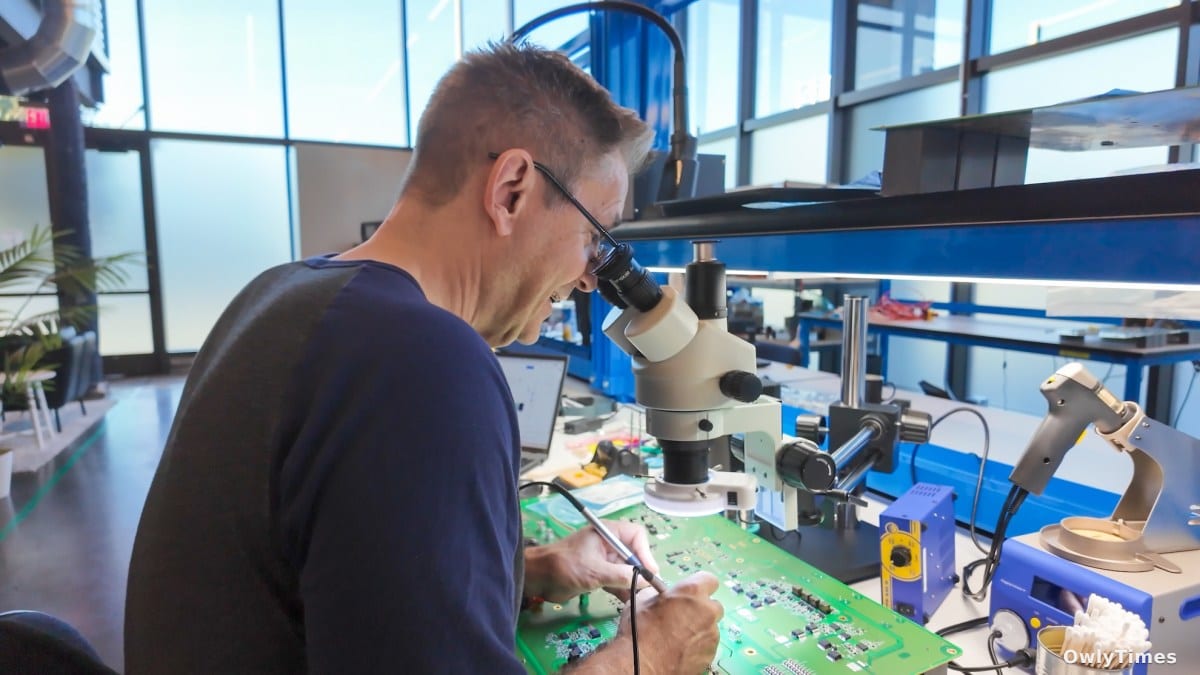
The expansion of Redwood’s San Francisco R&D lab – a fourfold increase to 55,000 square feet and a workforce of nearly 100 – further illustrates the commitment to energy storage. While these figures represent a small fraction of the company’s 1,200 total employees and sprawling Nevada campuses, the lab is the epicenter of integrating the hardware, software, and power electronics crucial for these systems. More importantly, McConnell reveals the scale of future projects in the pipeline: deals “in the hundreds of megawatt hours” and even “multiple gigawatt hours,” dwarfing the initial Crusoe deployment. This suggests Redwood isn’t simply filling a temporary gap; it’s building a substantial business around providing distributed energy resources.
The implications extend beyond AI. While data centers are the immediate driver, Redwood’s systems are also applicable to supporting renewable energy projects like solar and wind, offering a solution to intermittency challenges. However, the current investment cycle is undeniably focused on the AI boom. The tension here lies in balancing the long-term vision of a circular battery economy with the short-term demands of a rapidly expanding, energy-hungry industry. Will Redwood be able to maintain its commitment to sustainability while prioritizing the needs of hyperscalers?
What this means for your wallet: Expect to see the cost of AI-powered services – from cloud computing to advanced software – reflect the increasing cost of reliable energy. If Redwood Materials succeeds in scaling its energy storage solutions, it could mitigate some of that cost increase. However, the fundamental reality remains: powering the AI revolution requires significant energy infrastructure, and that infrastructure isn’t free. The key question for consumers and investors alike is whether Redwood can deliver on its promise of a sustainable, scalable energy solution before the grid reaches its breaking point.





