
The frustratingly slow pace of chemical discovery – often measured in months of painstaking data analysis – is facing a potential revolution. Researchers at the Department of Energy’s Lawrence Berkeley National Laboratory have developed the Digital Twin for Chemical Science (DTCS), an AI-powered platform poised to dramatically accelerate the interpretation of complex chemical experiments. While headlines proclaim a leap from months to minutes in research timelines, the reality is more nuanced, representing a significant methodological advancement rather than an instantaneous solution. The core promise of DTCS isn’t simply faster results, but a fundamentally altered research process, one where hypothesis, experimentation, and analysis occur in a continuous, iterative loop guided by artificial intelligence.
The challenge Jin Qian, a computational chemist and staff scientist at Berkeley Lab’s Chemical Sciences Division, identifies is the bottleneck between data acquisition and meaningful interpretation. “A common challenge that many researchers face during complex experiments is that although we have sophisticated tools that collect data, interpreting that data is another beast,” she explains. Traditionally, researchers embark on a linear path: formulate a hypothesis, design an experiment, collect data, build theoretical models, analyze the data, and then design follow-up experiments. This cycle, reliant on offline analysis and iterative refinement, can easily consume months. DTCS aims to collapse this sequence into a simultaneous process, offering real-time feedback and accelerating the convergence of theory and experiment.
Reporting from newscenter.lbl.gov informs this analysis.
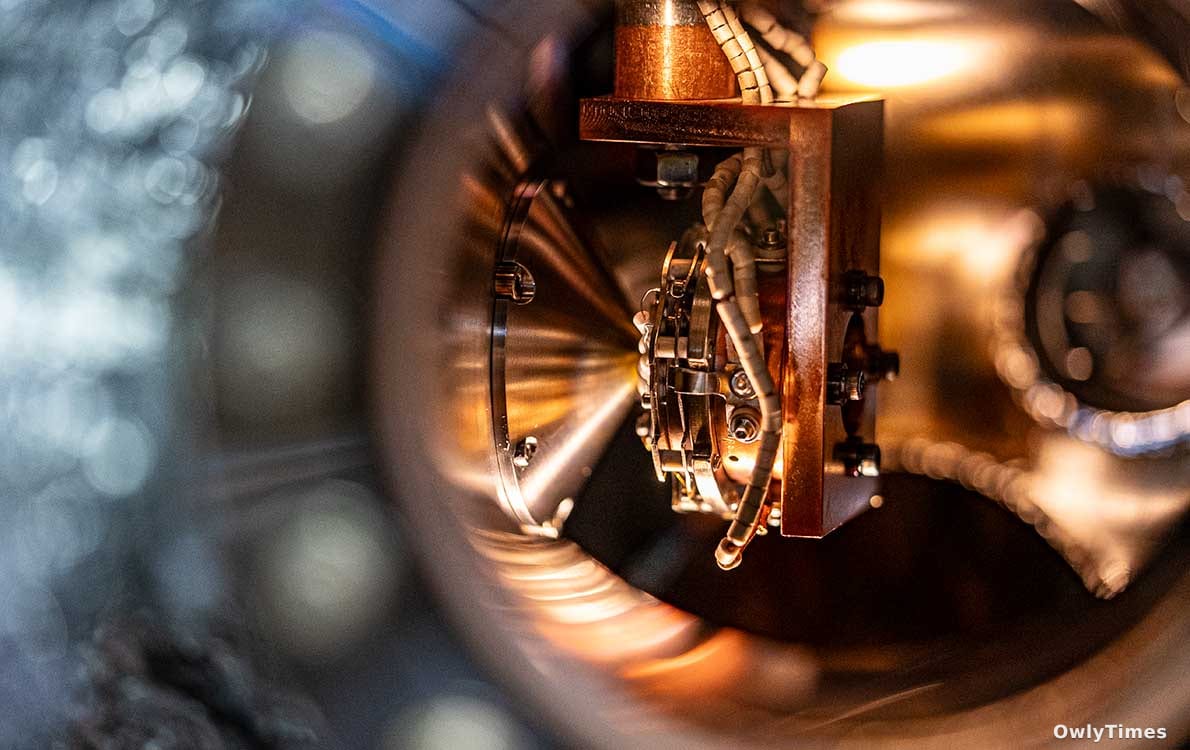
DTCS achieves this by creating a “digital replica” of ambient-pressure X-ray photoelectron spectroscopy (APXPS), a technique used to analyze the chemical composition of materials at surfaces. APXPS is already a powerful tool, identifying molecular compounds by their unique spectral “fingerprints” as they form on surfaces – crucial for understanding processes in batteries, fuel cells, and catalysis. However, deciphering those fingerprints requires significant expertise and computational power. DTCS bridges this gap by integrating physics-based simulations with experimental data, essentially predicting what the APXPS instrument should see based on theoretical models, and then comparing that prediction to the actual data in real time. This “forward loop” – simulation to experiment – is complemented by an “inverse loop” that uses experimental data to refine the underlying chemical mechanisms.
This isn’t simply about automating data analysis; it’s about enabling a new form of scientific intuition. By rapidly exploring a “chemical reaction network,” DTCS can predict how concentrations of different chemical species will evolve, identify the driving forces behind reactions, and even estimate the likelihood of molecules interacting. In a recent test case studying a silver/water interface, DTCS accurately predicted the formation of oxygen-containing species on the silver surface within minutes, validating its ability to mirror established experimental and theoretical findings. Ethan Crumlin, a staff scientist at the ALS and program lead, emphasizes the broader implications: “The Digital Twin for Chemical Science platform represents a new capability for Berkeley Lab’s Advanced Light Source and DOE’s scientific user facilities,” signaling a shift towards AI-guided experimentation as the future of scientific discovery.
However, it’s crucial to acknowledge the limitations. DTCS, in its current form, is a digital twin specifically tailored to APXPS. While the team is expanding its capabilities to include other spectroscopic techniques like Raman and infrared spectroscopy, it doesn’t represent a universal solution for all chemical characterization challenges. Furthermore, the accuracy of the digital twin is inherently dependent on the quality of the underlying physics-based simulations and the training data used to refine the AI algorithms. A poorly parameterized simulation or biased training data could lead to inaccurate predictions and potentially misleading experimental directions. The platform isn’t intended to replace the researcher, but to augment their expertise, providing a powerful tool for exploration and hypothesis validation.
The next steps for the Berkeley Lab team involve broadening the accessibility of DTCS and refining its AI capabilities. They plan to make the platform available to other scientific institutions and user facilities within the next few years, accompanied by comprehensive training programs. More importantly, they are focused on developing DTCS 2.0, which will incorporate data from a wider range of analytical techniques and leverage more sophisticated machine learning algorithms. Consider a scenario in the near future: a materials scientist attempting to optimize a new battery electrolyte. Instead of weeks of trial-and-error experimentation, they could use DTCS to simulate the electrolyte’s behavior under various conditions, identify promising compositions, and then rapidly validate those predictions with targeted experiments. The key question now isn’t if AI will transform chemical research, but how quickly these digital twins will become indispensable tools in the hands of scientists worldwide.