
Are we really talking about a revolution in scientific discovery, or just a fancier spreadsheet? The buzz around “digital twins” – those ultra-accurate computer simulations of real-world systems – is reaching a fever pitch, particularly at places like Lawrence Berkeley National Laboratory. But the real story here isn't just about building virtual replicas; it’s about fundamentally changing how science gets done, shifting from painstaking trial-and-error to predictive modeling and real-time optimization. And that shift, while promising, demands a healthy dose of skepticism about the hype.
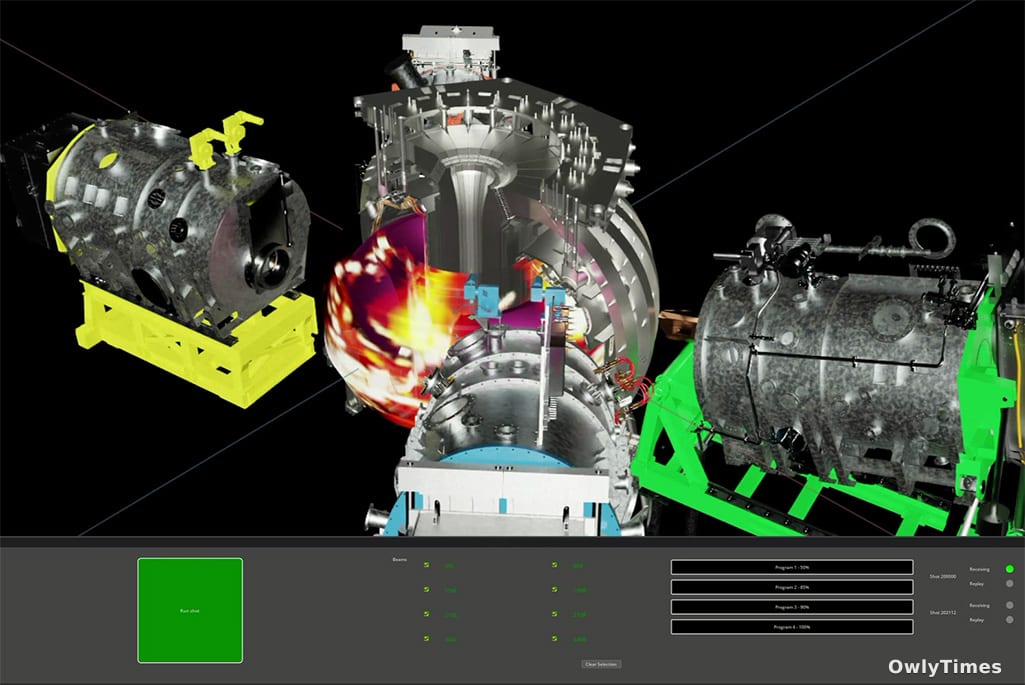
For decades, simulations have been a staple in fields like aerospace and manufacturing. But a traditional simulation is static, relying on pre-defined inputs. A digital twin, as researchers at Berkeley Lab are demonstrating, is dynamic. It’s a continuous feedback loop, ingesting real-time data from its physical counterpart – a battery, a particle accelerator, even a building’s HVAC system – to refine its predictions and suggest adjustments. This isn’t about predicting what might happen; it’s about anticipating what will happen, and intervening before problems arise. The lab is investing heavily in these models across disciplines, recognizing the potential to accelerate breakthroughs in everything from fusion energy to tsunami forecasting.
One particularly compelling example is the spatiotemporal Fourier Transformer (StFT), developed by Rémi Lehe and his team at the Accelerator Technology & Applied Physics (ATAP) Division. StFT isn’t just another AI model; it’s designed to accurately predict the long-term behavior of complex systems – like turbulent plasma in fusion devices – with a stability previously unseen. This is crucial because fusion, the holy grail of clean energy, relies on controlling incredibly chaotic processes. Traditional methods struggle to maintain control for extended periods. StFT, leveraging the computing power of the National Energy Research Scientific Computing Center (NERSC), learns patterns at multiple scales and even estimates its own uncertainty, providing trustworthy forecasts. It’s a foundational step towards automating the control of complex systems, freeing scientists from tedious manual adjustments.
But the implications extend far beyond fusion. Consider the challenge of aligning particle accelerator beamlines. Currently, this process can consume hours each day, even on smaller systems. Lehe’s team is building a digital twin of a beamline to automate this alignment, using high-fidelity simulations and machine learning to model the electron beam’s behavior. The goal isn’t just speed; it’s to replace physics-informed, ML-driven control with manual adjustments, allowing scientists to focus on higher-impact research. This isn’t about replacing scientists with algorithms; it’s about augmenting their capabilities, allowing them to tackle more ambitious problems. The work at the Berkeley Lab Laser Accelerator (BELLA) Center is a proving ground, with plans to link physical experiments directly to supercomputers for real-time modeling and decision-making.
This article draws on reporting from newscenter.lbl.gov.
The benefits aren’t limited to high-energy physics. Researchers at the University of Texas, utilizing NERSC’s Perlmutter supercomputer, have developed a digital twin for real-time tsunami forecasting. Current systems often struggle with the complexities of seismic activity, leading to delayed or inaccurate warnings. This new model dynamically adapts to real-world seafloor behavior detected by sensors, providing more predictive and timely alerts – a development so significant it’s already been awarded the 2025 ACM Gordon Bell Prize. Similarly, the Digital Twin for Chemical Sciences (DTCS) is compressing discovery timelines in chemistry and materials science, allowing researchers to observe reactions and validate hypotheses in minutes instead of months.
However, the widespread adoption of digital twins isn’t without its hurdles. Building these models requires massive amounts of data, advanced sensors, and significant computational resources. The success of the ARIES project, aiming to synchronize models of nuclear plants and grid components, hinges on ESnet’s ability to deliver data with incredibly low latency. Even tiny delays can disrupt the system. And while Berkeley Lab is making strides in standardizing API interfaces to improve compatibility across facilities, the reality is that many existing systems aren’t designed for this level of integration. The Genesis Mission’s American Science Cloud (AmSC) is a step in the right direction, but the path to a truly interconnected network of digital twins will be long and complex.
The development of biological digital twins, aimed at accelerating biofuel production, highlights another challenge: modeling living systems is inherently more complex than modeling purely physical or chemical ones. Microorganisms grow, divide, and interact in unpredictable ways. Successfully capturing these dynamics will require novel methods for obtaining and integrating imaging and genomic data. This isn’t a problem with a simple algorithmic fix; it demands a deeper understanding of the underlying biological processes.
So, what happens next? Don’t expect digital twins to magically solve all of science’s problems overnight. Instead, watch for a gradual expansion of these technologies, starting with applications where the benefits are most clear-cut – optimizing existing infrastructure, automating routine tasks, and accelerating iterative design processes. The real test will come when researchers attempt to use digital twins to tackle truly novel problems, where the underlying physics or biology is poorly understood. Specifically, keep an eye on the ALS-U upgrade at Berkeley Lab. If they can successfully deploy an AI agent, powered by a digital twin, to optimize the performance of the aging injector complex without interrupting user operations, that will be a clear signal that we’ve entered a new era of data-driven scientific discovery.