
The Calculated Risk of Appearing Normal in a Crisis
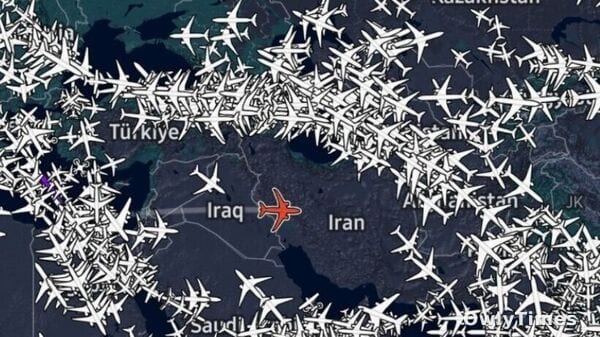
The swift clarification issued by Air India regarding viral images of its flight paths over Iran isn’t simply a matter of correcting misinformation; it’s a carefully calibrated move to project an image of stability and adherence to established safety protocols amidst escalating geopolitical risk. The airline’s denial – “Air India does not operate flights over any restricted airspace” – isn’t necessarily about what is happening, but about controlling the perception of what is happening. In a crisis where passenger confidence is paramount, appearing to react to a crisis, rather than being actively entangled in one, is a strategic imperative. This isn’t unique to Air India; airlines like Emirates, Etihad, Qatar Airways, Oman Air, SpiceJet, and IndiGo are all navigating the same treacherous airspace, and the same pressure to reassure passengers.
Mapping the Disruption and the Responses
The current disruption to flight operations, triggered by the US-Israel tensions with Iran, is impacting a critical global transit hub. Dubai International Airport, the world’s busiest, has seen mass cancellations since February 28th, leaving thousands stranded across the Middle East – in Iran, the UAE, Saudi Arabia, Kuwait, and Bahrain. The cancellation of approximately 180 flights from Mumbai, Delhi, and Bengaluru on Wednesday alone underscores the scale of the problem. While several carriers, including IndiGo, SpiceJet, and Akasa Air, have resumed limited operations, the underlying risk remains. Air India’s decision to resume flights between Jeddah and Delhi/Mumbai from March 5th, alongside additional flights to Toronto, Frankfurt, and Paris, isn’t simply a return to normalcy; it’s a demonstration to the Indian government – and to potential investors following the Tata Group’s acquisition – that the airline can adapt and maintain connectivity.
Original reporting: livemint.com.
A Historical Echo of Civilian Airspace in Conflict
The situation echoes historical precedents where civilian airspace became a contested zone during periods of heightened conflict. During the Iran-Iraq War (1980-1988), commercial airlines routinely rerouted flights to avoid direct conflict zones, often adding significant time and cost to journeys. The downing of Pan Am Flight 103 over Lockerbie, Scotland, in 1988 – though attributed to terrorism, not direct military action – highlighted the vulnerability of civilian aircraft operating near conflict areas. The current crisis differs in that the threat isn’t necessarily direct military engagement with civilian aircraft, but rather the risk of miscalculation or escalation leading to accidental targeting. This is why the emphasis on “real-time intelligence, global advisories, and continuous monitoring” in Air India’s statement is so crucial – it’s an attempt to demonstrate due diligence and mitigate risk, both real and perceived.
Who Benefits and Who Loses in the Airspace Shuffle
The immediate losers are, of course, passengers facing cancellations, delays, and increased travel costs. Airlines are also absorbing significant financial losses due to rerouting, fuel consumption, and refund policies. However, airlines that can maintain a semblance of operational continuity – and effectively communicate their safety measures – stand to gain market share and bolster their reputations. Countries actively evacuating their nationals, like India, France, Spain, and the US, are demonstrating diplomatic responsibility, but also incurring substantial logistical costs. A less visible beneficiary is the aviation intelligence industry, which is experiencing increased demand for real-time threat assessments and risk mitigation services. The long-term impact could be a permanent shift in flight routes, potentially benefiting airlines based outside the affected region.
The Next Maneuver: Monitoring Insurance Premiums
The immediate focus remains on passenger safety and operational recovery. However, the political chess move to watch next isn’t about flight schedules, but about insurance premiums. War risk insurance, already spiking for airlines operating in the region, will be the key indicator of how seriously the market assesses the long-term threat. A sustained increase in premiums will force airlines to either absorb the costs, pass them on to passengers, or further reduce service to the affected areas. The extent to which Air India – and its competitors – can navigate this financial pressure will reveal the true strategic calculus behind their current operational decisions. Will they continue to project normalcy, even as the cost of doing so rises exponentially? That’s the question that will define the next phase of this crisis.





