
Beyond the Launch: Arizona’s Unseen Role in Human Spaceflight
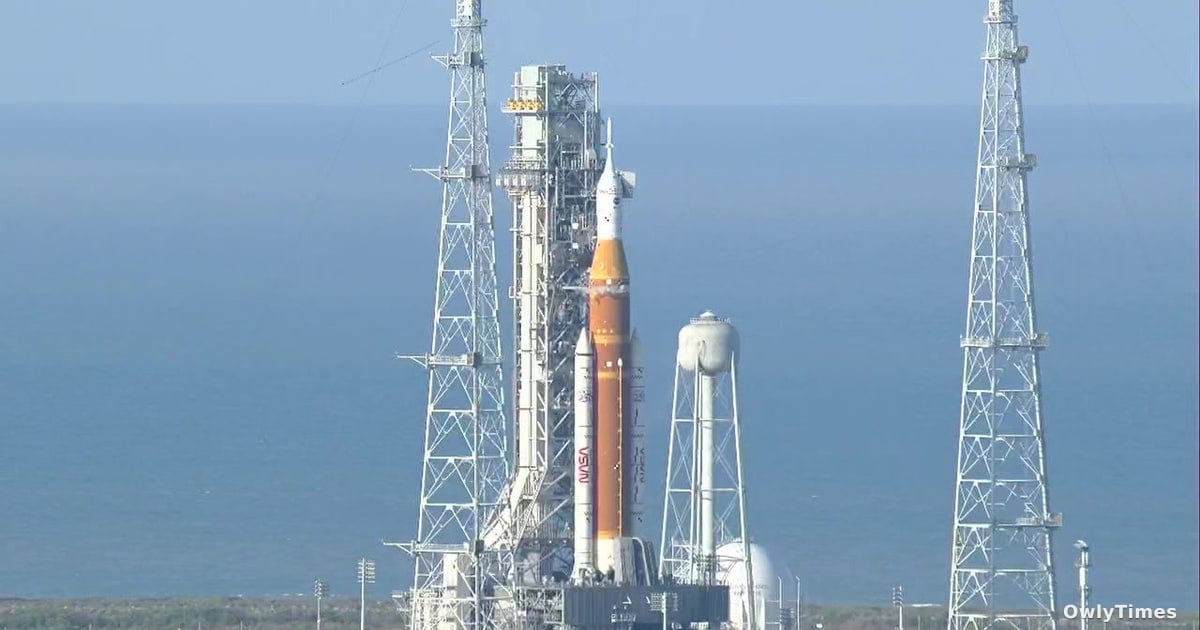
The successful launch of Artemis II on April 1st isn’t simply a triumph for NASA, or even for the United States. It’s a demonstration of a deeply interconnected national infrastructure, and a particularly striking example of how specialized expertise concentrated in unexpected places – like Arizona – makes ambitious space exploration possible. While headlines rightly focus on the four astronauts embarking on a 10-day lunar flyby, a critical, and often overlooked, component of this mission was manufactured right here in Arizona: the solid rocket boosters responsible for the initial, and most demanding, phase of flight. This isn’t a story about a state benefiting from a federal program; it’s about a state essential to the program’s success.
The sheer force required to lift the Orion spacecraft, and its crew, beyond Earth’s gravity is immense. According to NASA data, each of the two solid rocket boosters developed by Marty Frederick and his team at Northrop Grumman Civil Space Programs delivers up to 3.6 million pounds of thrust. That figure isn’t just large; it represents 75% of the total lift generated at launch. As Frederick emphasized, “It wouldn't get to space without us, so it can't get to space without Arizona.” This isn’t hyperbole. The boosters aren’t merely bolted onto the Space Launch System (SLS) rocket; they define its initial ascent profile. The mission, orbiting Earth for a day before traveling to the moon for a flyby beyond its far side, relies fundamentally on the performance of these Arizona-built components. It’s a level of contribution that often gets lost in the broader narrative of national space endeavors.
Drawn from fox10phoenix.com.
The significance of this contribution extends beyond the immediate launch. Artemis II is, crucially, a test flight. The ten days the astronauts will spend within the relatively confined space of the Orion capsule – described by Dr. Laurie Leshin, ASU Professor for Space Futures, as “about the size of the back of an SUV” – are dedicated to rigorously evaluating every system, from life support to navigation. This isn’t about reaching the moon; it’s about proving the reliability of the technology needed to sustain human presence in deep space. The boosters, having performed their critical function, provide invaluable data on structural integrity and performance under extreme conditions, informing the design of future missions. This data is particularly vital as Artemis transitions from flybys to planned lunar landings, beginning with Artemis IV.
However, it’s important to clarify what Artemis II isn’t. Despite the excitement surrounding the mission, no astronauts will be landing on the lunar surface this time. This distinction is often blurred in initial reporting, leading to public expectations that may not align with the mission’s objectives. The focus is on validating the SLS and Orion systems for future, more ambitious, landings. Furthermore, while Dr. Leshin’s current role at Arizona State University focuses on securing ASU’s involvement in future Artemis missions – including the development of lunar scouting cameras and scientific instruments – the university’s contribution isn’t limited to planning. ASU’s existing lunar camera is already actively mapping potential landing sites, demonstrating a tangible, ongoing commitment to the program.
Limitations to consider include the inherent risks associated with any human spaceflight. While the boosters have undergone extensive testing, unforeseen issues can always arise during launch and flight. Moreover, the success of Artemis II doesn’t guarantee the success of subsequent missions. Each stage of the Artemis program presents unique challenges, and continued funding and political support are essential for long-term sustainability. The current trajectory, while promising, is contingent on maintaining consistent investment in both hardware and research.
Looking ahead, the next 25 hours are critical, as mission control prepares for the trans-lunar injection burn – the maneuver that will propel the spacecraft towards lunar orbit. But beyond this immediate milestone, the real question is whether the data gathered from Artemis II will translate into tangible improvements in the design and operation of future missions. Will the lessons learned from this test flight allow for more efficient, reliable, and ultimately, more affordable access to deep space? And, perhaps more importantly, will the continued success of programs like Artemis inspire a new generation of scientists and engineers, ensuring that Arizona, and the nation, remain at the forefront of space exploration for decades to come?