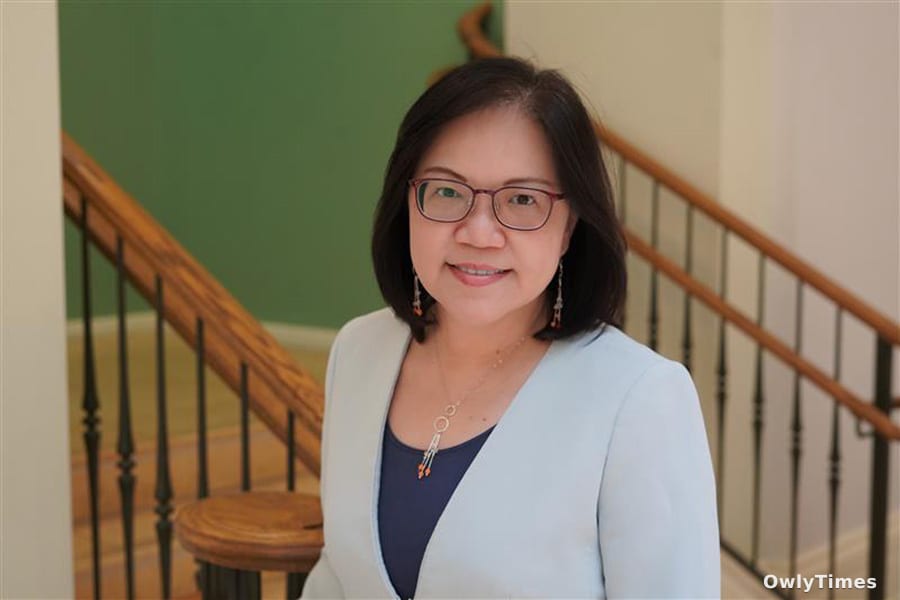

For over 14 years, the Tack Faculty Lecture Series at William & Mary has served as an intellectual bridge between academic inquiry and the broader community. On May 7, at 7 p.m., this tradition pivots toward a new frontier as Rachel Chung, a clinical professor of operations & information systems management at the Raymond A. Mason School of Business, takes the stage. Her presentation, “Wisdom & Machines: How Liberal Arts & AI Learn from Each Other,” marks a significant milestone: it is the first time a business school faculty member has been selected to headline this prestigious series.
Bridging the Gap Between Logic and Sentiment
The central tension in Chung’s research is not merely technical, but philosophical. By drawing inspiration from the literary themes of “Sense and Sensibility,” Chung contrasts the rigid logic of machine intelligence with the nuanced, value-laden decision-making characteristic of human wisdom. She posits that while AI serves as a powerful instrument for pattern recognition and information processing, it lacks the contextual depth required to transform raw data into actionable meaning.
In her analysis, Chung traces the development of modern artificial intelligence back to fundamental liberal arts disciplines, including psychology, political science, and mathematics. She invokes the work of Herbert A. Simon—specifically his research on bounded rationality—to ground the current debate in historical precedent. For investors and industry observers, this framework serves as a critical reminder that AI systems are not neutral arbiters of truth; they are reflective of the data, goals, and values selected by their human architects.
Business Scholarship as an Interdisciplinary Catalyst
Todd Mooradian, dean of the Mason School of Business, frames Chung’s selection as a reflection of a broader shift in academic priorities. By moving business research into the center of the university’s wider intellectual mission, the institution is signaling that the most pressing questions in technology are no longer confined to computer science labs. Chung, the author of “AI for Business” and “AI The Magic Box,” argues that the binary opposition between AI and the liberal arts is a false dichotomy.
Instead, she advocates for an integrated approach, citing her students’ consulting work as a practical application of these theories. This semester, students analyzed how agentic AI might enhance visitor engagement at Colonial Williamsburg, demonstrating how technology can be tailored to specific, human-centric environments. This interdisciplinary focus highlights the potential for AI to move beyond simple automation and toward more sophisticated, culturally responsive evaluation models.
Evaluating the Future of Human Labor
The economic implication of this shift is a fundamental reallocation of human attention. As AI assumes responsibility for routine, process-heavy tasks, the premium on human capabilities—such as creativity, interpretation, and complex sense-making—is expected to rise. Chung suggests that the future of knowledge work lies in this synergy: using machines to extend our “sense” while doubling down on the judgment that defines human expertise.
For those observing the intersection of AI and commerce, the lecture serves as a bellwether for how educational institutions are adapting to rapid technological integration. The next reading of institutional AI policy and the practical outcomes of student-led consulting projects like the Colonial Williamsburg study will show whether this integration can successfully bridge the gap between machine efficiency and human wisdom. Attendees interested in the discourse can RSVP online to participate in this ongoing inquiry into how we shape the tools that, in turn, shape our society.