
Beyond the Bench: How a Liberal Arts Foundation Fuels Biotech Innovation
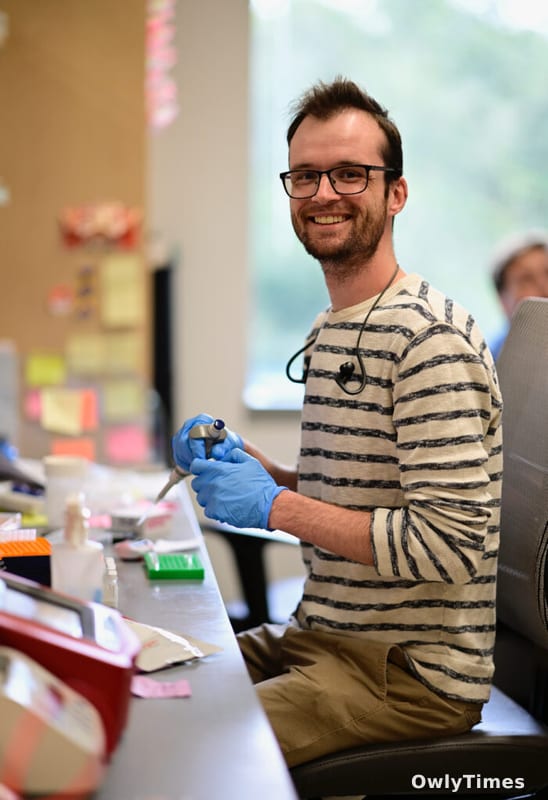
The narrative surrounding STEM education often emphasizes specialized training and technical prowess. But what role does a broader, more humanistic education play in fostering genuine scientific breakthroughs? The story of Noah Robinson ’21, now Chief Technology Officer at the California-based biotechnology company Genyro, offers a compelling answer. Robinson’s trajectory – from Saint Michael’s College biochemistry and philosophy major to Caltech Ph.D. and biotech entrepreneur – isn’t simply a tale of individual success, but a demonstration of how the seemingly disparate disciplines of the liberal arts can uniquely prepare students to navigate the complexities of modern scientific innovation. It’s a point often lost in discussions about workforce development, and one that deserves closer examination as we consider the future of scientific leadership.
Robinson’s path began with a deliberate choice: Saint Michael’s College, a smaller institution where he anticipated a more intimate learning environment. He quickly immersed himself in both the Biochemistry and Philosophy departments, a combination that, while perhaps unconventional, proved pivotal. This wasn’t about hedging his bets; Robinson actively sought to integrate these fields. He participated in “wet labs” under the guidance of Professor Mark Lubkowitz, gaining crucial hands-on experience, while simultaneously exploring logic and reasoning through philosophical inquiry with Professor Crystal L’Hôte. This dual approach, he argues, equipped him with the ability to not only do science, but to critically think about it. As Robinson himself stated, the education provided him with the skills necessary to “fit into any environment that I found myself in.” This isn’t simply a feel-good quote; it speaks to a core competency increasingly valued in rapidly evolving fields – adaptability.
Reporting from smcvt.edu informs this analysis.
The core of Robinson’s current work at Genyro revolves around a technology called “Sidewinder,” designed to revolutionize DNA assembly. Current methods for arranging DNA strands are notoriously time-consuming and prone to error. Sidewinder addresses this by incorporating a system of “page numbers” onto DNA strands, allowing for faster and more accurate alignment. This isn’t incremental improvement; it’s a potentially transformative technology with implications ranging from developing drought-resistant crops to improving access to clean water. However, it’s crucial to understand what the headlines don’t say. Genyro’s technology is still in development, and while the initial results are promising, widespread application requires further research, scaling, and regulatory approval. The company isn’t poised to solve global food security tomorrow, but it is offering a significant advancement in a critical field.
What’s particularly striking is how Robinson attributes his ability to effectively communicate the potential of Sidewinder – to investors, collaborators, and even students – to his liberal arts background. He emphasizes the importance of well-rounded thinking and communication skills, qualities often honed through humanities coursework. This highlights a tension within the scientific community: a tendency to prioritize technical expertise over the ability to articulate complex ideas to a broader audience. While deep technical knowledge is essential, it’s insufficient for translating research into real-world impact. Robinson’s success underscores the value of cultivating scientists who are not only brilliant in the lab, but also adept at storytelling and persuasion. Professor Lubkowitz noted Robinson “took advantage of everything St. Mike’s offered him,” embracing the interdisciplinary nature of the curriculum.
However, it’s important to acknowledge the limitations of drawing broad conclusions from a single case study. Robinson is an exceptional individual, and his success is undoubtedly due to a combination of talent, hard work, and opportunity. Furthermore, Saint Michael’s College, while providing a valuable liberal arts education, is a relatively small institution, and its model may not be easily replicable at larger universities. The “small school model” Robinson cites – with its emphasis on close faculty interaction – is a distinct advantage not universally available. It’s also worth noting that the biotech industry is notoriously competitive, and even groundbreaking technologies face significant hurdles in reaching the market.
Looking ahead, the critical next step for Genyro is demonstrating the scalability and cost-effectiveness of Sidewinder technology. Can it be reliably implemented in large-scale production environments? Will the cost savings translate into tangible benefits for end-users? Beyond Genyro, the broader research question is whether intentionally integrating humanities coursework into STEM curricula can demonstrably improve innovation rates and entrepreneurial success. We should be tracking the career trajectories of students who pursue this interdisciplinary path, and comparing them to those who follow more traditional STEM routes. The future of scientific progress may depend not just on what we teach, but how we teach it. Will universities adapt to prioritize not just technical skills, but the broader intellectual agility that individuals like Noah Robinson demonstrate is so vital?