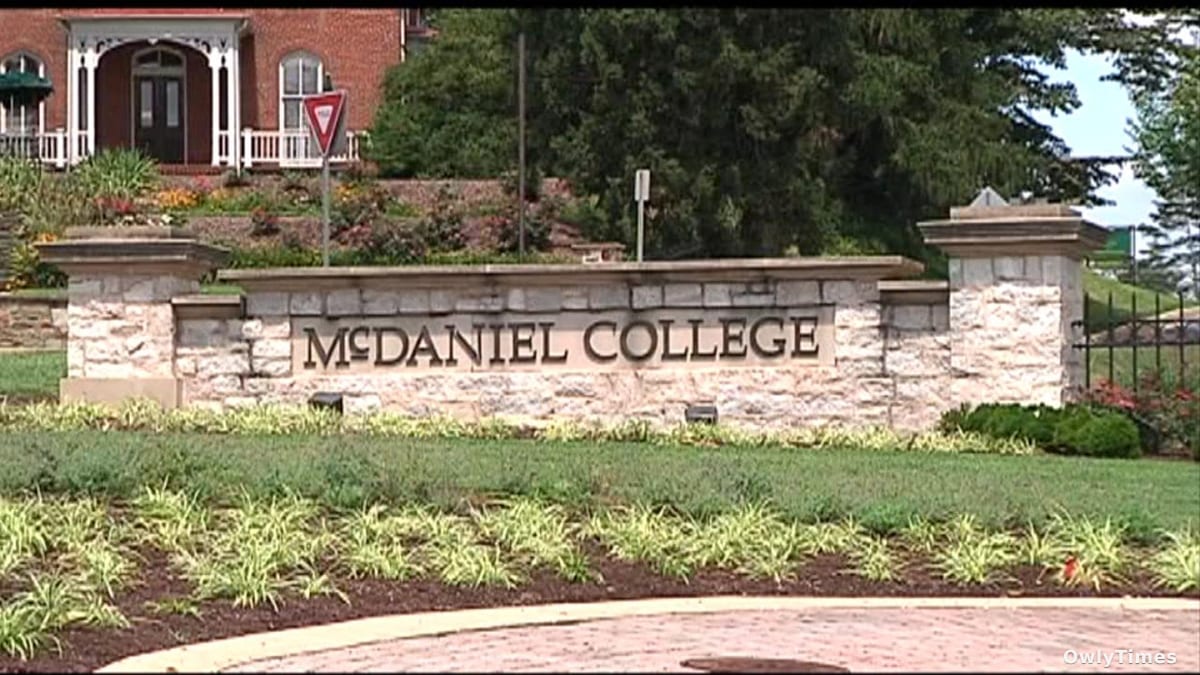

Is a liberal arts education officially…over? Not in the “dusty books and philosophical debates are irrelevant” sense, but in the practical, “what job will this actually get me” sense. McDaniel College in Westminster, Maryland, is betting big that the answer isn’t more philosophy, but a new School of Business and Technology, announced this week with a projected launch in fall 2027. The real story here isn’t a college adding another school – it’s the quiet admission that even institutions traditionally focused on broad intellectual development are now compelled to prioritize demonstrable career pathways, and specifically, pathways steeped in tech.
President Julia Jasken frames the move as strengthening academic offerings and preparing students for “evolving workforce demands,” a phrase that’s become the default justification for nearly every higher education shift in the last decade. And it’s true, business and tech programs are already popular at McDaniel. But consolidating existing programs – accounting, economics, computer science, and more – under a single umbrella isn’t about organic growth; it’s about signaling a deliberate realignment. It’s a recognition that a degree in, say, international business, carries significantly more weight when explicitly linked to data analytics or cybersecurity.
Reporting from foxbaltimore.com informs this analysis.
The financial backing is telling. A $2 million grant from the Maryland E-Nnovation Initiative Fund (MEIF), matched by a $15 million bequest from the late Jonas Eshelman, a 1950 alumnus, isn’t seed money for a poetry center. This is venture capital for curriculum. Eshelman’s gift, the largest in McDaniel’s history, is being strategically deployed to attract talent – specifically, an inaugural dean and an Endowed Professor of Computer Science and Technology Innovation. The simultaneous search for both positions suggests McDaniel isn’t just adding tech to the existing structure; they’re building a leadership core specifically focused on integrating it. This isn’t about sprinkling some coding classes onto the humanities curriculum; it’s a fundamental restructuring.
What’s particularly interesting is the timing. We’re two years into a tech correction, with layoffs dominating headlines and the breathless hype of 2021-2022 largely deflated. Yet, colleges are still doubling down. Why? Because the underlying demand isn’t gone, it’s just…shifted. The need for individuals who can bridge the gap between business strategy and technological implementation isn’t tied to the fortunes of any single tech company. It’s tied to the fundamental reality that every industry, from agriculture to healthcare, is now reliant on technology. The students McDaniel is trying to attract aren’t necessarily aspiring software engineers; they’re future managers, marketers, and entrepreneurs who need to understand the technology they’ll be using to run their businesses.
This isn’t just a McDaniel story, either. It’s a microcosm of a larger trend. Across the country, colleges are scrambling to demonstrate ROI – return on investment – to prospective students and their parents, who are increasingly skeptical of the value proposition of a traditional four-year degree. The pressure is particularly acute at smaller liberal arts colleges like McDaniel, which rely heavily on tuition revenue. The school’s Board of Trustees didn’t unanimously endorse this plan because they’re passionate about interdisciplinary learning; they endorsed it because they believe it’s essential for the college’s survival.
So, watch this closely. In the fall of 2027, when McDaniel’s School of Business and Technology opens its doors, pay attention not to the ribbon-cutting ceremony, but to the job placement rates of its graduates. Will they be landing positions at FAANG companies? Probably not. But will they be employed, earning a living wage, and applying their skills in a meaningful way? That will be the true measure of success. And it will be a bellwether for the future of higher education itself: are colleges preparing students for the world as it is, or the world as it was?