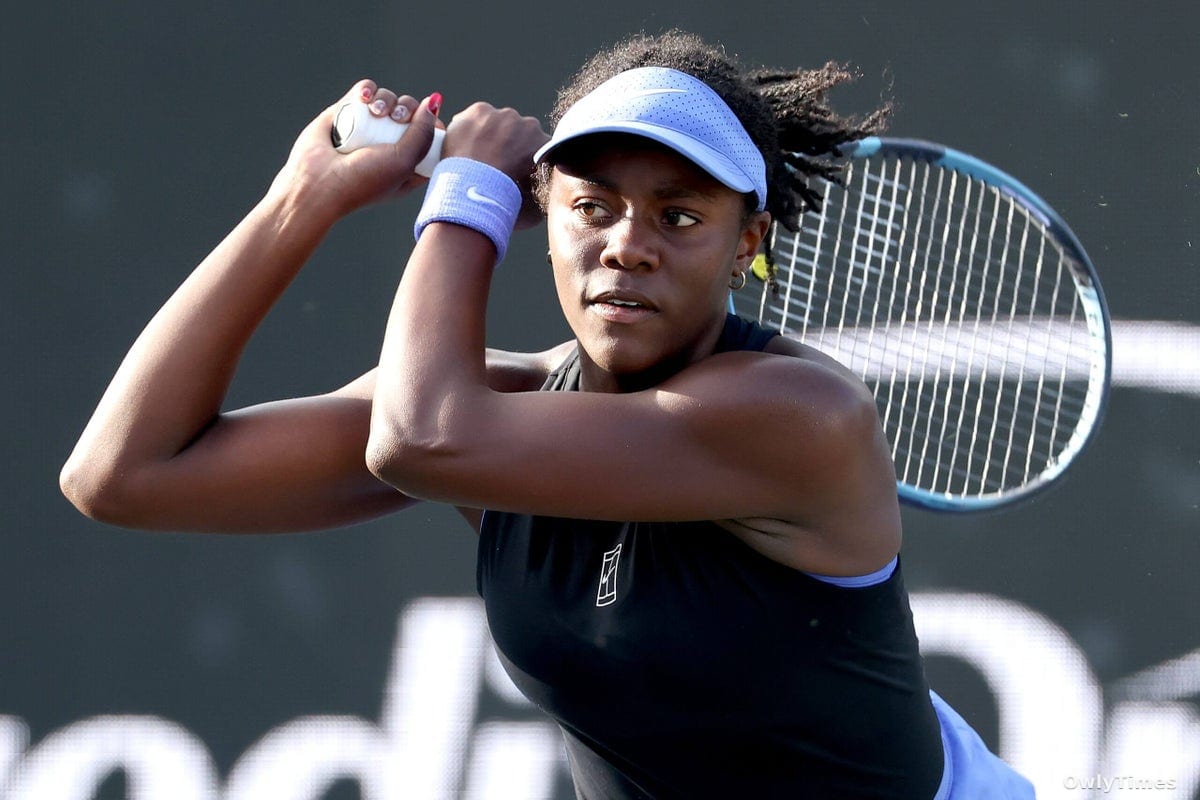

The humid air of Florence, S.C., in 2022 did not feel like the birthplace of a tactical revolution. But on a dusty clay court at a small ITF World Tennis Tour event—three rungs below the glitz of the WTA Tour—Jermaine Jenkins saw something that defied modern tennis physics. A 15-year-old girl named Akasha Urhobo, who had traveled to the tournament from her home in Fort Lauderdale, Fla., was playing like a ghost from a bygone era. She was not trading cautious, heavy-spin groundstrokes from the safety of the baseline; instead, she was storming the net on absolutely everything.
"I just remember watching her from a distance and being like: ‘Damn, she’s coming in on everything,’” recalled Jenkins, a former hitting partner for Venus Williams who has served as a national development coach at the U.S. Tennis Association since 2019. “Like… You’re not even trying to build a point! Just a little patience, you know? But, she was having legit chances at making volleys as she’s coming in."
A Rebellion Against the Baseline Era
In the modern landscape of women’s tennis, charging the net on every single point is essentially a tactical suicide mission. The modern baseline is where champions are forged, utilizing high-tech rackets and extreme athleticism to punish anything short. Yet, Urhobo’s radical, net-rushing style is a direct inheritance from her father and coach, TJ, who grew up idolizing serve-and-volley icons Pat Rafter and Pete Sampras. When Urhobo was just two years old, her father put a racket in her hand, prioritizing volleys and overheads before she had even learned to construct a rally from the back.
The romanticism of that vintage style crystallized for her in 2019 at the Miami Open, where she watched Taylor Townsend disrupt Simona Halep with an aggressive net game. From that moment, Urhobo was all in on the throwback approach. While peers of her generation like Iva Jović—now a top-20 junior player—and Clervie Ngounoe climbed the ranks with traditional baseline aggression, Urhobo became a beautiful anomaly. But as the competition grew stiffer, the limits of pure instinct became clear; to survive the professional ranks, she had to learn the sport backwards.
The Radical Reconstruction of a Maverick
The call that changed everything came 11 months ago. Kathy Rinaldi, the head of women’s tennis at the USTA who stepped down earlier this month after 16 years of service, phoned Jenkins with a unique assignment. She had a project for him: a raw, hyper-athletic teenager who needed to build a modern foundation without losing her competitive soul.
"We started last June," Jenkins said of their partnership, which began a grueling process of tactical reprogramming. To survive against elite baseliners, Urhobo had to develop what Jenkins calls "stability from the back." They worked on service variety, moving away from her habit of hitting heavy kick serves on both first and second deliveries—a tactic she used simply to buy time to run to the net. Jenkins compared the adjustment to a baseball pitcher who cannot rely solely on a curveball, introducing fastballs and sliders to keep opponents off-balance.
Beyond the Clay-Court Grind
The results of this stylistic compromise have been nothing short of explosive. Urhobo finished last year ranked world No. 432, but she has since climbed nearly 250 spots in the rankings. Armed with a newly structured baseline game, she went 29-7 this year, dominating the USTA's wild card challenge. For five weeks between the end of March and the start of May, she accumulated more ranking points on clay than any other American player outside the top 100.
That breakout stretch included qualifying for the main draw at the WTA 500 Charleston Open in March. There, she held a commanding 7-5, 3-0 lead over Argentina's Solana Sierra—who recently took world-class talent Coco Gauff to three sets at the Italian Open—before Sierra retired due to injury. Though Urhobo fell in the subsequent round, the experience demystified the upper echelon of the sport. "They’re just like me," Urhobo reflected. "They’re just playing at this higher level, and if I keep my head down and keep grinding, I can be there too."
Why This Hybrid Experiment Matters for Tennis
Beyond the headlines of a rapid teenage rise, Urhobo's journey challenges the very philosophy of modern player development. In an era where sports analytics often homogenize playstyles—turning tennis into a repetitive battle of baseline attrition—Urhobo is a living test case for stylistic diversity. If Jenkins can successfully marry her innate net-rushing instincts with a disciplined baseline defense, she won't just be a tough opponent; she will be a tactical disruptor.
The ultimate test of this hybrid experiment arrives on the red clay of Paris. Urhobo is set to make her Grand Slam main-draw debut at the French Open against Katie Boulter of Great Britain. Whether Urhobo's throwback instincts can disrupt the disciplined baseline power of the modern tour will be the defining story of her Parisian debut, and perhaps, a glimpse into a more creative future for the sport.