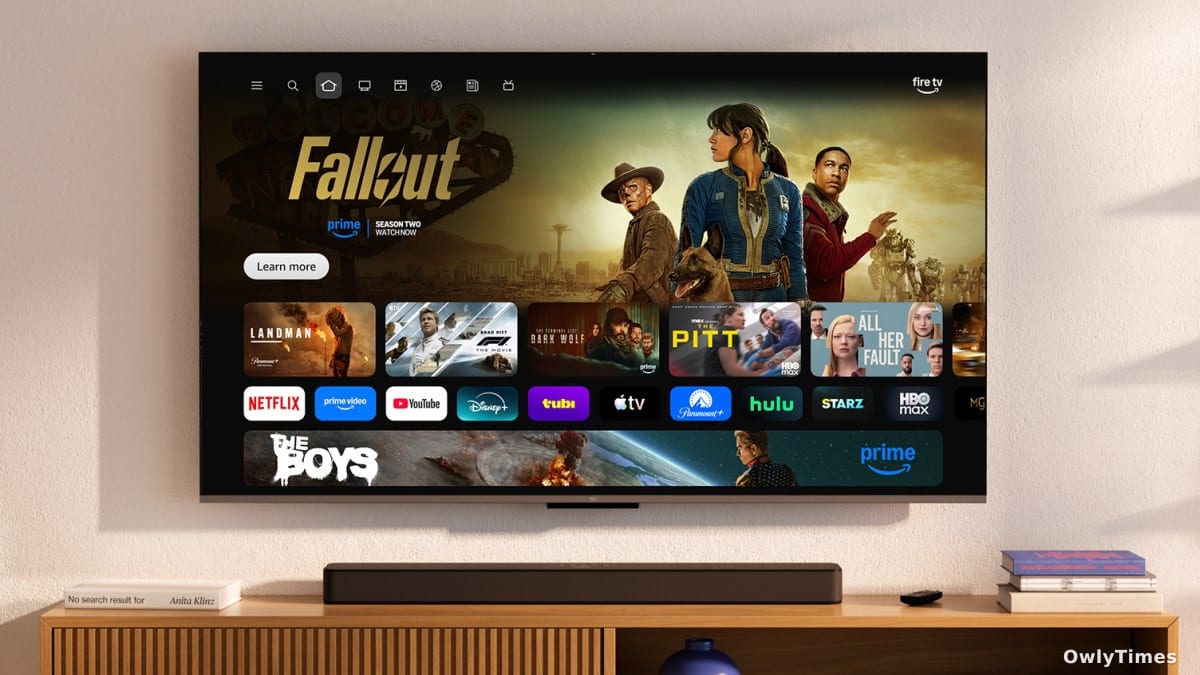

The living room felt…full. Not with people, but with possibility. My friend, Maya, scrolled endlessly through her Fire TV, a frustrated sigh escaping her lips every few seconds. “There’s just too much,” she finally declared, abandoning the search for a Friday night movie. “I spend more time looking for something to watch than actually watching anything.” Maya’s struggle isn’t unique. It’s a symptom of a streaming landscape that’s exploded in both content and complexity, and it’s precisely the problem Amazon is attempting to solve with its newly redesigned Fire TV interface, rolling out now to millions of homes. But this isn’t just about a cleaner menu; it’s about Amazon’s increasingly central role in curating – and controlling – how we experience entertainment.
The Paradox of Choice in the Streaming Wars
The sheer volume of streaming services is staggering. According to a recent report by Digital TV Solutions, the average US household now subscribes to over five streaming services, a 30% increase from 2019. This proliferation, while offering unprecedented choice, has created a “paradox of choice,” where the effort required to navigate options becomes paralyzing. Sarah Perez of TechCrunch noted this shift, observing that platforms like Fire TV are evolving from simple launchpads for apps into full-fledged discovery hubs. Amazon’s redesign, previewed at the Consumer Electronics Show in January, directly addresses this. The jump from a maximum of six pinned apps on the home screen to twenty, achieved through smaller icons, is a practical response to the reality of our streaming habits. It’s a tacit acknowledgement that most of us aren’t loyal to just a handful of services anymore.
This article draws on reporting from TechCrunch.
The aesthetic changes – rounded corners, gradients, consistent typography – are more than just cosmetic. They signal a deliberate attempt to create a calmer, more inviting experience, a visual antidote to the frantic scrolling that’s become synonymous with streaming. But the real power lies in the “For You” tabs, which leverage Amazon’s vast data collection to surface content based on viewing history and subscriptions. This isn’t neutral curation; it’s algorithmic steering. While convenient, it raises questions about the potential for filter bubbles and the diminishing of serendipitous discovery. Are we being shown what we want to see, or what Amazon wants us to see?
Alexa+ and the AI-Powered Living Room
The integration of Alexa+, available to Prime subscribers, adds another layer to this dynamic. Alexa+ isn’t just a voice assistant; it’s an AI companion capable of answering nuanced questions about content – “Find me more movies that have the same look” – and interacting directly with on-screen elements. This moves beyond simple search and into the realm of conversational entertainment discovery. Amazon is betting that this natural language interface will be more intuitive and engaging than traditional menu navigation. However, the reliance on AI also introduces potential biases and privacy concerns. The more data Alexa+ collects, the more personalized (and potentially manipulative) the experience becomes. The fact that access to Alexa+ is bundled with a Prime subscription further solidifies Amazon’s ecosystem lock-in, incentivizing users to remain within its walled garden.
Beyond the Interface: Amazon’s Expanding Influence
This update isn’t isolated to Fire TV devices. It’s rolling out across a range of Amazon-branded TVs and those made by partners like Hisense, Insignia, Panasonic, and TCL, extending Amazon’s influence far beyond its own hardware. Even the new Amazon Ember Artline televisions, designed to function as art displays when not in use, are integrated into this ecosystem. This isn’t simply about selling more devices; it’s about establishing Amazon as the central nervous system of the modern living room. The company is quietly building a platform that controls not just access to content, but also how we find and consume it.
The initial rollout to the Fire TV Stick 4K Plus, Fire TV Stick 4K Max (2nd Gen), and Fire TV Omni Mini-LED Series in the U.S. is a strategic move, targeting the most popular devices first. The subsequent expansion to more countries and devices this spring will solidify Amazon’s position as a dominant player in the streaming landscape. This isn’t just a software update; it’s a power play. The question now isn’t whether Amazon’s redesign will improve the user experience – it likely will, at least initially. The more pressing question is: as Amazon increasingly curates our entertainment choices, will we still be discovering new things, or simply reinforcing our existing preferences within an algorithmically defined comfort zone? And, crucially, what will it cost us in terms of genuine cultural exploration?