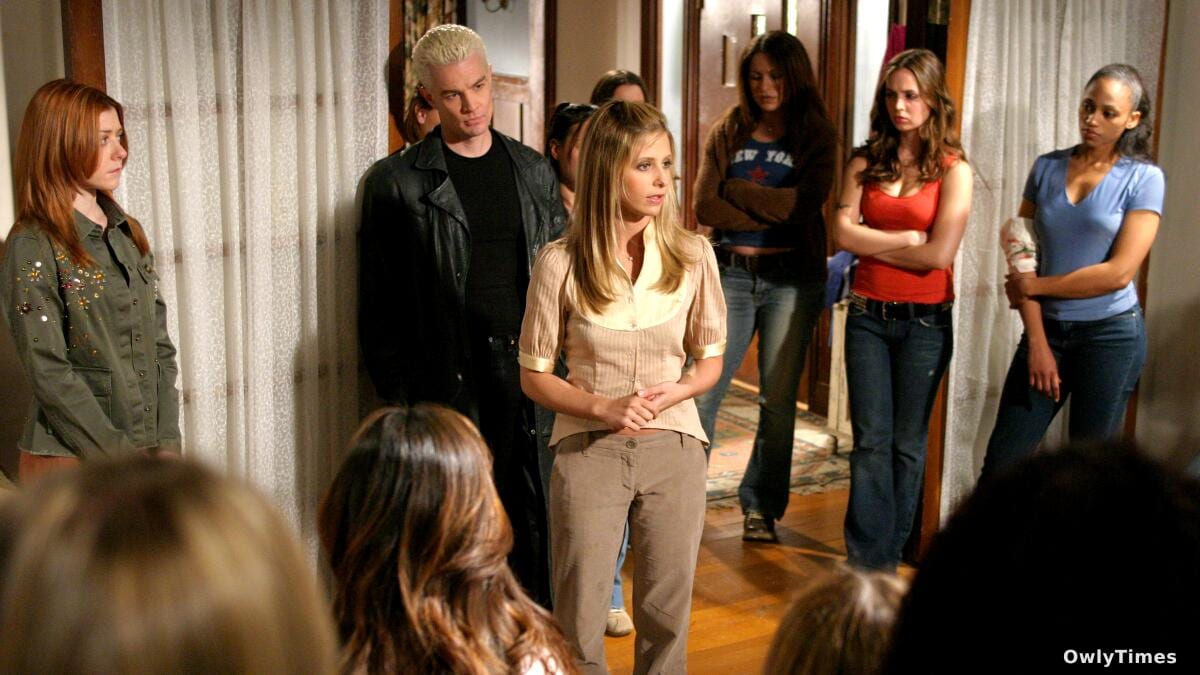

Is Hollywood officially allergic to doing anything right with beloved intellectual property? The implosion of Hulu’s “Buffy: New Sunnydale” reboot, barely a year after Sarah Michelle Gellar confirmed its development, isn’t just a disappointment for fans—it’s a symptom of a much deeper malaise within the streaming wars. The real story here isn't the cancellation of a vampire drama—it's the increasingly erratic decision-making that defines Disney’s streaming strategy, and the way it consistently undervalues passionate fanbases.
The details are familiar enough. Gellar delivered the news via Instagram, a platform now serving as the primary death knell for projects studios lack the courage to publicly address. She was set to reprise her role and executive produce alongside Oscar-winner Chloé Zhao, a pairing that initially felt…promising. Zhao, speaking at the 2026 Academy Awards red carpet, even admitted she wasn’t surprised by the cancellation, a level of candor that speaks volumes. Hulu began assembling a pilot cast last year, with Ryan Kiera Armstrong slated to play the new slayer, but apparently, assembling the pieces wasn’t enough to justify continuing. A rally organized by Los Angeles resident Bren O’Brien outside Hulu’s Santa Monica headquarters, complete with hand-painted signs declaring “Bring Buffy Back!!,” underscores the level of investment fans had already made.
But let’s be clear: this isn’t about whether a “Buffy” reboot should exist. It’s about the pattern of starts and stops that plague these revivals. Multiple attempts have reportedly floundered in development hell before, and the shadow of creator Joss Whedon’s alleged misconduct hangs over any attempt to revisit the Sunnydale universe. That’s a legitimate concern, and one that any responsible production would need to address head-on. However, the fact that Hulu greenlit the project at all, only to pull the plug after significant investment in pre-production, suggests a lack of internal conviction. Disney, which owns Hulu, has been aggressively cutting costs across its streaming platforms, and “Buffy” likely became a casualty of those broader financial pressures. In the last fiscal quarter, Disney reported a $125 million loss in its streaming division, a figure that dwarfs the potential cost of completing a single “Buffy” season.
This piece references the the Los Angeles Times report.
The problem isn’t just the money, though. It’s the signal this sends to audiences. Streaming services built their empires on the promise of endless content, catering to niche interests and reviving beloved franchises. Now, they’re increasingly demonstrating a willingness to abandon those promises at the first sign of trouble. This isn’t about protecting artistic integrity; it’s about chasing quarterly earnings. O’Brien’s frustration – “It’s just a no-brainer” – perfectly encapsulates the disconnect between what fans want and what corporate executives deem “valuable.” A show with a dedicated, multi-generational fanbase is valuable, but only if you’re willing to nurture it, not treat it as a disposable asset. The fact that fans are already organizing online and creating edits, as O’Brien noted, proves the appetite is still there.
This isn’t an isolated incident. We’ve seen similar patterns with other revivals and reboots across multiple platforms. The industry is obsessed with IP, but increasingly unwilling to commit to the long-term investment required to do it right. They want the nostalgia bump without the risk. And the audience? We’re left feeling like we’re being toyed with, offered a glimpse of something we love only to have it snatched away. Expect to see more of this in the coming months. My prediction: within the next 18 months, at least three other high-profile revivals will meet a similar fate, leaving fans wondering if the streaming era will be remembered more for its broken promises than its groundbreaking content. The question isn’t if another network will pick up “Buffy,” but whether any network will be willing to treat it with the respect it deserves.