
The Speed of Escalation: Examining Police Response to Mental Health Crises
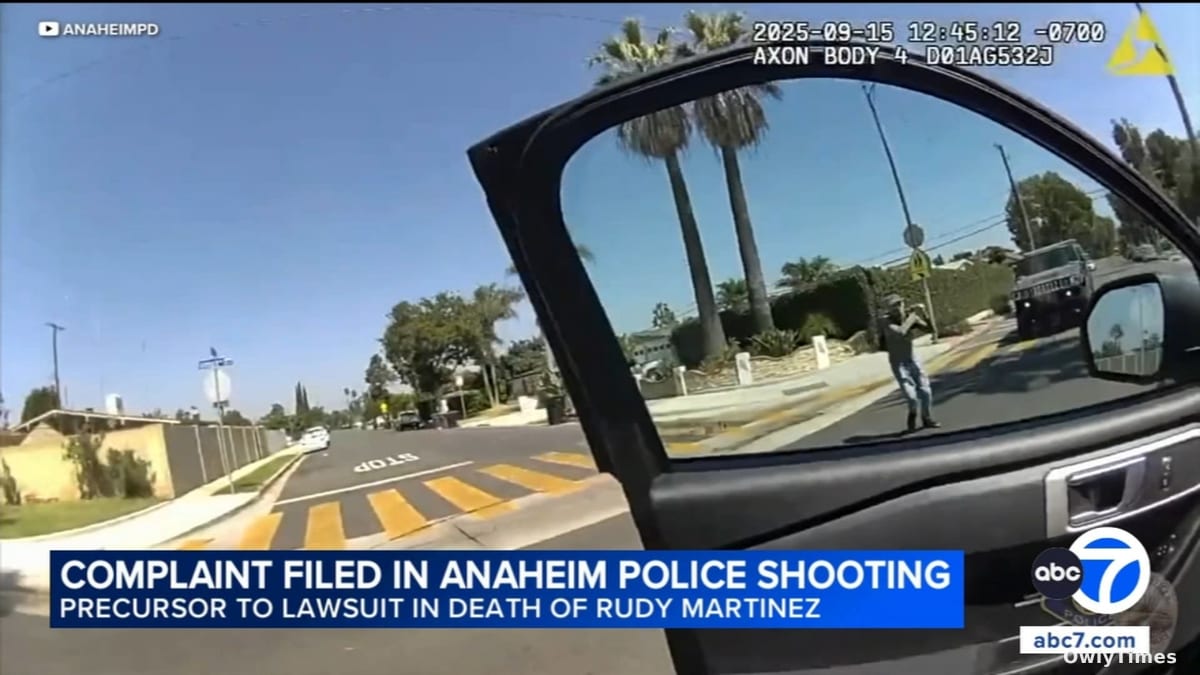
The fatal shooting of Rudy Martinez by Anaheim police in September 2025, and the subsequent legal claim filed by his family on February 26, 2026, isn’t simply a case of disputed facts. It’s a stark illustration of a critical, and increasingly urgent, question facing communities nationwide: how do we reconcile the need for public safety with the imperative to provide compassionate, de-escalated responses to individuals experiencing mental health crises? While initial reports often frame these incidents as officers reacting to immediate threats, a closer look at the available evidence – specifically, the bodycam footage central to this case – reveals a timeline measured in seconds, raising concerns about the options considered, and not considered, before lethal force was deployed. The narrative isn’t necessarily about whether Martinez posed a threat, but how quickly that threat was met with a fatal response.
Reporting from abc7.com informs this analysis.
The claim, filed as a precursor to a lawsuit, centers on the assertion that the Anaheim Police Department used unnecessary deadly force against Martinez, who attorneys for the family state was in the midst of a mental health episode. Jamal Tooson, an attorney representing the Martinez family, stated at a press conference Thursday, “We believe in fact the shooting was murder and we are demanding justice.” This strong language reflects the family’s interpretation of the bodycam footage, which reportedly shows Martinez armed with a shovel, striking a police vehicle before approaching the officer. The core of the legal argument, however, isn’t the presence of the shovel itself, but the speed with which the situation escalated. Tooson emphasized that the officer did not attempt to reverse the patrol car, nor did they utilize non-lethal force options before drawing and firing their weapon. The sequence, as described by the legal team, paints a picture of immediate escalation rather than a measured response.
This case highlights a fundamental tension in how law enforcement is currently equipped to handle mental health calls. The city of Anaheim, through spokesperson Mike Lyster, defended the officer’s actions, stating, “Our officer responded to a call next to an elementary school in session where, without provocation, he immediately faced a threat to life and safety.” This statement underscores the perceived immediacy of the danger and the officer’s responsibility to protect both themselves and students at the nearby school. However, it also reveals a justification rooted in a reactive, rather than proactive, approach. Lyster acknowledged the “importance of mental health intervention,” but argued that “there was no time to bring in resources and to do so without putting the lives of mental health workers at risk.” This framing positions mental health intervention as a desirable outcome, but one rendered impossible by the circumstances.
The critical point here isn’t simply disagreement over the facts – both sides acknowledge Martinez was armed with a shovel and approached the officer. Instead, the dispute lies in the interpretation of those facts and the available response options. The claim hinges on the argument that the officer’s actions demonstrate a failure to prioritize de-escalation techniques and a reliance on lethal force as the first, rather than last, resort. This isn’t an isolated incident. Data from 2024, compiled by the National Alliance on Mental Illness, showed that individuals with untreated mental illness are 16 times more likely to be killed during a police encounter than other civilians. While this statistic doesn’t establish causality, it does suggest a disproportionate risk faced by this vulnerable population. The question becomes: is this a systemic issue of training and protocol, or a series of unfortunate individual incidents?
Limitations to Consider
It’s crucial to acknowledge the limitations of drawing broad conclusions from a single case. The bodycam footage, while central to the claim, represents only one perspective of the event. A full understanding requires a comprehensive investigation, including forensic analysis, witness statements, and a thorough review of the officer’s training record. Furthermore, the context of the call – proximity to an elementary school – undoubtedly influenced the officer’s perception of the threat and their decision-making process. It’s also important to note that police officers are often placed in incredibly difficult and rapidly evolving situations, requiring split-second judgments with potentially life-or-death consequences. However, acknowledging these complexities doesn’t negate the need to critically examine the protocols and training that govern these encounters.
Looking ahead, the focus must shift towards preventative measures and alternative response models. The Anaheim case underscores the need for increased investment in mobile crisis teams – teams comprised of mental health professionals trained to de-escalate situations and provide on-site support. These teams could be dispatched alongside, or even instead of, law enforcement in cases where an individual is believed to be experiencing a mental health crisis. Furthermore, enhanced training for police officers in de-escalation techniques, crisis intervention, and recognizing the signs of mental illness is paramount. But beyond training, we need to ask: what systemic changes are necessary to ensure that mental health crises are treated as public health issues, rather than criminal justice matters? Will communities prioritize funding for preventative mental healthcare, or continue to rely on reactive, and often tragic, police interventions? The answer to that question will determine whether cases like Rudy Martinez’s become less frequent, or simply continue to fuel a cycle of tragedy and distrust.