
The question of how law enforcement responds to individuals experiencing mental health crises has once again surged to the forefront, not with a sweeping policy change or a new training program, but with a single personnel decision in Hartford, Connecticut. The firing of Officer Joseph Magnano on Friday, March 27, 2026, for his role in the fatal shooting of Steven Jones isn’t simply about accountability for one officer; it’s a stark illustration of the tension between rapid response tactics and de-escalation strategies, a conflict playing out in police departments nationwide as calls for mental health support increasingly fall to officers ill-equipped to provide it. While headlines focus on the 30-second timeframe between Magnano’s arrival and the commencement of gunfire, the deeper issue is the systemic failure to prioritize a measured approach when confronting vulnerable individuals.
The incident, captured on police body camera footage released earlier this month, unfolded on February 27th. Jones, experiencing a mental health crisis and armed with a knife – a detail frequently emphasized in initial reporting – was initially met by officers who employed a textbook de-escalation strategy. For twelve minutes, officers maintained distance, spoke calmly, and appeared to successfully calm Jones, according to the footage. This initial response, characterized by patience and attempts to build rapport, stands in sharp contrast to the actions of Magnano, a probationary officer who arrived on the scene and almost immediately escalated the situation. Hartford Mayor Arunan Arulampalam stated he terminated Magnano because the officer “did not work with his teammates,” failed to de-escalate, and ultimately caused the tragic death of Jones. The mayor’s assessment isn’t a condemnation of policing itself, but a specific critique of a deviation from established protocol, a protocol that, in this instance, was working.
Drawn from newsday.com.
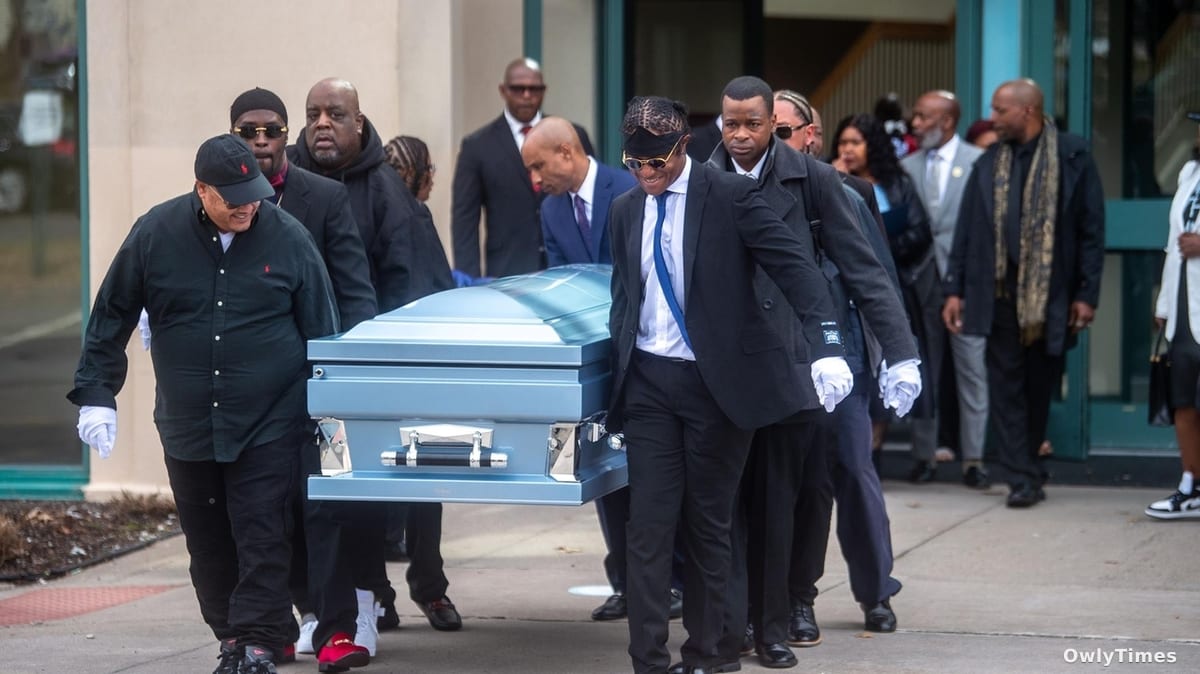
The immediate aftermath of the shooting saw widespread public outcry, culminating in a funeral service attended by civil rights leaders Al Sharpton and attorney Ben Crump, who is representing the Jones family. Crump’s statement at the funeral – that Jones “needed a helping hand…but instead he got nine bullet holes” – encapsulates the core grievance: a system that too often defaults to force when compassion and specialized intervention are required. It’s crucial to note, however, that the investigation is ongoing. The state inspector general’s office is currently determining whether to file criminal charges against Magnano, and the findings of that investigation will be pivotal in understanding the full legal and ethical implications of the shooting. The union representing Hartford police, led by President James Rutkauski, has defended Magnano’s actions as justified and consistent with department policy, raising the specter of officers hesitating in future critical situations for fear of repercussions.
This defense, while predictable, highlights a critical concern: the potential for “political second-guessing” to paralyze officers in genuinely life-threatening scenarios. Rutkauski argues that such hesitation will “slow responses and leave families more exposed,” a claim that warrants serious consideration. However, it’s a false equivalency to equate a cautious, de-escalated approach with inaction. The initial responding officers demonstrated that a measured response is possible, even in a tense situation involving a weapon. The problem isn’t the avoidance of force, but the premature and seemingly unnecessary deployment of it. Furthermore, the timing of this shooting – just days after another Hartford officer fatally shot Everard Walker during a mental health welfare check – suggests a pattern of escalating force in crisis situations, a pattern that demands systemic scrutiny. In the Walker case, officers were accompanied by mental health professionals, yet the situation still ended in gunfire, raising questions about the effectiveness of even collaborative responses.
Limitations to consider include the inherent difficulty of assessing a situation in real-time, particularly when an individual is in crisis and may not be communicating effectively. Body camera footage, while valuable, provides only one perspective and cannot fully capture the sensory experience of an officer on the scene. The investigation must thoroughly examine whether Magnano perceived an immediate threat that wasn’t apparent in the video, and whether his actions were influenced by implicit biases or inadequate training. However, the footage does clearly show a deliberate escalation, a departure from the established de-escalation efforts already underway.
The next crucial step is not simply to determine Magnano’s culpability, but to fundamentally re-evaluate how Hartford – and other cities – respond to mental health crises. The focus must shift towards equipping officers with comprehensive de-escalation training, increasing access to mental health professionals who can accompany law enforcement on these calls, and exploring alternative response models that prioritize care over confrontation. We should be asking: what specific protocols will be implemented to prevent a similar tragedy from occurring? And, perhaps more importantly, how will departments ensure that officers feel empowered – not penalized – for choosing de-escalation when appropriate? The future of policing, and the safety of vulnerable individuals, depends on finding that balance.





