
The story of the cheetah in Arabia wasn’t a tale of long-ago disappearance, but one of surprising resilience – and a complex, previously unknown history. Recent discoveries in Saudi Arabia aren’t simply rewriting the timeline of the cheetah’s presence on the Arabian Peninsula; they’re fundamentally altering the strategy for its potential return. While headlines proclaim the “rediscovery” of cheetah lineages, the nuance lies in understanding how our understanding shifted, and what this means for conservation efforts beyond simply releasing animals into a familiar, yet altered, landscape.
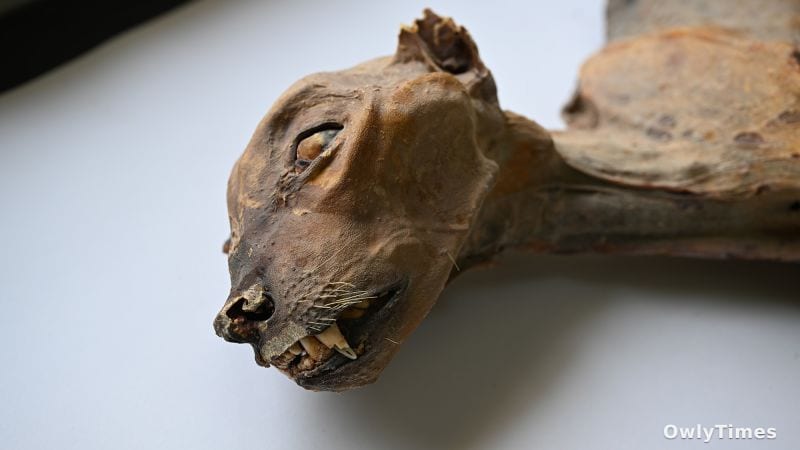
In 2022 and 2023, a team from the National Center for Wildlife in Saudi Arabia, led by ecologist Ahmed Al Boug, began surveying caves near the northern city of Arar. They weren’t expecting felines. Instead, they unearthed seven naturally mummified cheetahs, alongside skeletal remains of 54 additional cats. The remarkably preserved remains – some dating back 4,000 years – presented a unique opportunity to analyze the genetic history of cheetahs in the region. For decades, the prevailing assumption was that only the Asiatic cheetah (Acinonyx jubatus venaticus), now critically endangered with a dwindling population in Iran, had ever inhabited Saudi Arabia. Initial DNA analysis of three mummies shattered that assumption.
Based on the original CNN report.
The findings, published in January in Communications Earth & Environment, revealed that two of the oldest specimens were genetically linked to the Northwest African cheetah (Acinonyx jubatus hecki). This is the first documented evidence of this subspecies ever existing in the Arabian Peninsula, and the first instance of natural cheetah mummification. As Al Boug explained, “It was highly surprising.” The arid cave environments, he notes, weren’t chosen for isolation as the animals neared death, but rather represent an atypical behavior the team is still investigating. This discovery isn’t just about adding another subspecies to the historical record; it demonstrates that the Arabian Peninsula served as a crucial, and previously underestimated, corridor for cheetahs connecting Africa and Asia over millennia.
The implications for reintroduction efforts are substantial. Previously, any reintroduction plan would have logically focused on the Asiatic cheetah, assuming it was the historically appropriate species. Now, conservationists have evidence that the Northwest African cheetah also thrived in the region, and for a considerable period. Adrian Tordiffe, a veterinary wildlife specialist at the University of Pretoria in South Africa, who was not involved in the study, emphasized this point. “Because we now know which cheetah lineages lived in Arabia, reintroduction efforts can focus on using animals that are ecologically appropriate, rather than bringing in cheetahs from completely different environments.” This isn’t simply about choosing the “right” cheetah; it’s about maximizing the chances of successful integration into an ecosystem that demonstrably supported these animals for thousands of years. The remains also indicate breeding populations, with both young and adult cheetahs present, suggesting a thriving ecosystem alongside prey species like gazelles, which are currently being restored in Saudi Arabia.
However, it’s crucial to acknowledge the limitations of this study. The analysis is currently based on only three mummies, representing a small sample size from a larger collection of remains. While dating confirms some specimens are thousands of years old, the precise timeline of subspecies presence and potential overlap requires further investigation. The team plans to analyze the remaining mummies and skeletal fragments to build a more comprehensive genetic picture. Furthermore, the study doesn’t address the specific environmental factors that allowed both subspecies to coexist, or the reasons for their eventual decline and local extinction in the 1970s. Historical pressures from humans – overhunting and land-use changes – are cited as major contributors, but a detailed understanding of these dynamics is essential for preventing a repeat of the past.
The success of reintroduction hinges not just on which cheetahs are reintroduced, but on addressing the root causes of their previous disappearance. Laurie Marker, founder of the Cheetah Conservation Fund, highlights the ecological role of cheetahs as apex predators, emphasizing their contribution to biodiversity. “Cheetahs and other top predators play important roles in the ecosystem…where we find top predators there is a greater amount of biodiversity.” Saudi Arabia’s commitment to large, protected areas and the restoration of prey species offers a promising foundation, but ongoing monitoring and adaptive management will be critical. The question now isn’t simply can we reintroduce cheetahs to Arabia, but how do we ensure their long-term survival in a landscape that has undergone significant transformation? Future research should focus on identifying the specific habitat requirements of both subspecies, assessing the potential for human-wildlife conflict, and developing strategies to mitigate these risks. The Arabian Peninsula’s story of the cheetah is far from over – it’s entering a new chapter, informed by ancient DNA and a renewed commitment to conservation.