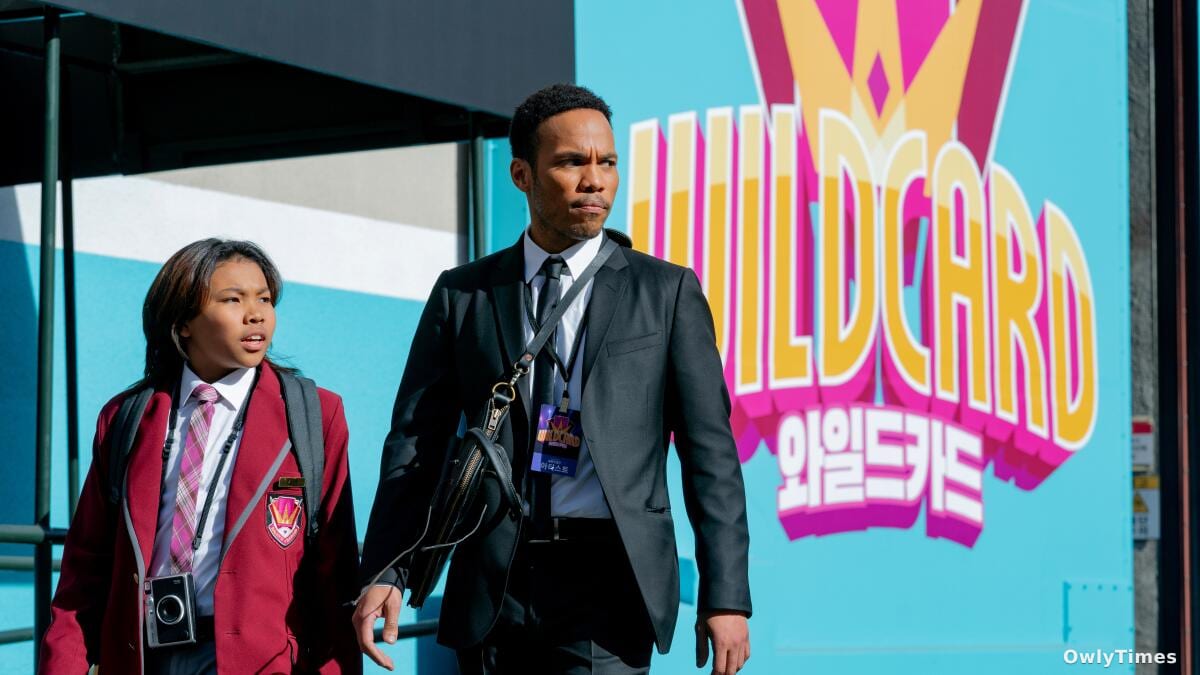

The air in the Wiltern Theater hung thick with anticipation, a low thrum of bass vibrating through the floor as Anderson .Paak – 13 Grammys and a smile capable of illuminating a small city – premiered his directorial debut, “K-Pops!” It wasn’t the polished spectacle one might expect from a musician of his stature, but something messier, more human, and ultimately, a surprisingly revealing portrait of ambition, fatherhood, and the shifting currents of global pop culture. The film’s reception has been…mixed, to put it mildly. But to focus solely on its cinematic shortcomings is to miss the larger story unfolding – a story about a generation grappling with legacy, influence, and what it means to chase a dream in a world where the center of that world is no longer firmly Westward.
“K-Pops!” centers on B.J., a percussionist played by .Paak himself, relentlessly pursuing a stardom that consistently eludes him. The script, co-written with Khaila Amazan, feels ripped from .Paak’s own early days hustling in Los Angeles, drumming at live-band karaoke nights in 2009 with his band, Free Nationals. It’s a familiar narrative – the struggling artist, the unwavering belief in one’s own talent, the frustrating reality of indifference. But .Paak doesn’t shy away from portraying B.J. as, well, a bit of a delusional showboat, convinced stardom is just one cover song away. This self-awareness is key; it’s a willingness to poke fun at the very archetype he embodies, a quality that resonates even when the film stumbles. The film’s willingness to lean into the awkwardness, the sheer effort of chasing a dream, is what sets it apart.
Source material: the Los Angeles Times.
The plot takes a sharp turn when B.J. is essentially exiled to South Korea by his mother and the bar owner he frequents, a scheme hatched to allow them to pursue a romance in peace. He lands in the world of “Wildcard,” a reality competition show designed to launch the next K-pop sensation. Here, the film attempts to satirize the rigorous, often brutal, world of K-pop training, but it’s a satire that feels…underdeveloped. The contestants are portrayed as largely inept, relying on nunchucks and mime instead of genuine talent, a choice that undermines the very industry .Paak seems intent on acknowledging. This is where the film’s tensions become most apparent: a desire to critique a system while simultaneously celebrating its aesthetic and global reach. The K-pop world, currently a $5 billion industry – a 22% increase from 2021 according to the Korea Creative Content Agency – isn’t built on novelty acts; it’s a finely tuned machine of discipline and artistry.
But the true heart of “K-Pops!” isn’t the K-pop satire, it’s the unexpected and deeply personal story of B.J.’s relationship with his son, Tae Young, played with remarkable charm by .Paak’s real-life son, Soul Rasheed. Tae Young believes his father is actor Idris Elba, a running gag that underscores the emotional distance between them. This subplot, initially feeling contrived, blossoms into a surprisingly moving exploration of fatherhood, legacy, and the complexities of identity. It’s a testament to Rasheed’s natural talent that he manages to ground the film’s more outlandish moments, injecting a genuine emotional core. The film’s most poignant moments aren’t the drum solos or the slapstick comedy, but the quiet scenes between father and son, grappling with their shared history and uncertain future. .Paak has openly discussed shouldering the weight of having parents incarcerated, and that resilience, that buoyant persona, clearly informs both his music and his approach to this film.
Ultimately, “K-Pops!” isn’t a masterpiece of filmmaking. It’s messy, uneven, and occasionally frustrating. But it’s also a deeply personal and surprisingly insightful exploration of cultural exchange and the evolving landscape of pop music. The film’s central argument – that the foundations laid by Black American artists paved the way for the global success of K-pop, as B.J. insists, “The Jacksons walked in order for BTS to dance” – is a crucial one. As American dominance in the pop-cultural sphere begins to wane, it’s vital to acknowledge the influence of those who came before, and to understand that cultural innovation is rarely a solitary endeavor. The question now isn’t whether “K-Pops!” will be remembered as a cinematic triumph, but whether it will spark a more honest conversation about the flow of influence in a world where the next global superstar might just be emerging from Seoul. Will the industry heed the call for acknowledging artistic lineage, or will the spotlight continue to chase the newest, shiniest trend, forgetting the roots that nourish it?