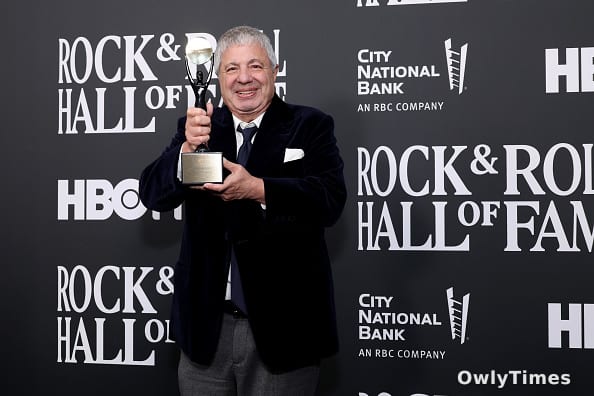

The flashbulbs popped, momentarily blinding Allen Grubman as he stood in the press room at the Microsoft Theater in Los Angeles, November 5th, 2022. It wasn’t a movie premiere, or a record release party, but the 37th annual Rock & Roll Hall of Fame induction ceremony – and he was the one being honored. Not as a musician, not as a producer, but as a lawyer. This wasn’t a lifetime achievement award for legal prowess in the abstract; it was recognition for fundamentally reshaping the power dynamics within the music industry, a testament to a career spent ensuring artists didn’t just make hits, but owned them. In an industry built on exploitation, Grubman’s induction felt less like a celebration of legal maneuvering and more like a quiet rebellion against the established order.
The Last Dealmaker: A Brooklyn Boy’s Ascent
The story of Allen Grubman isn’t one of inherited wealth or Ivy League connections, at least not initially. Hailing from Crown Heights, Brooklyn, his fascination with the entertainment world ignited at age eleven, a stark contrast to the traditional paths of his future peers. He attended Brooklyn Law School, a solid institution, but hardly a pipeline to representing the likes of Mariah Carey, Elton John, and Lady Gaga. What set him apart, and what he himself attributes his success to – “Common sense, street smarts, the ability to communicate with people and have people respect you and like you and want to work with you. You can’t be taught that in school” – was a rare combination of legal acumen and genuine human connection. This wasn’t about complex contracts alone; it was about understanding the creative soul of his clients and fiercely protecting their vision. The Wall Street Journal dubbed him “the last of a breed of entertainment dealmakers who have represented both the talent and old-school industry tycoons,” a title that speaks volumes about a changing landscape.
Based on the original abajournal.com report.
Beyond the Headlines: Creative Control in a Streaming Era
Grubman’s Rock & Roll Hall of Fame induction wasn’t for simply negotiating favorable contracts. It was for pioneering agreements that granted artists unprecedented creative control. Before Grubman, record labels held almost all the cards, dictating everything from song selection to album artwork. Artists were often locked into exploitative deals, sacrificing ownership for the promise of exposure. He changed that. He understood that an artist’s value wasn’t just in their ability to sell records, but in their unique artistic identity. This is particularly poignant now, in 2026, as the streaming era continues to reshape the music industry. While streaming has democratized access to music, it’s also created new challenges for artists, particularly regarding fair compensation and ownership of their masters. In 2023, the IFPI reported that global recorded music revenues grew by 10.7%, largely driven by streaming, but artist payouts remain a contentious issue, with many arguing they receive a disproportionately small share of the profits. Grubman’s legacy is a reminder that legal battles for creative control are far from over.
From BigLaw to Big Stars: A Different Kind of Prestige
The allure of BigLaw firms – the sprawling, prestigious institutions churning out graduates from Harvard, Yale, and NYU (all represented within Grubman’s firm of 50 lawyers) – is undeniable. But it lacks something crucial: the direct connection to cultural creation. While BigLaw focuses on corporate mergers and complex litigation, Grubman’s firm operates at the intersection of art, commerce, and power. He represents not just musicians, but also actors like Robert De Niro and media moguls like Bob Iger, navigating the intricate web of intellectual property, licensing, and branding. This isn’t simply about maximizing profits; it’s about safeguarding legacies. The contrast is stark: a partner at a top-tier BigLaw firm might boast about closing a multi-billion dollar deal, while Grubman can point to a contract that allowed an artist to retain ownership of their life’s work. The prestige is different, rooted not in financial scale but in cultural impact.
What Happens When the Dealmakers Age Out?
Allen Grubman’s success is a product of a specific era, a time when personal relationships and a deep understanding of the industry were paramount. But the entertainment landscape is rapidly evolving. Artificial intelligence is poised to disrupt music creation, virtual concerts are becoming increasingly common, and the very definition of “ownership” is being challenged by NFTs and blockchain technology. The question isn’t whether Grubman’s firm will continue to thrive, but whether the model he pioneered – the fiercely independent advocate for the artist – can survive in a world increasingly dominated by algorithms and data analytics. Will the next generation of entertainment lawyers prioritize creative control as passionately as Grubman did, or will they become simply another cog in the machine, optimizing for profit in a world where art is increasingly commodified? That’s the legacy worth watching.