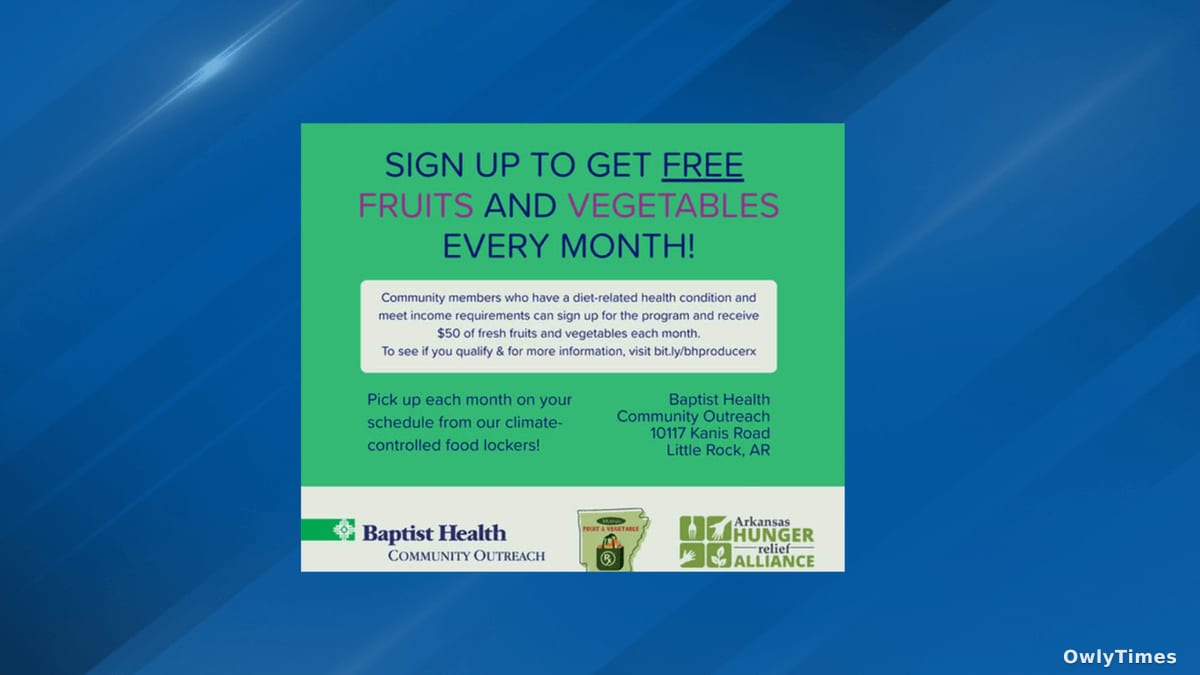

The persistent disconnect between medical advice and lived reality for many Arkansans is beginning to narrow, though not in the way many anticipate. It’s not a new drug or surgical technique driving this shift, but a prescription for produce. On February 26, 2026, Baptist Health Community Outreach announced a partnership with the Arkansas Hunger Relief Alliance to launch the Arkansas Fruit & Vegetable Prescription Program, a move that highlights a growing recognition within healthcare: food insecurity is a healthcare issue, and addressing it requires more than just telling patients to eat better. While headlines focus on “free produce,” the program’s significance lies in its attempt to directly intervene in the social determinants of health, a concept gaining traction but often lacking concrete implementation.
Beyond Dietary Advice: The Logic of “Food as Medicine”
For decades, physicians have advised patients with conditions like hypertension and type 2 diabetes to increase their fruit and vegetable intake. Yet, this advice often lands on deaf ears – not because patients are unwilling, but because access is limited. The Arkansas Fruit & Vegetable Prescription Program directly tackles this barrier. Qualified individuals – those with diet-related health conditions or hypertension and meeting specific income requirements – will receive a monthly allotment of fresh produce. This isn’t a charitable food bank distribution; it’s a medically-linked intervention. Baptist Health isn’t simply giving away food, they are prescribing it, framing access to nutritious food as a necessary component of treatment. This approach, often termed “food as medicine,” is gaining momentum nationally, with pilot programs demonstrating potential for improved health outcomes and reduced healthcare costs. The program’s location at 10117 Kanis Road, utilizing climate-controlled foot lockers for storage, speaks to a logistical commitment to maintaining produce quality – a crucial detail often overlooked in similar initiatives.
Original reporting: katv.com.
Eligibility and the Complexities of Need
The program’s dual eligibility criteria – health condition and income – are both a strength and a point of potential friction. Focusing on individuals with hypertension and diet-related illnesses allows for targeted intervention and measurable outcomes. According to the release, individuals can check their eligibility online, a necessary step for streamlining the process. However, the income requirements introduce a layer of administrative burden and, inevitably, exclusion. While the program aims to address a clear need, it’s important to acknowledge that many Arkansans experience food insecurity without meeting the specific criteria for this intervention. Data from the Arkansas Department of Health consistently shows disproportionately high rates of diet-related diseases in low-income communities, suggesting a substantial unmet need even within the eligible population. The program’s initial capacity, while not publicly specified, will undoubtedly limit the number of individuals served, raising questions about equitable access.
What the Study Actually Found (and Didn’t)
It’s crucial to clarify what this program is and isn’t. This is not a randomized controlled trial demonstrating the efficacy of produce prescriptions. It’s an implementation of a public health initiative based on a strong theoretical framework and emerging evidence from other “food as medicine” programs. Initial reports suggest a focus on access, not necessarily immediate health outcome measurement. While Baptist Health will likely track participant engagement and potentially monitor relevant health indicators like blood pressure, attributing changes solely to the produce prescription will be methodologically challenging. Confounding factors – changes in medication, other lifestyle modifications, seasonal variations in health – will all need to be considered. The program’s success shouldn’t be judged solely on immediate clinical improvements, but also on its ability to reach the target population and provide consistent access to fresh produce.
Limitations to Consider: Scale and Sustainability
The Arkansas Fruit & Vegetable Prescription Program represents a promising step, but significant limitations remain. The program’s current scale is modest, operating out of a single facility. Expanding to other locations and reaching rural communities will be a major undertaking. Furthermore, the long-term sustainability of the program is uncertain. Reliance on partnerships and potential grant funding creates vulnerability. A more robust solution would involve integrating “food as medicine” into standard healthcare reimbursement models, a policy change that remains a distant prospect. The program also doesn’t address the underlying systemic issues driving food insecurity – poverty, lack of transportation, limited access to grocery stores in food deserts. While providing produce is a vital intervention, it’s not a panacea.
Looking ahead, the most critical next step is rigorous evaluation. Baptist Health and the Arkansas Hunger Relief Alliance should prioritize data collection on program participation, produce utilization, and relevant health outcomes. Beyond simply tracking numbers, qualitative data – patient interviews and focus groups – will be essential to understand the lived experience of participants and identify areas for improvement. But perhaps the most important question to watch for isn’t whether the program works, but how it can be scaled and integrated into a broader, more sustainable system of food security and healthcare access. Will Arkansas policymakers consider incorporating similar programs into Medicaid or other state-funded healthcare initiatives? The answer to that question will determine whether this pilot program remains a localized success story or becomes a model for statewide change.





